
The sheer velocity of modern commerce has forced a radical reimagining of the logistics landscape, where the cold hum of mechanical hardware is being superseded by the sophisticated cognitive power of integrated software systems. In the current market, the industry has witnessed a fundamental pivot; automation is no longer merely a tactical upgrade designed to shuffle inventory from point A to point B but has become the strategic heartbeat of the entire enterprise. This transition is not born of a simple desire for novelty but is a direct response to a perfect storm of labor shortages, volatile fulfillment demands, and an increasingly unpredictable global supply chain. For years, the physical machinery—the conveyors, the sorters, and the massive steel racking—was the star of the warehouse floor. Today, the narrative has shifted to the invisible layer of intelligence that binds these disparate components together, turning a collection of expensive tools into a singular, responsive organism. This new paradigm emphasizes agility over raw power, allowing facilities to pivot their entire operational focus in a matter of hours rather than months of retooling. As a result, the definition of a high-performance warehouse has evolved from how many items it can move to how intelligently it can adapt to the next disruption.
This evolution has effectively elevated warehouse automation from a niche operational concern to a top-tier priority discussed in corporate boardrooms across the globe. Senior executives no longer view these technological upgrades as isolated capital expenses that sit on a balance sheet; instead, they recognize them as essential pillars of long-term competitiveness and business resilience. The conversation among the C-suite has matured from questioning whether a company should embrace automation to determining how quickly it can deploy scalable, software-defined systems to stay ahead of the curve. In this high-stakes environment, the risk of falling behind agile competitors or failing to meet the increasingly demanding expectations of consumers far outweighs the initial financial commitment required for implementation. Companies that fail to invest in the software “brain” of their facilities often find themselves trapped with rigid infrastructure that becomes a liability during market shifts. Consequently, the focus has moved toward creating a digital twin of the entire operation, where software simulates, monitors, and optimizes every movement before a single physical robot even begins its task.
Redefining the Architecture of Fulfillment
Modern fulfillment centers are undergoing a structural redesign where the digital architecture is developed alongside the physical layout to ensure seamless data flow. In this environment, the facility is no longer treated as a warehouse but as a data-driven fulfillment engine where every square foot is optimized by algorithmic logic. This approach allows for the integration of diverse technologies, from high-speed sorters to delicate picking arms, all governed by a unified set of operational rules. By establishing a robust software foundation first, companies can avoid the pitfalls of technical debt that often occur when disparate systems are patched together in a reactionary manner. This architectural shift provides the necessary framework to support advanced capabilities like real-time inventory tracking and dynamic order slotting, which are essential for meeting the rapid delivery windows demanded by today’s consumers.
Part 1: Software as the Orchestration Center
At the very center of a high-functioning facility lies the Warehouse Execution System (WES), which serves as the cognitive command center for the entire operation. This sophisticated software layer is tasked with the monumental job of orchestrating the complex interactions between autonomous mobile robots, traditional mechanical equipment, and the human workforce that remains a vital part of the ecosystem. By acting as a central nervous system, the WES ensures that every moving part of the warehouse works in perfect harmony, continuously calculating the most efficient paths and workflows to maximize throughput. It is no longer enough for a robot to simply move; it must move with purpose and in coordination with every other asset on the floor to prevent the formation of bottlenecks. Without this intelligent orchestration, even the most expensive hardware remains a series of isolated tools rather than a cohesive, high-output system. The software evaluates real-time data from thousands of touchpoints, adjusting the tempo of the facility to match the immediate demands of the order queue.
Part 2: Eliminating Operational Silos
One of the primary objectives of this modern software-centric model is the total elimination of “islands of automation” that have plagued logistics operations for decades. In previous eras, warehouses often suffered from fragmented architectures where individual machines, such as sorters or palletizers, operated independently within their own proprietary silos. These systems frequently struggled to communicate with the broader warehouse management software, leading to data gaps and manual intervention that slowed down the overall process. This lack of integration created significant technical debt, making it nearly impossible to upgrade one part of the system without breaking another. By prioritizing the software layer from the very beginning, organizations ensure that their systems are intrinsically integrated and inherently flexible. This unified approach allows for a much smoother flow of data and more accurate decision-making across the entire supply chain, from the moment a product enters the receiving dock to its final departure.
The Shift Toward Scalable Robotics
The transition from rigid automation to flexible robotics has fundamentally changed the physical profile of the modern warehouse. Unlike the permanent steel installations of the past, contemporary solutions are designed to be mobile, modular, and easily reconfigurable. This shift is particularly evident in the way facilities now manage space and labor, using robotic fleets that can be moved or augmented based on real-time needs. The ability to scale the workforce without increasing the physical footprint of the building has become a major competitive advantage, especially in urban areas where real estate is at a premium. As these robotic systems become more affordable and reliable, they are being deployed in a wider variety of tasks, from simple transport to complex, multi-stage picking operations. This versatility ensures that the warehouse remains an active, evolving asset that can grow in tandem with the business it supports.
Part 1: Mobile Flexibility vs. Fixed Constraints
Autonomous Mobile Robots (AMRs) have rapidly moved beyond the experimental pilot phases to become the fundamental cornerstone of modern warehouse infrastructure. Their widespread adoption has been fueled by consistently proven performance in high-stakes environments, such as large-scale fashion retail and electronics fulfillment, where they have demonstrably improved the speed of returns processing and inventory put-away rates. These robots represent a departure from the machinery of the past; they are equipped with advanced sensors and mapping technology that allows them to navigate dynamic environments safely alongside human workers. This level of reliability and operational efficiency allows businesses to scale their activities almost instantaneously in response to sudden market shifts or promotional peaks. For example, if a company experiences a major surge in orders due to a flash sale, they can simply deploy additional AMRs to the floor rather than having to build new, permanent conveyor lines.
Part 2: The Adaptability of Modern Fleets
The move away from traditional bolt-down conveyors and massive sorter loops is driven by the need for agility in an era of diverse product types and erratic volume spikes. While fixed systems were once considered the gold standard for high-volume operations, they are increasingly viewed as expensive constraints that lack the flexibility to handle changing packaging or warehouse layouts. Modern operators prefer hardware-agnostic software solutions that allow them to manage a fleet of varied robots from different manufacturers within a single interface. This adaptability is crucial for maintaining a competitive edge as consumer behavior continues to evolve at a breakneck pace. By investing in mobile, software-driven assets, companies avoid the risk of obsolescence that comes with permanent steel structures. If a facility needs to be relocated or optimized for a new product line, the software is updated and the robots are redeployed in a matter of days, preserving the original capital investment and ensuring long-term utility.
Leveraging Intelligence and New Commercial Models
The integration of artificial intelligence into warehouse management has moved from conceptual theory to practical, day-to-day application. Today, algorithms are used not just to track inventory, but to predict future needs and prevent operational failures before they occur. This intelligence is supported by new commercial frameworks that lower the barrier to entry for advanced technology, allowing smaller firms to compete with global giants. By leveraging data as a strategic asset, warehouses have become more than just storage sites; they are now centers of predictive intelligence that can influence the entire upstream supply chain. This shift has also created a new ecosystem of service providers who focus on delivering outcomes rather than just selling equipment. This ensures that the focus remains on operational success and continuous improvement, rather than simply maintaining a fleet of aging machines.
Part 1: Predictive Analytics and Operational Access
Artificial Intelligence currently delivers substantial benefits within the four walls of the warehouse through predictive maintenance and real-time task optimization. By constantly analyzing a stream of data from embedded sensors and motor controllers, intelligent algorithms identify subtle patterns that indicate a potential mechanical failure before it actually occurs. This shift from reactive to proactive maintenance saves companies millions in avoided downtime and emergency repair costs, ensuring that the automation remains available when it is needed most. Furthermore, AI-driven software optimizes the routing of mobile robots in real-time, accounting for congestion in aisles and balancing the workload across the facility to prevent any single station from becoming overwhelmed. This dynamic load balancing ensures that the warehouse maintains a high level of efficiency even during the most stressful peak periods, providing a level of resilience that was previously impossible.
Part 2: Robotics-as-a-Service and Scale
The financial landscape of automation has also undergone a dramatic transformation through the emergence of the Robotics-as-a-Service (RaaS) commercial model. By shifting what were once massive capital expenditures into manageable, recurring operational expenses, RaaS has made advanced robotics accessible to a much wider range of mid-market businesses. This model allows companies to deploy cutting-edge technology without taking on significant financial risk, as the service provider often handles the maintenance, software updates, and hardware repairs. This financial flexibility is particularly valuable in an era of cautious capital spending, as it allows firms to scale their automation footprints in direct proportion to their revenue growth. Furthermore, the RaaS model ensures that the warehouse stays current with the latest technological advancements without requiring a complete reinvestment every few years, as new hardware can be swapped into the existing fleet as part of the service agreement.
Ensuring Future Resilience and Security
As warehouses become more technically complex, the focus has shifted toward ensuring the long-term stability and security of these digital-physical hybrids. Modern facilities are now viewed as critical infrastructure, where a software failure or security breach could have devastating consequences for the entire supply chain. Consequently, the design of these systems now includes robust layers of redundancy and protection that were previously reserved for high-security data centers. At the same time, the need to maximize existing real-time assets has led to the development of sophisticated storage solutions that use every inch of available space. This combination of physical density and digital security creates a resilient foundation that can withstand both physical space constraints and the evolving landscape of global cyber threats, ensuring that fulfillment operations remain uninterrupted.
Part 1: Integration Stability and Infrastructure Optimization
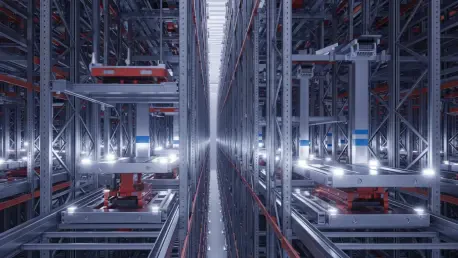
As urban warehouse space becomes increasingly expensive, high-density storage solutions like Pallet Shuttle Automated Storage and Retrieval Systems (ASRS) have become essential for maximizing cubic volume. These systems allow companies to utilize the full height of their buildings, providing dense storage that works in seamless coordination with mobile robots and traditional conveyors. This strategy is particularly effective in “brownfield” facilities—existing warehouses that must be modernized to handle the massive volumes of the modern era. By integrating software-driven ASRS into an existing footprint, a company can often double or triple its storage capacity without the need to construct a new building. The software layer manages the complex logic of which pallets to move and when, ensuring that frequently accessed items are always positioned for rapid retrieval. This optimization of physical infrastructure ensures that every square foot of real estate is contributing to the bottom line efficiently.
Part 2: Cybersecurity in the Connected Warehouse
Because modern warehouses are essentially large-scale digital infrastructures, cybersecurity has emerged as a critical component of the overall automation strategy. Today’s facilities are vulnerable to cyber threats that could bring a supply chain to a standstill, making digital defense as important as physical safety. A unified software platform simplifies the management of these risks by providing a single, centralized point for software updates, security patches, and network monitoring. By treating cybersecurity as an integral part of the design process, businesses protect their operations from ransomware and malicious disruptions. This security-first mindset extends to edge devices, ensuring that every mobile robot and handheld scanner is authenticated and monitored for unusual activity. In this hyper-connected environment, the integrity of the automated “brain” is the primary safeguard for the business, ensuring that the journey toward full automation is not compromised by external actors or digital vulnerabilities.
The Strategic Blueprint: Future-Proofing the Modern Facility
The shift toward software-centric warehouse automation redefined how global enterprises approached their logistics challenges, moving the focus from raw throughput to systemic agility. It became clear that the most successful organizations were those that treated their software stack as a living ecosystem rather than a static purchase. To capitalize on these advancements, leaders prioritized the development of internal digital competencies, ensuring that their teams possessed the skills necessary to manage complex, data-driven environments. They integrated disparate data streams into unified dashboards, allowing for a level of granular visibility that transformed warehouse managers into strategic orchestrators of supply chain flow. Decision-makers also realized that the integration of artificial intelligence and robotics required a fundamental change in organizational culture, fostering a mindset of continuous optimization rather than one-off project completion. By adopting hardware-agnostic platforms, businesses secured their investments against future technological shifts, ensuring that they remained compatible with the next generation of mobile robotics. Ultimately, the industry moved away from the pursuit of a “lights-out” facility in favor of a “smart” facility, where human ingenuity and machine precision collaborated through a shared digital interface. These steps solidified the warehouse’s role as a resilient hub of commerce, capable of navigating the complexities of a modern economy while maintaining the security and efficiency required for sustained growth.