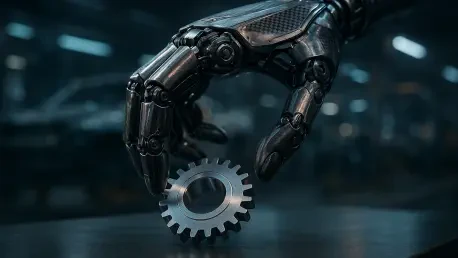

Humanoid robots in the Landshut plant are being trained to execute non-linear movements and apply variable pressure when handling delicate automotive components. This shift represents a fundamental change in how the BMW Group approaches industrial automation, moving away from the pre-programmed, static routines of the past. While several production sites are currently evaluating various hardware platforms, Landshut has emerged as the brain center for the development of “Physical AI.” This discipline focuses on the software layers that enable a machine to perceive its environment and make autonomous decisions in real-time. By concentrating on component manufacturing, the company is tackling some of the most complex dexterity challenges in the industry. These environments require robots to navigate crowded spaces and interact with objects that are not always in a fixed position. The goal is to move beyond simple mechanical repetition toward a form of synthetic intelligence that understands the nuances of physical touch and spatial orientation during assembly.
Developing the Intelligence Stack and Learning Pipelines
Advanced Software Architectures: The Role of VLA Models
Building these highly capable systems requires a modular software architecture that leverages Vision-Language-Action (VLA) models to process information. Traditional industrial robots operate on rigid code that dictates every millimeter of movement, but VLA-based systems integrate visual sensors and linguistic instructions to create a more intuitive operational framework. This means a robot can “see” a component, “understand” its intended role through context, and then “act” by choosing the most efficient path to pick it up. Such a leap in logic allows these machines to adapt to variations in the production line, such as a tray of parts being slightly misaligned or a tool being out of its usual place. By creating a universal intelligence stack, engineers are ensuring that this software can be deployed across different robotic platforms regardless of which company manufactured the physical limbs. This platform-independent approach is crucial for scaling technology across global production networks where hardware varies by region.
Simulation to Reality: The Virtual Training Pipeline
The training of these complex AI models depends heavily on a robust “simulation-to-reality” pipeline that bridges the gap between digital theory and factory floor reality. Engineers utilize sophisticated motion-capture suits and haptic gloves to record the exact movements of skilled human technicians, translating subtle wrist flicks and finger pressures into digital data. This information is fed into a high-fidelity simulation environment where the AI can practice a specific task millions of times in a fraction of the actual time. This virtual training ground allows the system to fail and learn from mistakes without risking damage to expensive vehicle components or robotic hardware. Once the AI achieves a high success rate in the digital world, the learned behaviors are transferred to the physical robot at the Landshut plant. This method drastically shortens the deployment cycle and ensures that when a humanoid finally touches a real automotive part, it does so with a level of precision and confidence that was previously impossible.
Strategic Application and Collaborative Ecosystems
Precision Assembly: Mastering Manual Dexterity
Component production serves as a rigorous testing ground for humanoid robotics because it involves intricate tasks that demand high levels of manual dexterity. Unlike large-scale body shop welding, where parts are massive and movements are repetitive, component assembly requires the ability to handle small, fragile connectors and complex wiring harnesses. Humanoid robots are being perfected to feel for the specific “click” of a part seating into place, adjusting their grip pressure dynamically to avoid crushing sensitive materials. This focus on fine-motor control is a prerequisite for the broader vision of “flexible manufacturing,” where production lines must pivot between different vehicle architectures with minimal downtime. As the automotive industry moves toward increasingly customized vehicle configurations, the ability for a robotic fleet to learn a new task overnight through AI updates rather than physical retooling becomes a massive competitive advantage for the brand.
Collaborative Innovation: Partnering for Platform Independence
To accelerate this transition, a collaborative ecosystem involving academic institutions and tech startups has been established to refine these Physical AI models. Partnerships with specialized firms like Athenyx Robotics and various university research labs provide the specialized expertise needed to solve deep-learning bottlenecks. These collaborations focus on ensuring that the AI models remain platform-independent, which prevents the manufacturing process from becoming tethered to a single hardware vendor. By integrating external research into the practical demands of a high-volume factory, the development team can experiment with cutting-edge sensor fusion and real-time path planning in a controlled environment. This open-innovation strategy allows for the rapid integration of new breakthroughs in machine learning, ensuring the robots can handle increasingly complex scenarios such as identifying transparent materials or working in variable lighting conditions during the shift.
Future Pathways for Autonomous Manufacturing Systems
The evolution of humanoid robotics at the Landshut plant reached a point where the distinction between machine and intelligent agent began to blur. Engineers successfully moved past the limitations of traditional automation by prioritizing software flexibility and adaptive learning over rigid mechanical programming. This progress indicated that the future of automotive production would rely on the seamless integration of Physical AI across all levels of the supply chain. For leaders in the manufacturing sector, the next steps involved expanding these simulation pipelines to encompass entire production halls, allowing for the pre-optimization of human-robot workflows before a single physical machine was installed. Stakeholders recognized the need to invest heavily in data standardization to ensure that the intelligence developed in one facility could be instantly utilized in another. The focus shifted toward long-term workforce development, where human employees transitioned into roles centered on the strategic oversight of these autonomous fleets.