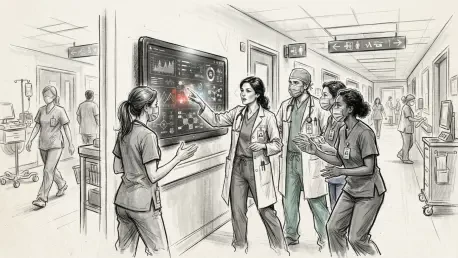

MIMIT Health uses specific emoji triggers within Slack channels to automate clinical approvals and notify specialized teams about urgent post-operative updates. This level of technical sophistication represents a significant shift from the traditional, paper-heavy administration that often slows down modern healthcare delivery. By moving away from rigid structures, this multispecialty physician group in Chicago has embraced an impact-driven design philosophy. Instead of letting technical specifications dictate clinical workflows, the organization prioritizes the final outcome of patient wellness and fast recovery. Integrating Slack and Salesforce into the core of their daily operations has effectively eliminated the systemic delays and communication gaps that typically hinder care in minimally invasive and regenerative medicine. This digital ecosystem ensures that data flows naturally between care teams, allowing for a more agile response to patient needs while maintaining the high standards required for complex medical procedures today.
Overcoming Structural Fragmentation: The Shift to Unified Orchestration
Identifying Friction Points: Challenges in Clinical Workflows
Before adopting a unified digital strategy, MIMIT Health faced a persistent challenge known as the fragmentation trap, which is common throughout the American healthcare system. Despite having a team of highly skilled clinicians, the practice found that growth was frequently hindered by rigid Electronic Health Record systems and siloed data structures. Care coordination required staff to juggle multiple disparate platforms for everything from patient records and procedure approvals to insurance verification and scheduling. This environment created a massive administrative burden, often pulling medical professionals away from direct patient interaction to handle manual data entry. The lack of a centralized platform meant that critical information was often buried in separate databases, making it difficult for teams to get a comprehensive view of a patient’s status. This systemic friction essentially acted as a barrier to scaling the practice and maintaining high-quality outcomes in a competitive market.
The most significant point of friction was the initial patient touchpoint, where the intake process was heavily manual and time-consuming. New patient referrals often involved a complex paper trail consisting of faxes, emails, and dozens of phone calls, which meant that onboarding a single patient could take several days. This slow pace was particularly problematic in a specialty focused on minimally invasive and regenerative care, where timely intervention is often key to a successful recovery. Routine inquiries about logistics or insurance frequently devolved into cycles of voicemail tag, leading to delays that could negatively impact patient trust and overall clinical results. MIMIT Health identified an urgent need to replace these outdated methods with an orchestration layer that could connect data, care teams, and patients in real-time. This realization sparked a transition toward a model where communication and data are treated as integrated components of the medical treatment plan.
Bridging Data Silos: Achieving Real-Time Coordination
To solve these deep-seated issues, the organization decided to position Slack as the primary interface for its entire healthcare ecosystem, supported by the data-management capabilities of the Salesforce suite. This integration fundamentally transformed Slack from a basic messaging tool into a sophisticated orchestration layer for medical operations. By creating a unified space where data from the Electronic Health Record system could be viewed and acted upon, the practice eliminated the need for clinicians to log into multiple portals. The transition allowed for a seamless flow of information, ensuring that every team member—from the front desk staff to the surgical suite—remained aligned with the most current patient status. This approach prioritized impact-driven design, meaning the technology was built to serve the clinical goal of wellness rather than forcing clinicians to adapt to the software. It represents a major leap toward truly interoperable healthcare systems.
This move toward unified orchestration also addressed the emotional and professional toll that fragmented systems take on healthcare workers. By automating the most tedious aspects of data retrieval and communication, the practice moved toward a more agile environment where decisions are made based on real-time insights rather than historical paperwork. The shift has effectively turned data into a tool for acceleration rather than a source of complication. Clinicians no longer have to spend their valuable time hunting for missing documents or waiting for callbacks from other departments to confirm insurance eligibility. Instead, the centralized dashboard provided by the Slack and Salesforce integration ensures that all necessary information is available at the click of a button. This clarity not only improves the speed of care but also fosters a culture of collaboration where teams can focus on problem-solving rather than technical troubleshooting and administrative logistics.
Transforming Patient Care: Integrating AI and Automation
Streamlining the Patient Journey: Smart Intake and Coordination
The patient journey at MIMIT Health now begins with a highly automated intake process that sets the stage for efficient care. When a prospective patient reaches out via a web form, text message, or phone call, Salesforce Agentforce instantly captures the lead and routes it to a dedicated Slack channel for new patient referrals. This automation has revolutionized the referral process by allowing staff members to claim and process new leads within minutes rather than the days it used to take. By providing an immediate response, the clinic ensures that patients feel supported from their very first interaction, which is a critical factor in building trust and reducing the likelihood of appointment cancellations. This rapid turnaround is made possible by the seamless connection between the public-facing intake forms and the internal communication channels used by the administrative team. The result is a much smoother transition from the initial inquiry to the first clinical consultation.
One of the most innovative aspects of the current MIMIT model is the creation of a private Slack channel for every single patient journey. These channels serve as the absolute single source of truth for the entire care team, which includes physicians, care coordinators, and revenue cycle specialists. By centralizing all communication related to a specific patient in one location, the practice eliminates the confusion often caused by disconnected email threads or verbal handoffs. Each channel is equipped with a Slack Canvas, a persistent document that provides a real-time summary of the patient’s medical history, current clinical status, and upcoming tasks. This ensures that any team member who joins the care journey—whether they are a surgeon preparing for a procedure or a billing specialist verifying a claim—has immediate access to the same context. This transparency is vital for preventing errors and ensuring that everyone is working toward the same clinical objectives.
Empowering the Care Team: Contextual Intelligence and Back Office
Artificial intelligence has become a cornerstone of the MIMIT Health strategy, specifically aimed at reducing the information overload that often leads to physician burnout. By utilizing Slackbot and Agentforce, clinicians can now invoke automated commands to generate concise summaries of a patient’s entire medical history directly within the Slack interface. This allows a doctor to enter a consultation with a full understanding of the patient’s background in just a few seconds, a capability that is often referred to as practicing medicine at the speed of life. Previously, reviewing hundreds of pages of digital records from various sources was a time-consuming chore that often happened after hours. Now, the AI does the heavy lifting of synthesis, presenting the most relevant clinical data in a format that is easy to digest. This shift ensures that the time spent with the patient is focused on active listening and diagnostic reasoning rather than scrolling through a computer screen.
Investing in interoperable and AI-driven workflows provided a clear path toward sustainable growth and superior patient satisfaction for the organization. By successfully removing the digital friction that historically slowed down care delivery, the practice demonstrated how unified platforms can transform repetitive tasks into automated efficiencies. The integration showed that clinicians were able to focus more on patient empathy when the technical environment was designed around the impact of their work. Looking toward broader industry applications, the success of this model suggested that other medical groups could achieve similar results by prioritizing the patient experience in their digital strategy. Future-proofing the practice involved not just adding new tools, but ensuring those tools communicated effectively to create a seamless journey. Ultimately, the adoption of these technologies proved that modern healthcare can be both technologically advanced and deeply human.