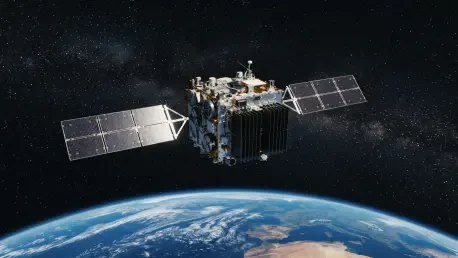

OwlO Cloud intends to address the high costs and latency of data transmission by transforming raw orbital information into actionable intelligence before it reaches the ground. This Luxembourg-based enterprise is making its public debut with a focused roadmap that prioritizes the creation of a sophisticated orbital data center constellation. By shifting the heavy lifting of computation into the vacuum of space, the company bypasses the traditional bottleneck of downlinking massive datasets for terrestrial processing. This movement marks a shift from simple data relay to true edge computing at the final frontier. The startup has already secured vital agreements with industrial titans like Thales Alenia Space and Edge Aerospace to integrate high-performance computing modules directly into satellite platforms. Rather than merely launching hardware, the firm is establishing a decentralized cloud network capable of handling the increasing demands of modern maritime surveillance and national defense operations. Establishing these nodes in orbit allows for a faster response to time-sensitive global events while maintaining a lower carbon footprint for data management.
Strategic Partnerships: Bridging the European Orbital Gap
The collaboration between OwlO Cloud and its industrial partners represents a fundamental change in how the European space supply chain approaches data management. By working with Thales Alenia Space, the startup gains access to advanced satellite manufacturing capabilities that can support multi-kilowatt space computers. These systems are not just standard processors; they are hardened against the intense radiation and extreme thermal fluctuations inherent in Earth’s orbit. The roadmap outlines the deployment of at least ten Orbital Cloud Nodes by the year 2030, creating a skeletal framework for a robust orbital infrastructure. This phased rollout ensures that the technology can be stress-tested in real-world scenarios while providing immediate value to early adopters. This technical foundation allows for the processing of data locally, which significantly reduces the energy and time required to send signals back to Earth. Consequently, users receive insights in minutes, which is vital for industries that rely on instantaneous satellite imagery.
A core component of this strategy involves the pursuit of European strategic autonomy in the burgeoning orbital economy. As international competition for space dominance intensifies, agencies like the European Space Agency are looking for sovereign solutions that protect data integrity and ensure independent operational capabilities. OwlO Cloud positions itself as a critical player in this ecosystem by offering a localized alternative to foreign cloud providers. Unlike some American counterparts that view orbital computing as a direct replacement for Earth-based server farms, this approach is more pragmatic. It acknowledges the cost benefits of terrestrial power but highlights the immense opportunity cost of delayed intelligence. The company focuses on specific high-value use cases, such as disaster response where real-time satellite imagery analysis can save lives. By building this capacity within the European framework, the startup ensures that dual-use technologies remain under regional oversight while fostering a competitive and technologically advanced local marketplace.
Infrastructure Growth: Engineering for Extreme Environments
The engineering hurdles associated with maintaining a data center in orbit are significant, requiring a departure from conventional server architecture. OwlO Cloud is focusing its research on 10kW-class nodes, which provide enough power for high-density AI workloads without overwhelming the satellite’s thermal management systems. By 2035, the company plans to scale this capacity into the tens of megawatts, effectively creating a high-performance compute belt around the planet. This infrastructure avoids the pitfalls of hyperbolic industry claims by focusing on incremental, verifiable progress in hardware efficiency and decentralized networking. The integration with Edge Aerospace provides the necessary networking protocols to ensure that these nodes can communicate seamlessly, forming a resilient mesh that remains operational even if individual satellites experience anomalies. This decentralized approach creates a self-healing network that mirrors the reliability of modern terrestrial cloud services in a much harsher environment. Building this resilience was a key factor in securing the trust of national security agencies.
The emergence of this orbital cloud infrastructure signaled a move toward a more efficient and responsive global data ecosystem. Stakeholders in the maritime and defense sectors recognized that the traditional model of data transmission was no longer sustainable given the volume of information being generated. To capitalize on this shift, organizations had to evaluate their current data pipelines and identify which processes were most critical for on-orbit acceleration. Implementing specific edge-processing protocols became the next logical step for companies seeking to maintain a competitive advantage in rapid decision-making. Future considerations involved the standardization of orbital compute interfaces to ensure interoperability across different satellite constellations. By prioritizing data efficiency over sheer scale, the industry transitioned toward a model where intelligence was generated at the source. This evolution proved that the economic viability of space-based processing depended on solving terrestrial bottlenecks through targeted orbital innovations.