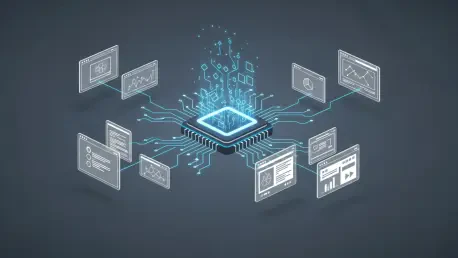

The persistent disconnect between technical engineers operating in command-line environments and non-technical stakeholders requiring visual clarity has long hindered the rapid deployment of software solutions. Claude Code Artifacts, launched by Anthropic, represent a pivotal shift in addressing this friction by moving beyond text-based code generation to provide live, interactive web pages directly from a developer’s terminal. By offering a real-time visual window into the coding process, this feature empowers stakeholders and project managers who do not engage with command-line interfaces to remain informed. This transformation converts raw technical output into a digestible format that allows every member of a team to see and understand project progress without needing deep technical expertise. This bridge ensures that underlying logic is no longer hidden but is instead a shared asset for the organization, fostering a more cohesive and transparent development environment.
Overcoming the Persistent Bottleneck: Beyond Simple Code Generation
For several years, the primary focus within the artificial intelligence industry remained almost entirely on the speed at which a tool could generate lines of code, prioritizing volume over clarity. However, as the technology matured and became more integrated into professional environments, developers realized that the actual bottleneck was not the physical typing speed but rather the significant time required to explain complex code to others. The traditional hand-off process often involved dense documentation or long meetings to translate terminal logic into business value, creating a lag in the development cycle. Claude Code Artifacts address this specific pain point by automating the visualization process, ensuring that the work is documented as it is created. This approach allows developers to maintain their flow while providing the rest of the organization with a clear, visual representation of the software’s functional state and its intended business purpose.
By converting complex technical output into professional-grade summaries and interactive dashboards, the tool effectively speaks to the diverse needs of an entire organization rather than just the engineering department. This capability moves the conversation away from line-by-line code review and toward a focus on outcomes and functionality, which is where strategic decisions are made. Managers can now look at a generated dashboard to understand data flow or system architecture, while marketing and product teams can view the interface as it will appear to the end user. This level of transparency eliminates the ambiguity that often plagues cross-departmental projects, fostering a more collaborative environment where everyone is aligned on the same objectives. Consequently, the communication gap is bridged by providing high-fidelity visual evidence of progress that is generated automatically during the standard engineering workflow at any stage.
Technical Functionality: The Mechanics of Real-Time Interaction
Unlike the static screenshots or simple text logs that previously served as the standard for progress reporting, these artifacts are dynamic and stay persistently connected to a developer’s active terminal session. They are engineered to handle up to 20 megabytes of data, providing ample capacity for rendering complex documentation, large-scale data visualizations, or intricate interactive components. As an engineer continues to iterate on their logic or refine a user interface, the shared link updates automatically to reflect the most current version of the project in real-time. This dynamic synchronization ensures that team members are always reviewing the latest iteration without the risk of looking at outdated mockups. This technical infrastructure supports an agile way of working, where the distance between a code change and its visual verification is reduced to almost zero, facilitating a rapid and more efficient feedback loop within the development team.
The introduction of this tool effectively merges the previously separate tasks of coding, documenting, and sharing into a single, fluid action that fits naturally into the developer’s command-line experience. It is particularly impactful for Pull Request walkthroughs, where the artifact provides a visual narrative of code changes that senior engineers can review with much greater speed and accuracy. Furthermore, front-end developers can leverage the tool to generate interactive previews, allowing stakeholders to test new user interface components in a live sandbox environment without the need to download local code or run complex build processes. This democratization of the testing phase allows for immediate validation of design choices, ensuring that issues are identified and resolved early in the cycle. Security is maintained through private sharing protocols that restrict access to internal teams only, ensuring that all proprietary data remains fully protected.
The Strategic Future: Redefining AI as a Project Partner
The development of this feature followed a multi-year journey that began with basic static previews in 2024 and reached its potential through the integrated terminal workflows that became standard in mid-2026. This progression saw the inclusion of dynamic refreshes and direct API connectivity, allowing the tool to evolve from a simple display feature into a core component of the enterprise development stack. Currently in beta for Team and Enterprise users, the system is designed for high-stakes environments where synchronization between technical and non-technical units is critical for success. Paying users can trigger complex visualizations using simple natural language prompts, effectively turning the terminal into a powerful presentation tool. This evolutionary path highlights a broader trend in AI where the emphasis has shifted from assisting individual tasks to enhancing the overall productivity and alignment of professional teams across the industry.
Organizations that integrated these artifacts found that the role of the AI assistant expanded from a simple programmer to a sophisticated project manager and documentation specialist. By making complex technical work visible and intuitive, these tools successfully reduced the need for the constant context switching that previously plagued engineering teams. The shift toward collective transparency ensured that the value of an AI partner was measured not only by the code it wrote but by how well it enabled the entire organization to work in unison. Companies that prioritized these visual tools reported significantly shorter review cycles and higher satisfaction. These developments suggested that the future of engineering would be defined by a focus on transparency. The successful deployment of these artifacts provided a roadmap for how technical depth could finally coexist with organizational oversight, improving team cohesion and functional output.