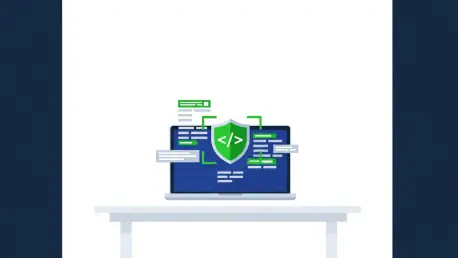

The rapid proliferation of interconnected cloud services and microservice architectures has pushed modern development teams into a state where manual security audits are no longer feasible or effective at scale. Traditional static analysis security testing tools frequently struggle with modern frameworks and dynamic execution paths, leading to significant bottlenecks in the release cycle. OpenAI Codex Security CLI addresses these challenges by applying the deep contextual understanding of generative pre-trained transformers to the specific task of threat modeling. Unlike legacy scanners that rely on rigid regular expressions, this command-line utility evaluates the semantic flow of data to pinpoint where user-controlled input might inadvertently compromise the system. This approach transforms code scanning from a reactive compliance checkbox into a proactive defensive measure that evolves alongside the codebase. Developers have reported a significant decrease in the time required to triage errors.
1. Logic
The core strength of the Codex-based approach lies in its ability to understand the programmer’s intent through natural language processing capabilities. Traditional tools often flag benign code patterns as critical vulnerabilities, a phenomenon known as noise, which can desensitize developers to genuine threats. By contrast, the OpenAI Codex Security CLI utilizes high-dimensional embeddings to map out the relationship between different functions and variables across a repository. This allows the tool to recognize when a specific pattern, which might look suspicious in isolation, is actually safe due to pre-existing sanitization logic implemented elsewhere in the application. Furthermore, the CLI can identify “zero-day style” logic flaws that do not match any existing signature in a database. For instance, if a developer mistakenly exposes an internal administrative endpoint through an poorly configured middleware wrapper, the engine can infer the danger by checking the actual data flow in context.
Building on this semantic foundation, the automation of code scanning now includes the capability to interpret comments and documentation alongside the executable logic. This holistic view enables the CLI to detect discrepancies between what a developer intended a function to do and what it actually performs. If a header comment specifies that a function must only be called by authenticated users, yet the logic lacks a verification check, the tool flags this as a critical logic deviation. This level of insight was previously only available during peer reviews or expensive third-party audits. Moreover, the tool continuously learns from the feedback loop within a specific organization, adjusting its sensitivity based on the unique coding standards and risk tolerance of the business. This adaptability ensures that the security posture remains robust even as the tech stack evolves from monolithic architectures to serverless environments for every individual engineer on the team.
2. Flow
Integrating the OpenAI Codex Security CLI into the modern DevOps pipeline creates a seamless transition from development to deployment without introducing friction. Developers can invoke the tool locally before pushing a commit, receiving immediate feedback that allows them to rectify security oversights while the context is still fresh in their minds. This “shift-left” strategy is essential for maintaining the agility required in a competitive market where updates are deployed multiple times a day. The CLI is designed to be highly modular, allowing it to hook into GitHub Actions, GitLab CI, or Jenkins with minimal configuration. When a pull request is initiated, the automated scanner performs a deep dive into the diffs, focusing specifically on the impact of the new changes on the existing security surface area. This targeted analysis saves significant compute resources compared to full-system scans and provides concise summaries that help reviewers understand the security status.
The implementation of the OpenAI Codex Security CLI fundamentally changed the landscape of automated code scanning by bridging the gap between intent and execution. Developers who adopted this technology found that they were able to eliminate common vulnerabilities long before they reached a production environment. The transition from rigid, rule-based systems to fluid, context-aware analysis provided a level of protection that was previously unattainable for many mid-sized firms. Security leaders leveraged the detailed insights to refine their internal training programs and focus on higher-level architectural threats. To maximize the benefits of this tool, organizations began by auditing their high-risk repositories and establishing clear guidelines for AI-assisted remediation. This proactive stance ensured that the move toward intelligent automation remained a necessary and successful evolution in maintaining the resilience of global digital infrastructure. The industry as a whole moved toward security.