
Modern streaming services have spent years refining the art of the infinite scroll, yet many enthusiasts find that the convenience of a flat digital grid pales in comparison to the tactile joy of wandering through a physical video store. While platforms like Netflix or Disney Plus prioritize algorithmic efficiency, a growing subset of the home theater community is seeking ways to reintroduce the friction and atmosphere of the analog era into their high-definition libraries. This desire for a tangible connection to media has led to the development of innovative front-ends that do not just list titles but instead recreate the specific geographic and sensory experience of a 1990s rental outlet. By leveraging the flexibility of the open-source Jellyfin media server, creators are now able to transform sterile metadata into a fully realized three-dimensional space that users can navigate with a keyboard or game controller. This shift represents a broader movement toward experiential software design where the interface becomes as much a part of the entertainment as the movie itself.
The Architecture of Nostalgia
Virtual Rental Environments: A New Way to Browse
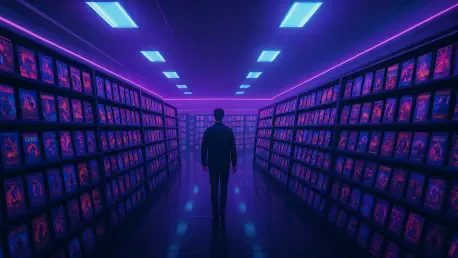
The core appeal of this software lies in its ability to generate a procedural 3D environment that mimics the layout of a classic retail space, complete with carpeted floors and neon-lit signage. Unlike traditional skins that merely change colors or fonts, this tool uses a Three.js engine to render a walkable shop where every movie in a Jellyfin collection is represented as a physical VHS box on a shelf. Users are granted the agency to move through aisles categorized by genre, observing how the light from virtual overhead lamps reflects off the plastic casings of their favorite films. This spatial organization provides a cognitive anchor that flat lists lack, allowing for a more serendipitous discovery process similar to how one might have stumbled upon a cult classic while browsing the horror section decades ago. The implementation of specific visual cues, such as the wear and tear on rental cases or the flicker of a distant CRT television, serves to deepen the immersion.
Technical Integration: Connecting to the Jellyfin Backend
Achieving this level of visual fidelity requires a robust connection to a media server that can handle high-quality metadata and image assets without significant latency or loading delays. The application operates as a separate web interface that communicates directly with a user’s Jellyfin instance through standardized APIs to pull movie posters, descriptions, and file paths. Once the connection is established, the software dynamically skins the 2D poster art onto 3D models of tape boxes, ensuring that the entire library is populated correctly regardless of how many thousands of titles a collector might possess. This separation of the front-end interface from the back-end database allows for greater stability, as the heavy lifting of media transcoding remains the responsibility of the server while the client focuses on rendering the aesthetic experience. Modern web standards ensure that the virtual store can be accessed across various devices, provided the hardware can handle basic rendering.
Beyond Static Interfaces
Customization and Visual Fidelity: Tailoring the Experience
Beyond the initial setup, the software provides a suite of configuration options that allow users to customize the specific atmosphere of their virtual store to match a particular era or personal preference. This includes adjustable post-processing effects like scanline overlays, chromatic aberration, and grain filters that replicate the look of low-resolution analog video output. Users can also modify the floor plan of the store, adjusting the density of the shelves or the lighting schemes to create anything from a bright, corporate blockbuster environment to a dimly lit, independent basement shop. These aesthetic choices are not merely cosmetic but influence how a user interacts with their media by setting a specific psychological tone before a single frame of a movie is played. The inclusion of specialized soundscapes, such as the hum of an air conditioner or the faint sound of music in the background, further rounds out the sensory experience of the digital curator.
Actionable Insights: The Future of Personal Media
Looking back at the development of these niche interfaces, it became clear that the future of personal media management relied on the successful blending of high-tech efficiency with high-touch emotional resonance. Enthusiasts who adopted these 3D environments found that they spent more time appreciating their collections and less time fruitlessly scrolling through rows of generic thumbnails. The move toward modular, community-driven front-ends suggested that the industry might eventually shift away from the “one size fits all” approach of major tech conglomerates in favor of highly personalized experiences. To capitalize on this trend, users were encouraged to prioritize high-resolution metadata and curated artwork, as these assets served as the foundation for any advanced visual simulation. Ultimately, the success of projects like Halcyon Video proved that the human desire for a sense of place remained strong. By treating a digital library as a living space, collectors reclaimed the magic of cinema.