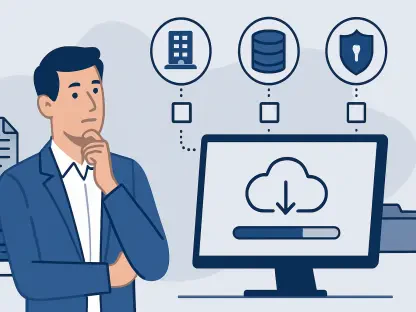

Establishing an automated pipeline for generating work summaries is no longer a luxury but a necessity for engineering teams operating in high-security environments where data privacy remains paramount. Organizations frequently struggle with the labor-intensive task of distilling fragmented developer logs into polished, professional reports that stakeholders can actually utilize for decision-making. While cloud-based large language models offer significant capabilities, the risk of exposing proprietary codebases or internal project roadmaps often prevents their adoption in sensitive sectors. By deploying local agents on internal infrastructure, firms can now bridge the gap between messy, unstructured developer input and high-quality output without sacrificing data sovereignty. This shift towards on-premise intelligence allows for a more granular level of control over the data lifecycle, ensuring that every piece of information processed remains within the corporate firewall. As the volume of development data increases, the ability to synthesize this information efficiently becomes a core competitive advantage for modern technical departments.
1. Establishing Protocols for Data Standardization and Content Segmenting
The first critical phase in the automation journey involves the transformation of disparate, free-form report entries into a uniform, machine-readable format. Developers often contribute to logs through various channels, including Slack snippets, Git commit messages, or localized markdown files, leading to a significant lack of structural consistency. A standardized input schema ensures that the local AI agent can process various writing styles and terminologies without encountering semantic confusion. By implementing a normalization layer that strips away idiosyncratic formatting and aligns time-stamps, task IDs, and author tags, the system creates a high-fidelity dataset ready for ingestion. This standardization process serves as the bedrock for all subsequent analytical steps, allowing the underlying model to focus on the semantic content of the work rather than deciphering structural anomalies. Without this foundation, the AI risks generating fragmented summaries that fail to capture the true scope of technical contributions.
Once the data is normalized, the system must address the inherent memory constraints of local, resource-efficient language models by implementing intelligent content segmenting. Because these models typically operate with specific context window limits, the application partitions large monthly reports into smaller, manageable batches of approximately twenty reports each. This prevents the model from losing focus or exceeding its processing space, which could lead to hallucinations or the omission of vital task details. Each segment is treated as an independent processing unit, ensuring that the local hardware can maintain high inference speeds and accuracy levels. This batch-driven approach also allows for better error recovery; if a single segment fails to process, the system can retry that specific batch without restarting the entire pipeline. By respecting the hardware’s physical limits, the workflow maintains a consistent throughput of information that is both reliable and scalable for larger engineering departments.
2. Enhancing Depth Through Contextual Integration via API
The primary weakness of raw developer notes is their lack of external context, a problem the agent solves by identifying Jira ticket IDs and automatically fetching full descriptions. Vague entries like “fixed bug in backend” are transformed into professional summaries by querying the Jira API for the original issue description, priority level, and technical specifications. This integration ensures that the final work list reflects the actual business value and technical complexity of the tasks performed, rather than just the developer’s brief notes. By enriching the internal log with external project management data, the system builds a comprehensive narrative for each work item. This contextual bridge allows stakeholders to understand the “why” behind every task, linking daily activities directly to high-level project milestones. The automated fetching process eliminates the need for manual cross-referencing, saving dozens of hours of administrative labor across the engineering lifecycle.
Building on this enriched data, the agent performs a deep semantic synthesis to replace developer shorthand with clear, professional language tailored for a non-technical audience. Many developer reports contain acronyms, internal jargon, or highly specific technical references that do not translate well into executive summaries. The local model acts as a sophisticated translator, using the retrieved Jira descriptions to expand on technical nuances while maintaining a tone suitable for corporate reporting. This step is crucial for maintaining transparency with clients or management who may not be familiar with the intricacies of the codebase. The result is a work list that reads as a cohesive, well-documented narrative of progress rather than a disconnected list of technical chores. This level of professional refinement ensures that the output is immediately ready for distribution, requiring only a cursory review rather than a complete rewrite by a project manager.
3. Refining Output via Noise Removal and Candidate Selection
A significant challenge in automated reporting is the presence of filler language and non-essential entries that clutter the final work list. The automated filter within the local agent scans specifically for generic phrases such as “working on,” “in progress,” or “meetings attended,” which do not represent concrete, completed accomplishments. By identifying and removing these entries, the AI ensures that the final list remains focused on high-impact results and measurable progress. This noise removal process is governed by a strict heuristic that prioritizes outcome-oriented descriptions over activity-based logs. Consequently, the final report provides a streamlined view of what was actually delivered, which is essential for accurate performance tracking and billing. Removing the “fluff” from developer reports significantly improves the readability of the output, making the most important achievements stand out to the reader.
Following the cleaning phase, the system moves into candidate selection to identify the most relevant entries from the refined pool of work items. The agent selects a specific number of items based on the individual project’s reporting requirements, ensuring that the volume of information is appropriate for the intended audience. If a project requires a high-level executive summary, the agent prioritizes major features and critical bug fixes; for a more detailed technical audit, it retains a broader set of tasks. This selection logic is dynamic, allowing the system to adapt to the specific needs of different departments within the organization. By tailoring the output size and scope, the agent prevents information overload, which is a common problem in manual status reporting. This intelligent pruning ensures that only the most significant contributions are highlighted, reflecting a curated and strategic view of the engineering effort.
4. Executing Multi-Step Semantic Redundancy Validations
To maintain the integrity of long-term project logs, the system must ensure that no task is repeated from previous months through a rigorous semantic redundancy check. This process begins with vector transformation, where each work item is converted into a numerical representation, known as an embedding, that captures its underlying meaning. These embeddings allow the system to look beyond the literal words used and understand the actual task being described. For example, “optimization of database queries” and “speeding up SQL calls” would be recognized as semantically similar despite the different wording. This mathematical approach to language allows for a much higher degree of accuracy than simple keyword matching. By maintaining a historical database of these vectors, the system creates a permanent memory of all previously reported work, which serves as the reference point for all new entries.
The second part of the redundancy check involves a similarity assessment where the system compares the new vector against the historical database for that specific project. If an entry is found to be more than 85% similar to an existing record, it is flagged as a duplicate and immediately discarded by the rejection thresholding logic. This high-precision filtering prevents the same bug fix or feature development from appearing in multiple monthly reports, which is a common error in manual documentation. By enforcing this threshold, the organization can guarantee that every item on a work list represents new, unique progress. This not only improves the quality of the reports but also builds trust with stakeholders who rely on these lists for accurate progress tracking. The automated nature of this comparison ensures that the check is performed consistently and comprehensively, regardless of the volume of tasks being processed.
5. Architecting On-Premise Technical Deployments
The technical success of this pipeline depends on the selection of an appropriate model that can run efficiently on standard CPU hardware without the need for expensive GPUs. A compact model like Gemma 4 E2B, featuring five billion parameters, is ideally suited for this task as it balances linguistic capability with low computational requirements. Using such a model allows the entire system to be hosted on existing internal servers, reducing the total cost of ownership while maintaining the highest levels of data security. Effective prompt engineering is also critical, requiring the definition of strict roles for the AI and providing clear examples of desirable and undesirable outputs. Setting the model’s “temperature” to zero ensures that the results are consistent and predictable, which is vital for professional reporting where creative variation is unwanted. These technical choices create a stable environment where the agent can perform repetitive tasks with high reliability.
To maximize operational efficiency, the entire report generation process was configured as an overnight task, executed via a standard cron job. This scheduling handled the longer processing times sometimes required by CPU-only hardware, ensuring that the final, cleaned work list was ready for human review by the following morning. By running the agent during off-peak hours, the system utilized idle server resources and avoided any impact on the daily technical operations of the engineering team. The transition to this automated schedule allowed the department to move from reactive, last-minute report preparation to a proactive, continuous documentation cycle. This approach proved that local AI agents could be integrated into existing infrastructure with minimal disruption. The resulting workflow demonstrated a sustainable model for engineering management, where the burden of administrative tasks was successfully shifted to secure, local automated agents.
6. Realizing Long-Term Productivity Gains and Strategic Implementation
The deployment of a secure local agent for work list generation transformed the administrative landscape of the engineering department by eliminating manual bottlenecks. Organizations that adopted these local-first AI pipelines observed a significant reduction in the time spent by senior developers on status reporting, allowing them to refocus on core architectural challenges. The standardized data flow ensured that all project documentation remained consistent, regardless of which team member contributed to the original logs. This consistency improved the quality of internal audits and simplified the onboarding process for new project managers who needed a clear history of technical progress. By keeping the entire inference process on-premise, the security team maintained full oversight of the data, satisfying all compliance requirements for sensitive client work. The project successfully proved that high-performance AI tools did not require a trade-off with data privacy.
Moving forward, the focus shifted toward expanding the capabilities of the local agent to include predictive project tracking and automated risk assessment based on historical task vectors. The groundwork laid by standardizing data and implementing semantic similarity checks provided the necessary data structures for more advanced analytical tools. Engineering leaders were encouraged to refine their internal APIs to provide even richer context to the agent, further reducing the need for human intervention in the reporting cycle. As local models continue to improve in efficiency, the cost of running these sophisticated agents on standard hardware will likely decrease even further. The implementation of this pipeline served as a blueprint for other departments looking to automate repetitive tasks while keeping their data strictly internal. This strategy ensured that the organization remained at the forefront of technical innovation while adhering to a rigorous security posture.