
Listen to the Article
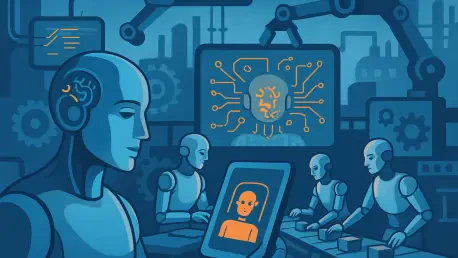
Decision clarity and the ability to direct autonomous systems at scale now define the main constraints in software delivery. In several early adopters, engineers begin their day triaging pull requests, test evidence, and risk flags created overnight by coordinated AI agents. Human teams set direction, while agent teams handle the heavy lifting. This leads to a fundamentally different production system.
Consider this transition as a redesign of management rather than merely an upgrade of tools. Successful companies redefine roles, workflows, and controls, positioning humans as leaders in orchestration and quality oversight. This approach leads to shorter cycle times, improved quality, and reduced unit costs. Conversely, if this shift does not occur, AI may become just a flashy add-on that loses effectiveness after initial use.
From Pair Assistants to Agent Factories
Progress in the SDLC is unfolding across four levels:
At Level 1, a developer writes and reviews all code; throughput scales linearly with headcount.
At Level 2, an AI pair assistant predicts lines, writes boilerplate, and suggests tests; individuals complete tasks faster, but the workflow remains human-centered.
At Level 3, a developer describes a feature and an agent produces code, tests, and documentation for a first pass; entire steps move off the critical path.
At Level 4, a small team directs a coordinated system of agents that design, code, test, integrate, and document; human attention shifts to architecture, constraints, and risk.
Most organizations sit at Level 2. Level 3 is spreading as large language models can now run longer, multi-file workflows with traceable outputs. Level 4 is emerging, with credible pilots across financial services, telecom, and travel.
The productivity evidence at Level 2 is mixed and context-dependent. A large multi-company RCT spanning Microsoft, Accenture, and a Fortune 100 firm, involving nearly 5,000 developers, found a 26% average increase in productivity with GitHub Copilot access. A UK government trial involving 2,500 public-sector developers found that participants saved an average of 56 minutes per working day.
However, a July 2025 randomized controlled trial by METR on 16 experienced open-source developers found AI tools increased task completion time by 19%, with overhead from prompting, reviewing, and debugging exceeding coding speedup on complex tasks in mature codebases. The honest summary: gains are real and significant for well-scoped, structured tasks, and marginal or negative for complex work in messy systems. That makes work decomposition and clean architecture preconditions, not nice-to-haves.
What Separates Top Performers
Buying tools does not move the needle. Redesigning the operating model does. BCG’s December 2025 State of GenAI Across SDLC survey found that top decile performers achieve more than 30% productivity gains and more than 25% quality gains, while companies with bold ambitions are targeting 2x improvements. The rate of organizations scaling or fully deploying AI in one or more SDLC use cases tripled from 9% in 2024 to 28% in 2025.
Three patterns separate leaders. High performers invest in hands-on upskilling through simulator sprints, code labs, and coaching tied to real backlogs, not classroom overviews. They track release frequency, lead time for changes, change failure rate, defect escape rate, and customer experience metrics rather than seat counts. And they tie AI goals to performance plans for product managers, engineering managers, and staff engineers, with guardrails and model choices codified rather than left to chance.
Inside an Agent Factory
An agent factory operates as a two-shift production line. Daytime is judgment, design, and direction. Overnight is execution, iteration, and improvement.
During the day shift, the human team converts intent into agent-ready work: refined user stories, acceptance criteria, affected modules, and explicit constraints. Overnight, a coordinated fleet runs multistep workflows. Coding agents implement changes. Test agents generate and execute test suites.
Security agents check secrets, dependencies, and policies. Performance agents benchmark and flag slow paths. Documentation agents update references and change notes. An orchestrator manages handoffs and policies. Failed tests route to a fix agent, and policy violations pause the workflow for human review.
By morning, the system delivers pull requests with code, evidence, and a natural-language rationale. The engineering platform enforces identity, access, logging, and quality gates so agents work within clear limits.
The Non-Obvious Foundations
Agent factories run on disciplined inputs and hard guardrails. Crucials ones are as follows:
Spec-Driven Development: Agents perform best when instructions are clear and the environment is rich. Provide architecture diagrams, data models, API contracts, non-functional requirements, and explicit acceptance criteria. Good outputs depend on good context.
Work Decomposition: Break features into small, well-defined tasks with clear inputs and outputs. Large, monolithic tickets can cause agents to stall or lose focus.
Enterprise Knowledge Graphs: Connect code, services, documents, decisions, and owners into a navigable map. This allows agents to easily locate facts and dependencies, reducing erroneous assumptions and the need for repeated context lookups.
Human Review as an Editorial Function: Senior engineers should act as editors-in-chief by spotting architectural drift, evaluating trade-offs, and adjusting guardrails based on observed failure patterns.
FinOps for AI: Tokens are a variable cost that compounds. Track tokens per accepted pull request and per successful test run. Set spend alerts and cut off loops that chase diminishing returns.
The economics have shifted materially. Frontier model token prices fell by approximately 79% per year between early 2023 and mid-2024, with the fastest price drops (up to 900x per year on comparable performance benchmarks) accelerating after January 2024. Lower break-even thresholds change the ROI calculation for agent-heavy workflows significantly.
Policy and compliance built in: Configure agents to respect data residency, license obligations, and access scopes. Require evidence of provenance in every artifact. Treat legal, security, and audit checks as first-class steps.
Economics and Measurement
Frame the economics in terms of unit cost and risk, instead of focusing on features: total engineering cost plus AI operational cost plus platform expenses, divided by the number of pull requests that are merged and meet a predefined quality standard.
Track these signals to confirm productivity is real:
Lead time for change (from code committed to running in production),
Release frequency (production releases per week),
Change failure rate (percentage of releases causing incidents),
Mean time to restore service,
Escaped defects (per thousand lines of code),
Security issues per release, and
Average tokens per accepted pull request as a spend-performance signal.
Tie these to product outcomes. Faster cycle time must show up as improved activation, conversion, or retention for customer-facing systems. For internal platforms, track consumption, incident trends, and ticket resolution time. McKinsey’s analysis of organizations embedding AI across development workflows found gains of up to 30% faster time-to-market alongside higher customer satisfaction scores, with the strongest results in organizations that redesigned workflows rather than adding AI on top of existing processes.
Governance for Agents
Agents are services that require explicit SLAs and clear accountability. Set SLAs covering evidence completeness (every change must include rationale, test evidence, and security scans), policy compliance (no use of unapproved licenses, models, or data scopes), rollback readiness, run budgets (maximum tokens and steps per workflow with stop conditions), and traceability (all actions logged with identities and links to artifacts).
Assign ownership. A named engineering manager owns agent configuration, guardrails, and spend for each codebase. A named product manager owns the value delivered per agent run. This prevents shadow automation that creates silent risk.
When to Lead Versus Fast-Follow
Not every company should rush to Level 4. Lead now if software is the profit engine or main differentiator, if regulatory change and customer expectations outpace current release cycles, if the enterprise carries a heavy legacy modernization backlog, or if the company operates across markets where reuse compounds return. Fast-follow if the product roadmap does not demand rapid iteration, risk appetite is low, or vendor ecosystems can cover most needs with off-the-shelf automation.
Even for fast followers, Levels 2 and parts of Level 3 deliver immediate value in test creation, documentation, and refactoring. Early wins build the data and skills needed for later stages.
Conclusion
AI is revolutionizing software delivery by enabling better coordination between humans and agents, moving away from a tedious step-by-step process. The main advantage lies in improving project clarity and providing essential evidence. In the next two years, success will come to companies that emphasize basics like clear interfaces and straightforward acceptance criteria. Rather than replacing engineering teams, agents will transform workflows, shifting the focus from workload to decision-making.
Companies that treat agents as services with SLAs, measure unit economics, and train engineers as editors will convert AI from novelty into a durable advantage. The 2025 DORA research, drawing on data from more than 3,000 professionals, confirms the direction: higher AI adoption correlates with increased software delivery throughput, but AI acts as an amplifier of existing organizational strengths. It was never going to work as a standalone fix, meaning the management model matters as much as the tooling.