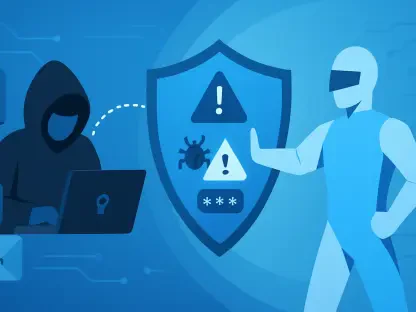

Establishing layers of defense, such as network segmentation and endpoint detection, is required because perfect asset discovery remains an impossible goal in complex environments. This fundamental reality dictates that security architectures must be designed with the assumption that unknown variables already exist within the corporate perimeter. In the modern cybersecurity landscape, the most dangerous threats are often the ones that security teams do not even know exist. Organizations frequently focus their defensive energy on hardening known perimeters, yet they remain vulnerable to the internal invisible, which includes unmanaged devices, rogue applications, and unauthorized services. This visibility gap represents the significant distance between what an IT department believes is on the network and the actual reality of the digital environment. Such a disparity creates a massive blind spot that malicious actors can exploit with ease. As technology shifts from traditional hardware toward decentralized cloud services, the foundational paradox becomes clear: total protection is impossible without visibility.
The Evolution: From Shadow IT to Shadow AI
For several years, IT departments have contended with the persistent challenge of Shadow IT, where employees utilize unapproved software to perform their jobs more efficiently. However, the rise of Shadow AI in 2026 has transformed this manageable hurdle into a significantly more complex risk profile. Because artificial intelligence tools are now highly accessible and remarkably easy to integrate into daily workflows, employees can adopt powerful, data-hungry applications in mere seconds. These tools often involve uploading sensitive proprietary information to external servers or deploying autonomous agents that execute multi-step tasks without human oversight. This represents a qualitative shift in how data leaves the controlled environment, as these AI agents often operate with a level of independence that traditional software lacks. The speed of AI adoption has outpaced the ability of most governance frameworks to keep up, leading to a sprawling ecosystem of unauthorized intelligence tools that bypass security.
Beyond the software layer, physical and virtual blind spots continue to multiply through the proliferation of personal devices and temporary infrastructure projects. Whether it is an employee connecting an unmanaged tablet to the corporate Wi-Fi or a development team spinning up a cloud instance for a short-term test that is never properly decommissioned, these assets create unpatched vulnerabilities. These forgotten sensors, abandoned cloud trials, and personal gadgets provide perfect footholds for attackers to move laterally across a corporate network. Often, these intruders stay undetected for long periods because they exist entirely outside of formal governance and monitoring systems. The ephemeral nature of modern computing means that an asset can appear, cause a vulnerability, and disappear before a traditional weekly scan even begins. Consequently, the reliance on legacy auditing methods is no longer sufficient to secure a perimeter that is constantly expanding and contracting in real-time as users interact with the web.
Strategic Discovery: Monitoring and Agentic AI
To effectively combat these invisible risks, organizations must move away from manual, periodic audits and toward a framework of continuous, automated discovery. This proactive approach involves frequent network scanning and the deployment of monitoring tools that can identify unusual traffic patterns or unauthorized connections in real time. In a modern twist on defensive strategy, many security teams are now utilizing sanctioned agentic AI. These are authorized AI tools specifically designed to monitor network behavior, essentially acting as digital detectives that hunt for and catalog rogue AI agents and other unauthorized services operating in the background. By using AI to catch AI, security professionals can match the speed and scale of the modern threat landscape. This continuous visibility ensures that new devices are identified as soon as they attempt to handshake with the network, preventing the long-term residency of unauthorized assets that traditionally occurred between audit cycles.
Once these hidden assets are finally unmasked, they must be seamlessly integrated into a comprehensive risk management strategy that addresses three primary domains: data exposure, infiltration pathways, and governance failure. By categorizing discovered assets based on the specific threat they pose to the organization, security teams can implement targeted layers of defense such as micro-segmentation and advanced endpoint detection. This ensures that even if an asset remains temporarily hidden or unmanaged, the rest of the network is protected by a defense-in-depth strategy that limits the potential for a widespread breach. For instance, segmenting the network ensures that a compromised rogue sensor in a remote office cannot provide a direct path to the central database. This approach shifts the focus from hoping for total visibility to ensuring that lack of visibility does not lead to total catastrophe. It acknowledges the imperfection of discovery while prioritizing the containment of any potential threats.
Human Factors: Culture and Policy Alignment
Effectively securing invisible assets requires more than just technical solutions; it necessitates a profound shift in organizational culture and employee engagement. Most security breaches involving unknown assets are not the result of employee malice or a desire to cause harm, but are instead driven by a sincere desire for higher productivity and efficiency. When employees feel that sanctioned corporate tools are insufficient or too slow for their specific tasks, they are naturally tempted to go off-grid to find better alternatives. Therefore, security leadership must ensure that approved tools are highly functional and that employees understand the specific risks associated with using unauthorized external platforms. A transparent environment where employees can request new tools without facing bureaucratic hurdles reduces the incentive to bypass security protocols. Education must move beyond simple compliance training to explain the mechanics of how a single unauthorized tool can compromise the entire organization.
Ultimately, the process of unmasking the invisible became a continuous journey that demanded both technical vigilance and human-centric policy alignment. Since the state of a network changed by the minute, organizations that treated asset discovery as a static goal found themselves lagging behind sophisticated adversaries. By fostering a culture of transparency and maintaining a rigorous, multi-layered defensive posture, leadership teams successfully narrowed the visibility gap. The objective moved from a reactive state of damage control to a proactive posture where the security team understood the network environment as intimately as the users who operated within it. Security professionals prioritized the implementation of real-time monitoring and emphasized the importance of user feedback to align security with operational needs. This transition ensured that the digital infrastructure remained resilient, as the visibility of assets became a shared responsibility across all departments and roles.