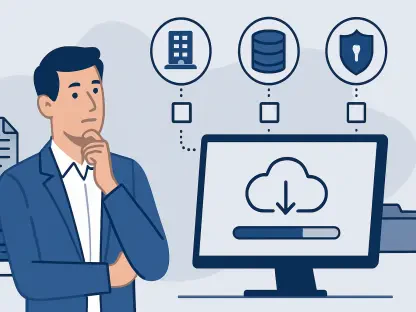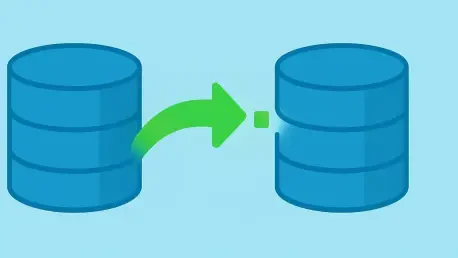

Automated pipeline remediation through Genie ZeroOps demonstrates how shallow clones of production data can be used to safely verify fixes before human approval. This fundamental shift in data architecture addresses the inherent risks associated with autonomous AI agents interacting directly with live databases. In traditional setups, developers faced a binary choice: grant agents read-only access, which limits their problem-solving capacity, or provide write access, which risks catastrophic data corruption. Databricks Lakebase resolves this dilemma by decoupling compute from storage, allowing for the instantaneous creation of writable branches. These branches appear as standard Postgres instances to the agent but are physically isolated from the production environment. This capability ensures that an agent can reason about complex schemas or execute transformations without the business fearing a misplaced command. By providing a safe playground that mirrors production, organizations can finally deploy high-agency AI without the overhead of manual staging environments.
1. Accessing a Specialized Database Instance
Accessing the necessary infrastructure begins within the Databricks ecosystem, specifically through the Lakebase offering. This serverless Postgres implementation is designed to function seamlessly alongside other modern data tools like serverless GPUs and LakeFlow Designer. For organizations starting their journey, the availability of these features in various service tiers, including the Free Edition, lowers the barrier to entry for testing agentic workflows. Unlike traditional monolithic databases where compute and storage are tightly coupled, Lakebase utilizes a decoupled architecture that stores data on lake storage. This separation allows the system to manage storage as a series of page addresses, which is the technical foundation for the branching capability. Instead of cloning entire datasets, the system simply tracks the deltas between the parent and the branch. This means the initial setup of an instance does not require the massive resource allocation typically associated with enterprise-grade databases, making it an efficient starting point.
Once the instance is active, the system provides a familiar Postgres interface that is compatible with existing tools and drivers. This genuine Postgres foundation is crucial because it ensures that AI agents can utilize standard SQL dialects and reasoning patterns without requiring custom modifications for a proprietary database engine. The underlying mechanics involve sophisticated components such as Safekeepers, which utilize the Paxos consensus algorithm to manage low-latency durable writes, and page servers that materialize data on demand from the lake. This architecture guarantees that even though the storage is distributed, the performance and transactional consistency expected from a relational database remain intact. For the developer, this means the provisioning process is nearly instantaneous, allowing the focus to remain on the agent’s logic rather than the infrastructure. The ability to launch millions of database instances daily across a global platform demonstrates that these ephemeral environments are not just a feature but the core operational model for high-frequency tasks.
2. Establishing Strict Environment Isolation
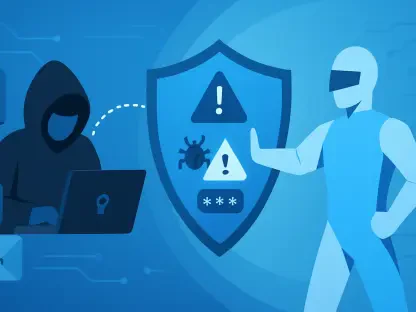
Establishing a protective perimeter around the production environment is the next critical phase of implementation. This involves constructing an isolation layer that physically prevents the AI agent from ever seeing or interacting with the primary production credentials. Rather than providing the agent with a standard Data Source Name (DSN) that points to the live database, the system generates a session that is strictly bound to a temporary branch. This architectural choice ensures that the agent operates within a confined workspace where any action taken—be it a table deletion, a schema modification, or a large-scale data transformation—has no impact on the source data. This level of isolation is achieved through copy-on-write mechanisms, where the branch remains identical to the parent until a change is made. At that moment, the system records only the divergence. This method provides the agent with a perfect representation of production data without the risk of accidental corruption, creating a sandbox that is high-fidelity and safe.
Furthermore, this isolation strategy simplifies the management of secrets and access controls. By wrapping the database connection in a session-bound branch, the security team can enforce granular permissions that are specific to the agent’s current task. This eliminates the need for complex, shared staging environments where multiple agents or developers might interfere with each other’s data. Each run or task can have its own dedicated branch that disappears once the work is completed, effectively removing the concept of a “shared” development database. This shift away from persistent staging environments reduces the ongoing maintenance burden and eliminates the risk of data drift, where a test database slowly becomes unrepresentative of the real world. In the current environment, where agents are increasingly tasked with complex data remediation, this isolation provides the necessary peace of mind for leadership to authorize autonomous actions. The agent remains focused on its objective, while the platform handles the invisible work of separation.
3. Implementing Rigorous Validation Measures
Confirming the results of an agent’s operation is a fundamental requirement that goes beyond simply trusting the agent’s internal success reports. Even the most advanced AI can suffer from hallucinations or logical errors that lead it to believe a task was completed correctly when, in fact, the data state is invalid. To mitigate this, practitioners must implement a validation step that captures key data snapshots both before and after the agent executes its proposed changes. By generating these snapshots, the system can perform a detailed comparison of the data invariants—such as row counts, checksums, or specific column constraints—to verify that the outcome matches the expected goal. This differencing process highlights exactly what was modified, added, or removed, providing a transparent record of the agent’s behavior. This verification mechanism acts as a critical fail-safe, ensuring that only those changes which meet strictly defined structural criteria are ever considered for potential integration into production.
This rigorous approach to validation also serves as a training and auditing tool for improving agent performance over time. When a mismatch is detected between the agent’s reported success and the actual delta recorded in the branch, developers can analyze the specific SQL commands or reasoning steps that led to the error. Because the branch is ephemeral and cost-effective, it can be preserved in its failed state for human forensic analysis without blocking other processes. This allows for a continuous feedback loop where the agent’s logic is refined based on real-world failures encountered in a safe environment. Additionally, these validation checks can include custom business logic that the agent might not be aware of, such as ensuring that financial totals across disparate tables remain balanced after a migration. By embedding these checks into the workflow, the system creates a multi-layered security model where the isolation prevents damage, and the validation layer prevents the promotion of incorrect logic for data integrity.
4. Executing Agent Tasks Safely
Executing the agent’s task within the isolated branch is where the theoretical safety of the architecture meets practical application. During this stage, the agent is permitted to perform its operations with full write privileges, allowing it to act on its own diagnostic findings without constraint. Whether the task involves fixing a broken data pipeline, updating outdated schemas, or performing complex data cleaning, the agent can iterate through multiple attempts if necessary. If a particular approach fails or produces an undesirable state, the branch can be instantly reset or a new one can be created from the parent snapshot in a matter of milliseconds. This freedom to fail is what enables the high-agency behavior required for modern data operations. The production data remains untouched and secure, shielded by the architectural barrier of the branch. This allows organizations to move away from slow, manual approval processes for every minor change, moving toward a model where the agent proves its competence in the sandbox first.
The efficiency of this execution phase is further enhanced by the sub-second provisioning times inherent to Lakebase. Traditional database cloning methods often required minutes or even hours to prepare a suitable test environment, a delay that often discouraged the use of proper isolation in favor of riskier quick fixes. In the current landscape, the ability to spin up a fully featured database instance in under 500 milliseconds transforms the developer experience. Agents can complete their loops in real-time, responding to data quality issues or schema errors as they occur. This responsiveness is particularly valuable for time-sensitive operations where a delay in remediation could lead to downstream data corruption in other systems. By making the safe path the fastest path, the platform ensures that security protocols are followed by default. The result is a more resilient data infrastructure where autonomous agents can contribute meaningfully to system uptime without introducing new vectors for human or machine error.
5. Applying the Operational Loop Pattern
The operational loop pattern, exemplified by the Genie ZeroOps framework, represents the pinnacle of automated data management strategies. This cycle begins with the investigation phase, where the agent identifies a failure or a necessary optimization within a data pipeline. Once the problem is diagnosed, the agent moves into the drafting phase, constructing a potential solution or migration script. The crucial next step is the cloning process, where a shallow, point-in-time copy of the production environment is generated instantly. This clone serves as the staging ground for the deployment and testing phase, where the proposed fix is applied and verified against the actual data it will eventually encounter in production. This end-to-end process ensures that every proposed change is road-tested against reality before it ever leaves the development environment. By automating the creation and destruction of these test environments, the system maintains a high velocity of updates while ensuring that each change is structurally sound.
The final stage of this loop involved human review, which remained a critical component of the overall security posture. Once the agent had verified its fix on the clone and confirmed that all data invariants were maintained, it presented the results as a pull request. This request included the proposed code changes and a detailed summary of the data deltas observed during the test run. This allowed human operators to inspect the final results and provide explicit approval before any changes were merged into the actual production environment. This collaborative model leveraged the speed and scale of AI for the heavy lifting of diagnosis and testing while it retained human oversight for strategic decision-making. By adopting this pattern, organizations scaled their data operations significantly, managing complex environments with fewer manual interventions. The transition to this automated remediation model effectively turned database management from a reactive chore into a proactive, machine-assisted discipline.