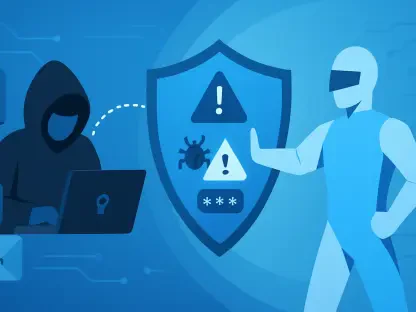

Modern cybersecurity threats have evolved beyond the capabilities of traditional static defense mechanisms, forcing organizations to rethink how they maintain operational integrity in an increasingly volatile digital landscape. In the current landscape of 2026, the reliance on manual security interventions has proven insufficient against automated, AI-driven exploits that target vulnerabilities within seconds of their discovery. This reality has catalyzed a significant shift toward adopting Continuous Integration and Continuous Deployment (CI/CD) methodologies within the Security Operations Center (SOC). By treating security policies, detection rules, and incident response playbooks as version-controlled code, organizations can achieve a level of agility that was previously impossible. This transition is not merely a technical upgrade but a fundamental cultural shift that aligns security teams with the fast-paced delivery cycles of software development. As the boundary between infrastructure and security blurs, the application of CI/CD frameworks offers a promising path toward building a truly resilient and adaptive security posture.
The Core Integration: Security as Versioned Code
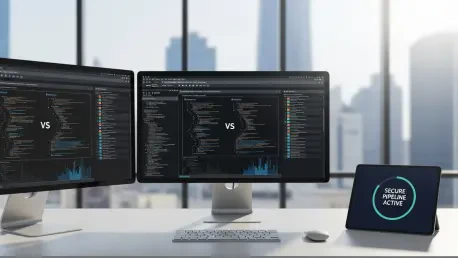
Integrating security into the CI/CD pipeline requires a transition from manual configuration management to a centralized, version-controlled repository system that treats every security rule as a piece of software. In this environment, security analysts utilize platforms like GitHub or GitLab to manage Sigma rules, YARA patterns, and SOAR playbooks, ensuring that every change is documented, tested, and peer-reviewed before being deployed to production environments. This approach eliminates the “lone wolf” mentality where a single administrator might make unrecorded changes to a firewall or SIEM, which often leads to configuration drift and hidden vulnerabilities. Instead, the use of automated testing frameworks within the pipeline validates that new security logic does not break existing detections or cause performance bottlenecks. By enforcing these rigorous standards, organizations ensure that their security operations are as stable and predictable as their production applications, creating a robust foundation for defense.
Beyond version control, the CI/CD framework introduces the concept of automated staging for security operations, allowing teams to simulate attacks against new detection logic in a sandboxed environment. This phase of the pipeline is crucial for identifying false positives that could otherwise overwhelm a SOC with irrelevant alerts, thereby reducing analyst fatigue and improving the signal-to-noise ratio. Using tools like Atomic Red Team or automated breach and attack simulation (BAS) platforms, security engineers can verify that a specific rule triggers only under the intended conditions. This systematic validation process mirrors the unit testing found in software development, providing a quantifiable measure of confidence in the defensive layer. When security logic passes these automated hurdles, it is seamlessly pushed to global security controllers, ensuring that protective measures are updated across the entire enterprise simultaneously. This level of synchronization is essential for maintaining consistency in multi-cloud and hybrid environments where fragmented security policies often create gaps for attackers.
Operational Resilience: From Automation to Execution
The evolution of automated response protocols marks a turning point in how organizations handle the massive volume of telemetry generated by modern infrastructure and cloud-native services. By leveraging CI/CD principles, security teams can develop and deploy automated remediation scripts that react to identified threats with machine-speed precision, effectively neutralizing malicious activity before it can escalate. For instance, if a detection rule identifies an unauthorized credential harvest attempt, the pipeline can immediately trigger a series of actions such as revoking the affected token, isolating the associated container, and initiating a forensic snapshot for later analysis. This level of orchestration relies on well-defined APIs and tight integration between security tools and the underlying infrastructure providers like AWS, Azure, or GCP. The focus here is on reducing the Mean Time to Remediate (MTTR), which has become a primary metric for evaluating the success of modern security programs. Automation allows human analysts to shift their focus from repetitive tasks toward complex hunting activities.
Building a resilient security operation through CI/CD frameworks required a commitment to continuous improvement and a willingness to embrace modern engineering practices over traditional siloed workflows. Organizations that successfully navigated this transition focused on three primary areas: standardizing their security infrastructure as code, automating the validation of detection logic, and fostering a culture of collaborative review. Analysts recognized that the primary hurdle was often not the technology itself, but the organizational resistance to changing established manual processes. To move forward, it was recommended that teams start by automating a single, high-frequency security task—such as the deployment of updated blocklists—to demonstrate the value of the pipeline to stakeholders. As these smaller successes built momentum, security leaders expanded the scope to include complex multi-stage incident response workflows. Ultimately, the integration of CI/CD into security operations proved that resilience was not a static state to be achieved, but a dynamic capability maintained through constant automation and rigorous testing.