
The rapid expansion of generative artificial intelligence has effectively dismantled traditional supply chain assumptions, leaving global IT departments in a state of perpetual urgency as they navigate a hardware deficit expected to endure until the end of 2027. This crisis is not merely a temporary hiccup in manufacturing logistics but a fundamental structural shift in how computing resources are allocated and consumed on a global scale. As major cloud providers and hyperscalers engage in aggressive procurement strategies to bolster their AI capabilities, the standard enterprise customer is finding it increasingly difficult to source essential components such as high-performance servers, specialized networking switches, and advanced memory modules. The imbalance between supply and demand has reached a tipping point where traditional procurement models are no longer viable, forcing a complete reimagining of corporate technology lifecycles. Organizations that fail to recognize the long-term nature of this scarcity risk stalling their digital transformation efforts entirely. By understanding that this landscape is defined by the heavy footprint of generative AI training and inference, leadership can begin to move away from reactive purchasing and toward a strategic, multi-year approach that emphasizes resilience over convenience in an era of unprecedented scarcity.
Supply and Demand: The Root Causes of Scarcity
The core of the current infrastructure crisis lies in the transition toward AI-centric computing, which has placed an unprecedented strain on global manufacturing capacity that shows no signs of easing in the near term. Major cloud providers are dominating the market by purchasing the lion’s share of available chips and memory to build massive AI clusters, often leaving smaller enterprises and mid-market firms competing for the remaining production capacity. This aggressive procurement behavior has created a “crowding out” effect, where the needs of hyperscalers take priority at specialized fabrication plants. Consequently, smaller organizations face significant project delays and are often forced to settle for older technology generations because the latest hardware is simply unavailable to anyone but the largest buyers. This structural shift has changed the nature of hardware procurement from a routine transactional process into a high-stakes competitive endeavor where timing and scale are the only significant leverage points.
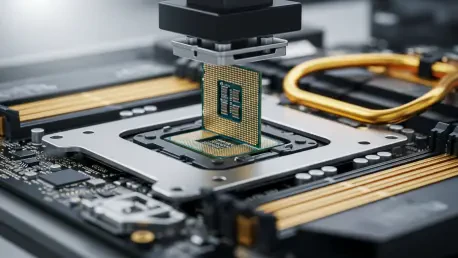
High-bandwidth memory has emerged as a primary bottleneck, dictating the availability of the entire IT stack and causing ripple effects that impact even seemingly unrelated hardware categories. Because advanced memory is a required component for everything from enterprise-grade servers to high-speed networking switches, its scarcity slows down the entire assembly line for modern data center equipment. Industry experts emphasize that the demand for hardware is evolving into two distinct and overlapping waves that will sustain high pressure on the supply chain. While the initial surge was driven by the “training wave,” where massive foundation models were first constructed, the industry has now entered the “inference wave,” where those models are being deployed for real-world applications. This second phase is expected to be even more resource-intensive and persistent, ensuring that the pressure on global manufacturing remains high as thousands of companies attempt to run AI workloads simultaneously.
Market Dynamics: Economic Realities and Procurement
For modern technology departments, the most visible impact of this global crisis is the dramatic extension of lead times for critical hardware components. Historically, businesses could expect a turnaround of about a month for standard server or networking orders, but current market conditions have stretched those timelines to twelve or even eighteen months in some regions. This volatility makes traditional project management extremely difficult, as IT leaders must now commit to hardware purchases long before the specific requirements of a project are fully defined. The inability to rely on “just-in-time” delivery models has forced a shift toward “just-in-case” inventory strategies, which requires significant upfront capital and a much higher tolerance for long-term forecasting risks. This environment favors organizations that can afford to lock in orders far in advance, further widening the gap between technology leaders and those struggling to keep up.
Financial costs associated with IT infrastructure have reached record highs, with certain types of memory and high-performance silicon seeing price increases of over 200% in a remarkably short timeframe. These surges have led to a significant increase in the final price of finished goods, with some server and networking equipment costs more than doubling compared to the previous procurement cycles. Analysts warn that even if the supply chain eventually achieves some level of stability, prices are unlikely to return to their pre-crisis levels, effectively establishing a new, higher baseline for the cost of doing business in the modern digital economy. This “AI tax” is now a permanent fixture of infrastructure budgeting, requiring technology leaders to justify much higher expenditures for the same level of computing power they could have acquired at a fraction of the cost only a few years ago.
Resource Management: Maximizing Existing Assets
To survive this prolonged period of scarcity, many enterprises are opting to “sweat their assets” by extending the operational life cycles of their existing hardware well beyond traditional refresh windows. By conducting rigorous capacity planning and consolidating underutilized virtual servers, companies can free up existing resources to support new initiatives without the immediate need for new hardware purchases. Modern servers and storage arrays are increasingly durable and capable of maintaining high performance levels for several years, allowing many organizations to comfortably push their refresh cycles to six or seven years instead of the standard three or four. This strategy not only mitigates the impact of current shortages but also provides a buffer against the rising costs of new equipment. By focusing on software optimization and more efficient virtualization, IT teams can squeeze every possible bit of performance out of their current data center footprint.
Flexibility in vendor selection has also become a vital survival tactic for IT leaders who are no longer able to rely on a single primary manufacturer. Organizations are increasingly moving away from brand loyalty and adopting a vendor-agnostic approach, sourcing from various manufacturers based on immediate availability rather than long-standing preferences or specific feature sets. Additionally, many firms are turning to alternative silicon sources and the secondary market for refurbished gear to fill critical gaps and maintain project momentum when new equipment is stuck in a production backlog. This diversification requires a more complex management strategy, as IT teams must support a heterogeneous environment with different support contracts and management tools. However, the ability to pivot between suppliers is often the difference between completing a critical digital transformation project on time and seeing it stall indefinitely.
Cloud Integration: Balancing Scale and Physical Limits
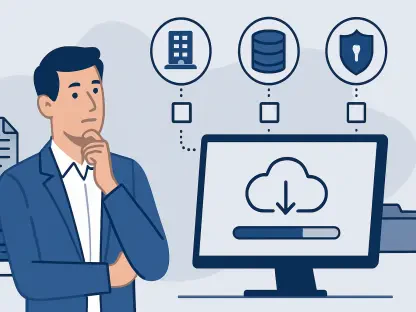
Public cloud services and specialized “neocloud” providers offer an essential safety valve for urgent computing needs that cannot wait for the arrival of physical on-premises hardware. These platforms have prioritized access to the latest GPUs and high-performance networking gear, allowing businesses to start their AI projects or perform essential model tuning in a cloud environment while waiting for their own equipment to ship. This hybrid approach helps maintain a competitive edge by decoupling software development from hardware procurement cycles. By leveraging the scale of cloud providers, companies can experiment with different AI architectures and workloads without committing to a massive capital expenditure on hardware that may be difficult to source. This shift toward cloud-based “bridging” strategies has become a standard operating procedure for many enterprises navigating the current hardware crisis.
Beyond the shortage of chips and memory, the sheer power and cooling requirements of modern AI hardware are creating a secondary crisis in data center management and physical facility design. Modern AI-focused racks consume significantly more electricity than traditional gear, often exceeding the power density and cooling capacity of older facilities that were designed for much lighter workloads. IT leaders must now work closely with facilities teams and electrical engineers to modernize their infrastructure before new hardware even arrives at the loading dock. In many cases, the bottleneck is no longer just the availability of the server itself, but the ability of the building to provide the required megawatts of power and the liquid cooling systems necessary to keep high-performance chips from overheating. This physical constraint adds another layer of complexity to strategic planning, requiring significant lead times for facility upgrades that must run parallel to hardware procurement.
Strategic Governance: A Blueprint for Resilience
The evolution of the hardware market necessitated a much closer partnership between the technology department and the Chief Financial Officer to ensure that long-term procurement goals remained aligned with corporate fiscal realities. Organizations that successfully navigated this period moved toward rolling twenty-four-month forecasts, keeping finance teams constantly updated on market price fluctuations and potential supply chain disruptions. This proactive communication was essential for avoiding “sticker shock” during the budgeting process and for securing the necessary funding for the “AI tax” that impacted nearly every hardware purchase. Strategic leadership shifted from a focus on short-term efficiency to a model centered on long-term resilience, recognizing that the ability to secure computing power had become a primary competitive differentiator. Those who adopted these integrated financial and technical strategies were far better positioned to handle the volatility of the mid-2020s.
Success in the current landscape requires a blend of technical pragmatism and aggressive, proactive financial planning to stay ahead of the next wave of infrastructure challenges. Organizations must prioritize the development of internal expertise in heterogeneous system management and liquid cooling technologies, as these will be essential for the next generation of data center deployments. It is critical to establish stronger relationships with secondary market suppliers and to investigate open-source hardware standards that can reduce dependence on proprietary vendor ecosystems. By diversifying sourcing strategies and maximizing the utility of existing assets, enterprises can ensure their modernization efforts remain on track despite a global infrastructure landscape that is stretched to its breaking point. Moving forward, the most resilient firms will be those that treat infrastructure not as a commodity to be purchased, but as a strategic resource to be carefully cultivated and optimized through every stage of its lifecycle.