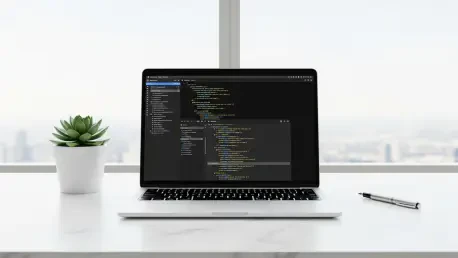

The software engineering landscape experienced a fundamental shift as development environments evolved from static text editors into highly autonomous ecosystems that anticipate developer intent with surgical precision. While early iterations of artificial intelligence in programming functioned primarily as autocomplete engines tucked away inside established integrated development environments, the emergence of a dedicated standalone application represents a significant departure from these humble origins. This transition signifies that AI is no longer merely a feature of a code editor but has instead become the core infrastructure upon which modern software is constructed, debugged, and maintained. By decoupling the AI logic from the traditional constraints of an IDE plugin, developers now gain access to a deeper level of system integration that allows the assistant to perceive the entire workspace context simultaneously. This change addresses the long-standing fragmentation issue where tools struggled to communicate across various terminal sessions and local repositories.
Seamless Integration: Breaking the IDE Barrier
The shift toward a central application allows the AI to function as an orchestrator across the entire local development environment rather than being siloed within a single window or project folder. Instead of requiring manual context switching or the constant copy-pasting of error logs between a terminal and an editor, the system monitors the active state of the machine to provide real-time suggestions based on live feedback. For instance, when a background service fails or a specific network request returns an unexpected status code, the application automatically identifies the anomaly and correlates it with the code changes currently in progress. This holistic view enables a more intuitive debugging experience that mimics the thought process of a senior engineer who understands how different components of a stack interact under pressure. By maintaining a persistent presence outside the editor, the tool manages to reduce cognitive load, allowing developers to focus on architectural decisions while the AI handles the mundane tasks.
Furthermore, the architecture of this new standalone entity facilitates a much more robust handling of large-scale codebases that previously overwhelmed standard plugin-based solutions. Traditional extensions often faced memory limitations and performance bottlenecks because they shared resources with the primary editor, frequently leading to latency during high-intensity coding sessions. The dedicated application environment bypasses these constraints by utilizing independent processing lanes, which ensures that complex refactoring tasks and deep-scan security audits do not impede the responsiveness of the user interface. Consequently, teams working on monolithic architectures or sprawling microservices benefit from an assistant that can index millions of lines of code without degrading the machine’s performance or causing the primary workspace to freeze. This specialized resource allocation provides a level of stability that was simply unattainable when AI was competing for cycles within a browser-based IDE, marking a new era of reliability.
Strategic Implementation: Navigating the New Workflow
Adopting this advanced toolset requires a strategic shift in how organizations approach security and data privacy within their automated development pipelines. Enterprise leaders recognize that a standalone application monitoring system-wide activity necessitates more granular permission structures to ensure that sensitive proprietary data remains protected during the inference process. Teams that successfully integrate these features prioritize the creation of contextual boundaries, which allow the AI to access necessary documentation and local environment variables while strictly walling off restricted credentials and personal information. This proactive stance on security enables developers to utilize the full power of the assistant without compromising the integrity of their internal networks or violating compliance standards. Moving forward, the focus shifts toward refining these permission models to allow for even more autonomous agents that can safely execute shell commands under the watchful eye of a human supervisor.
The transition to a centralized AI coding application established a new baseline for productivity that redefined the expectations of the global software workforce. Engineers who embraced the shift found that their workflows became significantly more fluid, as the barriers between conceptualizing a feature and deploying a production-ready solution began to dissolve. Organizations that invested in comprehensive training for their staff ensured that the human-AI partnership flourished, leading to a marked decrease in technical debt and a noticeable improvement in overall code readability. This evolution demonstrated that the most effective use of artificial intelligence resided not in replacing the programmer, but in amplifying their ability to manage complexity through superior context awareness and automation. Ultimately, the industry moved toward a model where the standalone application served as the primary interface for all technical creation, proving that a dedicated environment was the essential catalyst for excellence.