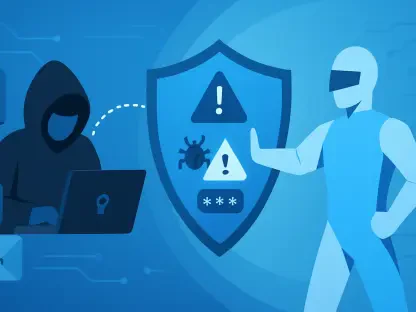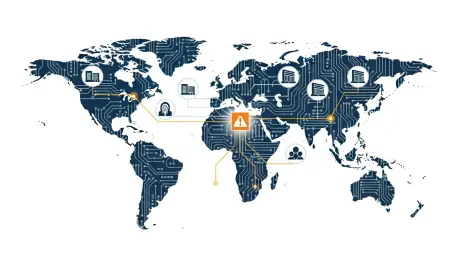

The digital infrastructure of the global economy experienced a profound and unsettling shift during the early months of 2026 as the LiteLLM security breach exposed the inherent vulnerabilities of the modern artificial intelligence supply chain. This incident was far more than a standard software error or a localized data leak; it represented a systemic failure that allowed malicious actors to compromise the very foundations of how enterprises interact with large language models. By infiltrating a central node in the AI ecosystem, the attackers were able to cast a wide net that ensnared thousands of organizations, ranging from emerging startups to multinational conglomerates. This event has fundamentally altered the security landscape, forcing a complete reassessment of trust in third-party integration tools and the automated pipelines that deliver code to production environments. The tech industry now finds itself in a period of intense scrutiny, attempting to bridge the gap between the rapid adoption of AI capabilities and the robust security protocols required to protect sensitive intellectual property and user data from sophisticated threats.
The magnitude of the breach is best understood through the staggering metrics of its impact, which involved more than 2,500 distinct organizations and disrupted over 400,000 individual software development pipelines worldwide. Orchestrated by a threat group identified as TeamPCP, the campaign reached its peak efficiency in March 2026, marking a significant milestone in the history of cyber espionage and financial theft. This particular group demonstrated an advanced understanding of the “middleman” architecture, identifying LiteLLM as a high-value target because it serves as a critical junction connecting disparate AI providers to functional applications. By poisoning the tools that developers rely on to manage these connections, TeamPCP achieved a level of access that traditional perimeter defenses were never designed to prevent. The crisis serves as a stark reminder that the most dangerous vulnerabilities are often found in the small, seemingly innocuous pieces of infrastructure that facilitate the flow of data between major services, rather than in the high-profile models themselves.
The Mechanics: Poisoning the Upstream Supply Chain
The sophisticated nature of the LiteLLM breach is evident in its point of origin, which began several layers removed from the primary target in what security researchers call an upstream supply chain attack. The initial entry point was not LiteLLM itself, but a widely trusted security utility named Trivy, which is used by millions of developers to scan their code for known vulnerabilities. By compromising a tool intended to improve security, the attackers exploited the implicit trust that the developer community places in their defensive stack. This irony was not lost on the industry, as the very mechanism designed to keep malicious code out of production environments became the primary delivery vehicle for a devastating infection. The breach highlights a fundamental paradox in modern software engineering where the complexity of security tooling creates new, unmonitored surfaces for exploitation that are often overlooked during routine audits.
The technical catalyst for this disaster was a single automation token that had been leaked during a previous development cycle, and although it was supposedly rotated, it remained functional within a narrow but critical window. TeamPCP utilized this unrevoked credential to bypass authentication protocols and gain unauthorized access to the core repositories of the Trivy scanner. Once inside, they injected malicious logic into the official builds, ensuring that any developer pulling the latest version of the tool would unknowingly download the corrupted code. This window of opportunity lasted only 40 minutes, but in the world of automated continuous integration and deployment, 40 minutes was more than enough time to infect thousands of systems. The speed at which the poisoned update propagated through the global cloud infrastructure demonstrated the lethal efficiency of modern DevOps practices when they are turned against the very users they are meant to serve.
Cascading Vulnerabilities: From Scanner to Python Package
The infection path followed a complex, multi-stage trajectory that ultimately led to the contamination of the LiteLLM library, a process that illustrated the dangerous interconnectedness of modern software libraries. LiteLLM, acting as a proxy to various AI backends, utilized the compromised Trivy scanner as part of its internal quality assurance and security checks during the build process. When the LiteLLM development team initiated a routine update, their automated systems pulled the poisoned version of Trivy from the official registry. Consequently, the malicious code within the scanner was able to intercept the build process for LiteLLM, injecting a persistent backdoor into versions 1.82.7 and 1.82.8 of the package. This cascading effect meant that any enterprise downloading these specific versions from the Python Package Index was essentially importing a direct link to the attackers’ command-and-control infrastructure.
The publication of these infected versions to a public repository served as the final step in the transmission of the malware to the end-user. Because many organizations use automated tools to keep their dependencies current, the compromised versions of LiteLLM were instantly distributed across a vast array of production environments. The “three-deep” nature of the chain, starting from a leaked token, moving through a security scanner, and landing in an AI integration library, proved that traditional security models focusing only on direct dependencies are no longer sufficient. Developers are now realizing that a compromise at the top of the chain can trickle down through multiple layers of abstraction until it reaches a point where it can do the most damage. This realization has sparked a move toward more rigorous verification of third-party code and a demand for better visibility into the deep layers of the software supply chain.
SANDCLOCK: The Anatomy of an Advanced Stealer
At the heart of the LiteLLM breach was a custom-built piece of malware dubbed SANDCLOCK, which was engineered specifically to target the unique environments found in AI development. Unlike generic ransomware or legacy viruses, SANDCLOCK was designed for stealth and surgical precision, focusing on the discovery and exfiltration of high-value credentials used in cloud-native applications. Its architecture allowed it to operate silently within containerized environments, frequently evading detection by standard monitoring tools that look for more traditional signs of malicious activity, such as high CPU usage or unusual disk access. The malware demonstrated a sophisticated understanding of how AI models are deployed, targeting the specific configuration files and environment variables that hold the keys to the world’s most powerful language models and data processing clusters.
The malware’s persistence mechanism was particularly innovative, leveraging a specific feature of the Python programming language known as path configuration files, or .pth files. By placing a malicious .pth file within the site-packages directory of a system, SANDCLOCK ensured that its code was executed every time the Python interpreter started, regardless of which application was being run. This allowed the malware to initialize itself before any security wrappers or defensive scripts could be loaded, effectively giving it the “first word” in the execution environment. This technique is especially dangerous because it bypasses many of the standard installation-time checks that developers use to flag suspicious scripts. The ability of SANDCLOCK to hide in plain sight within the standard library structure of a common programming language represents a significant evolution in the tactics used by threat actors to maintain a long-term presence on compromised servers.
Data Exfiltration: Stealthy Movements and Cloud Theft
Once SANDCLOCK established a foothold on a system, it initiated a comprehensive search for sensitive credentials, with a primary focus on the digital keys that provide access to major cloud providers. The malware was programmed to automatically scan for configuration folders belonging to Amazon Web Services, Google Cloud Platform, and Microsoft Azure, which often contain long-term access tokens and secret keys. By obtaining these credentials, the attackers gained the ability to manipulate entire cloud infrastructures, potentially allowing them to spin up expensive server instances for cryptomining or to siphon off massive amounts of corporate data from secure storage buckets. The theft of these keys essentially handed the attackers a skeleton key to the entire digital kingdom of an affected organization, bypassing nearly every layer of external perimeter security.
In addition to searching through static files, the malware utilized advanced memory scraping techniques to find passwords and tokens that were currently in use by active processes. This allowed the attackers to capture temporary credentials and session tokens that are never written to disk, making them incredibly difficult to protect using standard file-based encryption. The malware would wait for a developer or an automated process to authenticate with a service and then snatch the relevant data directly from the system’s random-access memory. This approach highlights the extreme vulnerability of the “execution phase” of software, where data must necessarily be decrypted and accessible to the processor. The ability to intercept secrets at the exact moment of their use proved that even the most robust encryption at rest is useless if the runtime environment itself is compromised by a sophisticated actor.
Exploitation Tactics: GitHub as a Staging Ground
The method by which SANDCLOCK exfiltrated stolen data was perhaps its most brazen feature, as it used the victims’ own infrastructure to hide its tracks. Instead of sending the stolen keys directly to a suspicious third-party server, which might be flagged by network firewalls, the malware often attempted to create private or hidden folders on the victim’s own GitHub or GitLab accounts. By using legitimate API calls to these trusted platforms, the malware made its data transfers look like normal developer activity, such as pushing code or updating documentation. In many cases, the hackers even forced the victim companies to host their own stolen data by creating public repositories under the organization’s name, essentially using the victim’s reputation as a shield to store and distribute the stolen credentials to other members of the TeamPCP group.
This use of trusted platforms for data staging represents a significant challenge for network security teams who have traditionally relied on blocking known malicious domains. When the “command-and-control” traffic is directed toward a site like GitHub, which is essential for daily business operations, it becomes nearly impossible to distinguish between a legitimate code commit and a malicious exfiltration event. The attackers further protected this data using high-level encryption, ensuring that even if the suspicious transfers were noticed, the contents of the files would remain unreadable to everyone except the hackers. This tactic forced organizations to confront the reality that their most trusted collaboration tools could be weaponized against them, turning the very heart of their development culture into a conduit for cybercrime and data theft.
Impact Analysis: A Directory of Vulnerable Giants
The aftermath of the LiteLLM breach revealed a list of affected organizations that read like a directory of the most influential entities in the modern technological and financial landscape. High-confidence matches in the exposed data included giants such as NVIDIA and AWS, indicating that even the companies providing the underlying infrastructure for the AI revolution were not immune to supply chain risks. Other household names across various sectors, including Samsung in electronics, FedEx in logistics, and Volkswagen in automotive manufacturing, were also identified as having significant exposure. The diversity of these victims illustrates that the risk is not confined to any single industry; rather, it is a universal threat facing any organization that attempts to integrate advanced AI capabilities into their operational workflows.
The volume of data exposed for certain companies was particularly alarming, with some large technology firms seeing thousands of internal secrets, such as database strings and API tokens, flagged in the attackers’ databases. This volume suggests that the automated harvesting tools used by TeamPCP were incredibly efficient, capable of sifting through millions of files and terabytes of memory in a fraction of the time it would take a human analyst. While not every organization whose data was flagged suffered a catastrophic loss, the potential for future exploitation remains high as long as those secrets remain active. The breach has created a massive “security debt” for the global economy, as organizations must now spend months, if not years, identifying and rotating every possible credential that might have been compromised during the incident.
Strategic Junctions: The Modern Rail System Analogy
Security experts have drawn a compelling parallel between the current AI infrastructure and the strategic rail junctions of the industrial age, noting that control over a few key points provides control over the entire system. In the nineteenth century, the city or the army that controlled the point where different train lines met could dictate the flow of goods and resources across a continent. Today, AI gateways and integration tools like LiteLLM serve as the digital version of these junctions, acting as the central nexus where application logic, sensitive data, and cloud compute power all converge. By targeting these gateways, a hacker does not need to break into every individual server or database; they only need to compromise the one point that has permission to talk to all of them, granting them unparalleled access with minimal effort.
This centralized risk is becoming even more acute as the industry moves toward “agentic” AI, where autonomous models are given the authority to make decisions and take actions on behalf of a company. If a hacker gains control of the credentials used by an autonomous agent, they are not just stealing information; they are seizing a digital employee that can move through the network, change configurations, and even authorize financial transactions. The LiteLLM breach demonstrated that the “control plane” of these AI agents is often remarkably fragile, relying on the security of third-party libraries that may not be held to the same standards as the company’s core systems. Protecting these strategic junctions has now become the top priority for cybersecurity leaders, who recognize that the future of corporate security depends on the integrity of the bridges between their data and their AI models.
Future Safeguards: Implementing the AI Bill of Materials
The hard-earned lessons of 2026 have led to a rapid industry-wide adoption of a new security standard known as the AI Bill of Materials, or AI BOM. Much like the ingredient lists found on food packaging, an AI BOM provides a comprehensive and transparent inventory of every piece of code, every library, and every third-party service that goes into the creation of an AI application. This level of transparency is essential for identifying vulnerabilities in the supply chain before they can be exploited. If another tool in the ecosystem is compromised in the future, organizations with a robust AI BOM will be able to determine within seconds whether they are affected and where the problematic code is located. This move away from “black box” development toward a model of total component visibility is seen as the only way to manage the inherent risks of a global, interconnected software ecosystem.
Beyond the implementation of AI BOMs, the industry is shifting toward a philosophy of continuous, automated security monitoring rather than relying on periodic manual audits. In a world where a malicious package can be published, used, and deleted in under an hour, traditional security checks are simply too slow to be effective. New defensive tools are being developed that monitor the behavior of development pipelines in real-time, looking for the tell-tale signs of a supply chain attack, such as unauthorized token usage or unusual network traffic during a build process. By integrating security directly into the automation that drives modern development, companies hope to create a self-healing infrastructure that can detect and neutralize threats as they emerge. This shift represents the final transition of cybersecurity from a separate, reactive function into an integral part of the very fabric of software creation.
The Legacy of 2026: Establishing New Protocols for AI Governance
In the months following the incident, organizations shifted their focus toward a model of absolute credential hygiene that treated every secret as a temporary asset. The industry adopted rigorous protocols for the automated rotation of all API keys and access tokens, moving away from the dangerous practice of using long-term credentials that could be banked by attackers for future use. Security teams implemented granular access controls that restricted the permissions of AI integration tools to the bare minimum required for their specific tasks, a strategy known as the principle of least privilege. These changes reflected a new understanding that the speed of AI deployment must be balanced by a corresponding investment in the resiliency of the underlying infrastructure. By the end of the year, the “set it and forget it” mentality that characterized early AI integrations had been replaced by a culture of constant vigilance and proactive defense.
The long-term impact of the breach also manifested in the creation of new international standards for software registry security and developer authentication. Large-scale cloud providers and repository maintainers collaborated to introduce mandatory multi-factor authentication for all automated tokens, closing the loophole that allowed TeamPCP to gain their initial foothold. These collective actions represented a maturing of the AI industry, as it moved from a period of experimental growth into a more stable and secure phase of global operation. While the financial and reputational costs of the breach were significant, they catalyzed a necessary evolution in how the world protects its most valuable digital assets. The tech community emerged from the crisis with a more sophisticated understanding of the interconnected nature of modern threats, ensuring that the next generation of AI tools would be built on a foundation of transparency, accountability, and robust security architecture.