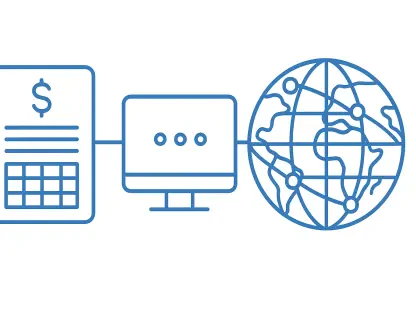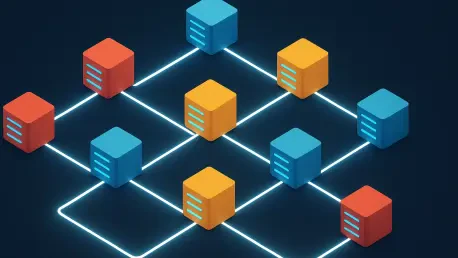

The unbundling of the cloud marketplace, payment systems, and physical hardware allows for a level of efficiency that integrated corporate models cannot easily match. As of 2026, the digital landscape remains heavily influenced by a trio of hyperscalers—Amazon Web Services, Microsoft Azure, and Google Cloud—which together manage the vast majority of global cloud traffic. This concentration of power has historically led to a rigid environment where pricing is dictated from the top down and users are bound by restrictive service agreements. However, the inherent limitations of this centralized model are becoming increasingly apparent as the demand for diverse, high-performance computing power continues to climb. Centralized providers often leave massive amounts of hardware sitting idle in regional data centers and private facilities because they lack the flexibility to integrate smaller, independent contributors. This inefficiency creates an artificial scarcity that inflates costs for developers and researchers. By shifting the paradigm toward a decentralized physical infrastructure network, the industry is seeing the rise of a permissionless marketplace that treats computing power as a liquid commodity rather than a gatekept luxury. This evolution not only lowers the entry barrier for smaller players but also ensures that the global supply of hardware is utilized more effectively, challenging the status quo through economic transparency and technical agility.
Architectural Precision: Separating Coordination From Execution
A fundamental misunderstanding often persists regarding how decentralized cloud platforms function, specifically the assumption that the actual computational work occurs directly on a blockchain. In reality, attempting to run complex server-side operations on-chain would lead to catastrophic latency and astronomical costs that no modern business could justify. Akash Network avoids this pitfall by implementing a sophisticated two-layer architecture that separates the coordination of resources from the actual execution of tasks. The coordination layer, constructed using the Cosmos SDK, serves as the network’s decentralized brain, handling the critical tasks of order placement, lease management, and cryptographic security. This layer ensures that every transaction and resource allocation is transparently recorded and immutable, providing a layer of trust that was previously only possible through legal contracts with massive corporations. By utilizing a blockchain specifically for metadata and marketplace functions, the network maintains a high level of integrity without sacrificing the speed required for modern applications, effectively proving that decentralized governance can handle the complexities of a global supply chain for digital resources.
The execution layer operates off-chain, utilizing industry-standard technologies such as Kubernetes and Docker to manage the actual workloads. This design choice is critical because it allows developers to deploy existing software without needing to rewrite code for a crypto-native environment. When a tenant leases computing power through the network, their containers are deployed onto standard servers located in data centers or private facilities around the world. These servers provide the same level of performance and reliability as traditional cloud instances because they are, in many cases, the exact same hardware. The distinction lies in how the resources are accessed and paid for. Because the execution happens in a standard containerized environment, the migration from a legacy provider to a decentralized network is remarkably seamless. This architectural separation ensures that the network remains highly scalable, as the computational heavy lifting is distributed across thousands of independent providers while the blockchain focuses solely on the logistics of the marketplace. This dual-layered approach has set a new standard for how decentralized systems can compete with centralized giants in terms of raw performance and operational reliability.
Market Dynamics: The Efficiency of the Reverse Auction
The primary economic engine driving the disruption of the cloud monopoly is the reverse auction mechanism, a radical departure from the fixed-price lists favored by traditional hyperscalers. In the conventional cloud model, providers set the price for a virtual machine or a GPU instance, and the user has no choice but to accept those terms or seek another provider with similar pricing. Akash Network flips this dynamic by allowing the tenant—the person or company needing the compute—to set the initial terms of the deal. A user broadcasts a deployment manifest detailing their specific hardware requirements, such as CPU cores, memory, and storage, along with the maximum price they are willing to pay for the duration of the lease. This broadcast acts as a request for proposals that is visible to every provider on the network, creating an environment where competition is immediate and transparent. This shift in power from the seller to the buyer represents a fundamental change in digital commerce, ensuring that the market, rather than a corporate executive, determines the true value of computing resources at any given moment.
Once a request is live, providers across the globe begin bidding downward to win the contract, a process that naturally drives prices toward the marginal cost of operation. For many independent data centers or individual hardware owners, their marginal costs are significantly lower than the overhead-heavy prices of a major cloud provider. Consequently, this competitive bidding often results in costs that are significantly lower than those found on AWS or Azure, sometimes reaching a tenth of the price for equivalent CPU or GPU resources. This price discovery is especially beneficial for workloads that do not require the massive enterprise-grade service level agreements often used to justify the high premiums of the big three. For startups, research labs, and independent developers in 2026, these savings are not just a convenience but a strategic necessity that allows them to allocate more capital toward innovation rather than infrastructure maintenance. The reverse auction model essentially commoditizes computing power, stripping away the brand-name markup and focusing purely on the utility of the hardware, which forces the entire industry to reconsider its pricing strategies in the face of decentralized competition.
Empowering Providers and Strengthening Network Integrity
One of the most compelling aspects of the decentralized cloud is the democratization of the supply side, which allows a diverse range of hardware owners to monetize their idle resources. To become a provider on the Akash Network, an entity does not need to sign a multi-year partnership agreement or undergo a rigorous corporate audit. Instead, the requirements are purely technical: a provider must have a server capable of running a specialized Kubernetes cluster and the ability to maintain a stable internet connection. This low barrier to entry has unlocked a vast supply of computing power from small regional data centers, private research institutions, and even dedicated home-based operators who previously had no way to enter the global cloud market. By creating a standardized way for these providers to offer their capacity, the network has built a resilient and geographically distributed infrastructure that is far less vulnerable to localized outages or regional policy shifts than a centralized data center hub. This diversity of supply ensures that the network remains robust even if individual providers go offline, as the marketplace can quickly reallocate workloads to other available nodes.
Trust in this permissionless environment is not based on a legal contract but on a robust, automated escrow system that protects both the tenant and the provider. When a lease is established, the tenant’s funds are deposited into an on-chain escrow account, and payments are released to the provider on a per-block basis as the service is delivered. This mechanism completely eliminates the credit risk that often plagues smaller businesses in the tech industry. If a tenant’s balance falls to zero, the provider’s software automatically terminates the lease, ensuring they are never forced to provide free services. Conversely, if a provider fails to maintain the agreed-upon uptime, the tenant only pays for the exact amount of time the server was functional, as payments stop the moment the provider goes offline. This real-time financial settlement creates a self-regulating environment where honesty and reliability are directly tied to profitability. This system has proven to be incredibly effective in 2026, fostering a high level of professional conduct among thousands of anonymous participants and proving that code-based incentives can replace traditional legal frameworks in the management of complex global infrastructure.
The Strategic Utility of the AKT Token
The AKT token functions as the essential heartbeat of the decentralized cloud ecosystem, providing a multi-faceted utility that ensures the network remains secure, governed, and economically viable. As a Proof-of-Stake network, Akash utilizes the token to incentivize validators and stakers who secure the underlying blockchain. These participants are rewarded for their contribution to the network’s stability, creating a strong alignment between the token holders and the long-term health of the platform. This security model is vital for a system that manages millions of dollars in compute leases, as it ensures that the coordination layer remains resistant to attacks or manipulation. Beyond mere security, the token serves as a tool for governance, allowing the community of users and providers to vote on critical technical upgrades and economic parameters. This democratic approach to network management ensures that the platform evolves in response to the actual needs of its participants, rather than being steered by the profit motives of a centralized board of directors.
In the 2026 economy, the role of the AKT token in settlement has expanded to include a sophisticated fee structure that captures value as the network grows. While the platform has integrated support for stablecoins like USDC to mitigate the impact of price volatility for corporate users, AKT remains the primary currency for paying network fees and participating in the “take rate” of the marketplace. When a lease is paid for in AKT, a portion of the payment can be directed back into the network’s incentive pool, effectively creating a closed-loop economy where increased demand for compute directly benefits the security and sustainability of the entire system. This tokenomic design ensures that as more AI agents and decentralized applications migrate to the network, the underlying utility of the token scales accordingly. By balancing the need for price stability through stablecoin integration with the strategic necessity of a native utility token, the network has created a flexible financial environment that appeals to both traditional enterprises and crypto-native developers, further solidifying its position as a credible alternative to centralized cloud providers.
Navigating the Global GPU Crisis and AI Expansion
The exponential growth of artificial intelligence has fundamentally altered the demand for graphics processing units, leading to a persistent global shortage that has challenged even the largest tech companies. While the hyperscalers prioritize high-end clusters for training massive foundational models, there is a massive and growing need for “inference,” which is the process of running an already trained model to generate responses. AI inference is often less demanding in terms of interconnectivity between chips but requires a massive, distributed supply of GPUs to serve global users with low latency. Akash Network has successfully addressed this need by tapping into a hidden supply of prosumer and consumer-grade GPUs that are often overlooked by the big three providers. By allowing owners of high-end gaming rigs or workstation-class hardware to lease their GPUs to AI developers, the network has created a secondary market for specialized compute that is significantly more affordable and accessible than the traditional alternatives.
This decentralized approach to GPU allocation has been particularly transformative for the burgeoning field of AI agents, which require short bursts of computing power to perform specific tasks. In 2026, these autonomous agents have become a staple of the digital economy, handling everything from complex data analysis to automated financial management. These agents do not need the 99.999% uptime guarantees of a major bank; instead, they prioritize cost-efficiency and the ability to scale up or down instantly. The decentralized cloud provides the perfect environment for these workloads, offering a pool of hardware that is both flexible and censorship-resistant. For developers who are building the next generation of AI tools, the ability to access thousands of NVIDIA chips across a global network at a fraction of the cost of AWS has become a significant competitive advantage. This utilization of formerly “under-the-desk” hardware has effectively expanded the global capacity for AI innovation, proving that a decentralized marketplace can find and activate resources that centralized giants are simply too large and too rigid to notice.
Resilience and the Path Toward Decentralized Sovereignty
The persistent dominance of centralized cloud providers has long presented a single point of failure for the internet, where a localized technical error or a sudden change in corporate policy can silence entire industries overnight. This vulnerability has driven a significant movement toward decentralized sovereignty, where developers seek to host their infrastructure on platforms that are not subject to the whims of a single boardroom. Akash Network provides this resilience by allowing applications to be hosted across a diverse array of independent providers, ensuring that no single entity can unilaterally terminate a service or alter the terms of engagement. For decentralized finance protocols and censorship-resistant applications, this is not just a technical preference but a core requirement of their mission. By hosting frontends and validator nodes on a decentralized cloud, these projects can ensure that their digital presence remains accessible as long as the underlying protocol exists, effectively decoupling the web from the control of any one nation or corporation.
The historical transition toward this decentralized model was characterized by a fundamental shift in how trust and reliability were defined within the technology sector. It was concluded that the traditional reliance on massive corporate entities for cloud infrastructure was a necessary phase of early growth that eventually reached its limits of efficiency and fairness. As the 2026 digital landscape matured, the success of the Akash Network demonstrated that a community-governed, permissionless marketplace could successfully manage the world’s most critical computational resources. This realization prompted organizations to diversify their hosting strategies, moving away from total dependence on hyperscalers in favor of a more resilient, multi-provider approach. The path forward involved a deep commitment to open-source protocols and a collective understanding that digital infrastructure should function as a public utility rather than a private monopoly. Ultimately, the industry learned that by empowering individual providers and utilizing code-based coordination, it could build a more robust and equitable foundation for the future of the global internet.