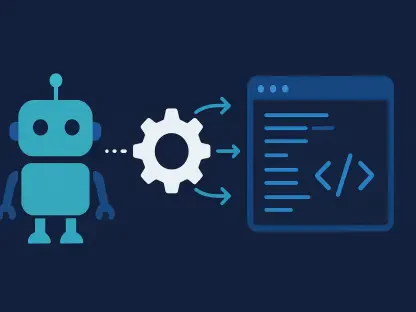

The traditional security perimeter has dissolved under the weight of hyper-connected architectures, leaving manual penetration testing struggling to keep pace with the sheer velocity of modern exploits. RedAgents functions as a cloud-based aggregator that consolidates findings, logs, and raw data from multiple specialized agents into a unified management interface. This shift toward a Software-as-a-Service model by ThreatBook allows organizations to move beyond the limitations of static scanners that often fail to identify the complex, multi-stage attack paths used by contemporary adversaries. By deploying a swarm of autonomous agents, the platform offers a dynamic alternative that mirrors the adaptive nature of real-world threats while maintaining the rigorous control required for enterprise environments. The core innovation lies in its ability to parallelize diverse testing methodologies, ensuring that a vulnerability missed by one logic engine is caught by another. This transition favors an ensemble approach that provides much deeper visibility into network weaknesses.
Evolutionary Shifts in Multi-Agent Security Architectures
The architecture of the platform represents a fundamental change in how security teams approach the concept of automated testing by utilizing specialized agents for distinct tasks. At the heart of this system is Artex Pro, an enterprise-grade agent designed for autonomous, end-to-end testing that covers the entire lifecycle of an attack from discovery to exploitation. Complementing this is Cyber(YanJi), a Python-based agent that excels in complex pathfinding, allowing it to navigate through intricate network segments to reach a predefined objective or sensitive asset. By separating these functions, the platform ensures that each agent operates within its optimal logic parameters rather than attempting a generalized approach that often leads to shallow results. This specialization allows the system to tackle the nuance of modern enterprise networks, where legacy systems and cloud-native applications coexist in ways that typically confuse standard automated tools. This architectural diversity provides a more accurate simulation of how a determined human threat actor would probe a network for various entry points.
Beyond individual agent capabilities, the platform introduces Yanxun, an orchestration layer specifically built to coordinate dozens of specialist sub-agents for layered assessments. This coordination is critical when testing massive infrastructures where a single point of failure might be hidden behind multiple defensive tiers. Additionally, the inclusion of CyberStrikeAI Enterprise Edition, following a significant acquisition in late 2026, further diversifies the platform’s internal testing logic by bringing in AI-native methodologies. This multi-layered strategy directly addresses the problem of data fragmentation by unifying all agent outputs into a single, cohesive dashboard that simplifies the analysis of complex attack chains. Instead of forcing security analysts to piece together disparate logs from various tools, the system provides a consolidated narrative of the security posture. This unified view not only saves time but also reduces the cognitive load on security operations center personnel, allowing them to focus on high-level strategy rather than the tedious manual correlation of security data points.
Navigating Data Sovereignty and Industry Positioning
As organizations increasingly integrate artificial intelligence into their defensive stacks, the focus has shifted toward tools that can perform “black-box” testing with minimal prior knowledge of the internal code. RedAgents enters a competitive market alongside established players like PentestCode and Xalgorix, but it distinguishes itself by emphasizing the autonomy and the “second opinion” provided by its parallel agent structure. This positioning reflects a broader consensus within the cybersecurity industry that machine-led testing must evolve to become more unpredictable and creative to counter the rise of automated malware and adversary scripts. The demand for such tools is driven by the reality that human red teams are often too expensive or too slow to provide the continuous coverage required in a world of daily code deployments. By mimicking the adversarial mindset, these AI-driven platforms offer a scalable solution for maintaining a robust security posture. The goal is to provide a level of coverage that was previously only available through high-end consulting engagements, making advanced testing accessible to a wider range of companies.
One of the most significant barriers to the adoption of cloud-based security AI has been the concern over sensitive data retention and the potential for corporate secrets to leak into training models. To mitigate these risks, the platform implements comprehensive “Zero Data Retention” (ZDR) protocols designed to satisfy the strict requirements of data sovereignty. This ensures that any network maps, credential hashes, or vulnerability data discovered during a session are never shared with third-party entities and are permanently purged upon the completion of the assessment. For industries like finance and healthcare, where regulatory compliance is paramount, this level of data control is not just a feature but a prerequisite for any new technology implementation. By prioritizing security and privacy at the architectural level, the platform addresses the trust gap that often hinders the deployment of advanced automation. This approach allows enterprises to leverage the power of distributed AI agents without compromising their internal security policies or violating jurisdictional data protection laws, bridging the gap between innovation and safety.
Operational Safety Protocols and Verification Frameworks
The introduction of autonomous agents into production environments often raises concerns about unintended service disruptions or “noisy” traffic that could trigger false alarms in monitoring systems. To prevent these scenarios, the system employs sophisticated “allowlist” configurations that serve as digital guardrails, restricting the movement of agents to specifically authorized IP ranges and protocols. This granular control ensures that the aggressive probing techniques required for a valid penetration test do not negatively impact critical business operations or bypass internal governance structures. Furthermore, the platform allows administrators to adjust the intensity of the testing in real-time, providing a “kill switch” functionality that can instantly halt all agent activity if an anomaly is detected. This focus on operational safety is essential for gaining the confidence of IT operations teams, who are traditionally wary of any tool that simulates malicious behavior. By providing a safe and controlled sandbox for offensive testing, the platform enables organizations to identify their weaknesses without the risk of causing the very downtime they are trying to prevent.
Despite the impressive autonomous capabilities of these agents, the role of human experts remains central to the successful deployment of the platform. Security practitioners are encouraged to view these AI agents as force multipliers that handle the repetitive, labor-intensive phases of reconnaissance and initial vulnerability discovery. Once the system identifies a potential exploit path, the findings must be verified by a human analyst to confirm their relevance to the specific business context. This verification process is crucial because AI, while efficient, may lack the nuanced understanding of which assets are truly critical to an organization’s core mission. By manually reproducing the findings in a controlled environment, defenders can differentiate between theoretical risks and actionable vulnerabilities that require immediate attention. This collaborative model, where the machine performs the heavy lifting and the human provides the strategic oversight, represents the most effective way to integrate AI into existing security workflows. It ensures that remediation efforts are prioritized based on actual impact rather than just automated severity scores, maximizing the return on security investment.
Strategic Integration and Actionable Future Considerations
The transition toward multi-agent testing provided a clear pathway for enterprises seeking to modernize their vulnerability management programs through automated orchestration. By consolidating diverse testing logics, organizations successfully reduced the time spent on manual discovery while increasing the breadth of their security assessments. This shift demonstrated that the efficiency of centralized logging and parallel processing was a vital component in closing the gap between discovery and remediation. Security leaders who adopted these platforms focused on integrating the results directly into their existing ticketing systems to ensure that identified weaknesses were addressed with the necessary urgency. The results suggested that the most successful implementations occurred when the AI tools were treated as part of a broader defensive strategy rather than a standalone solution. This holistic approach allowed teams to build more resilient infrastructures by identifying edge-case vulnerabilities that had previously gone unnoticed. The platform’s ability to act as a universal hub for both proprietary and open-source agents offered a level of flexibility that was previously unattainable for most security departments.
Looking ahead, organizations should prioritize the development of internal skill sets that focus on AI orchestration and the interpretation of automated findings. The next logical step involves the integration of these testing platforms with automated remediation tools, creating a closed-loop system where vulnerabilities are discovered and patched with minimal human intervention. To prepare for this evolution, security teams should begin by establishing clear authorization protocols and data sovereignty standards that align with their specific regulatory environments. It is also recommended to conduct regular benchmarking of AI agent performance against traditional manual testing to ensure that the automation continues to provide high-quality, actionable data. By fostering a culture of continuous testing and automated verification, enterprises can stay ahead of increasingly capable threat actors who are already utilizing their own versions of adversarial AI. The ultimate goal is to transform penetration testing from a periodic compliance requirement into a continuous, data-driven process that proactively hardens the network against future threats. This strategy ensures that the organization remains agile and resilient in an ever-changing technological landscape.