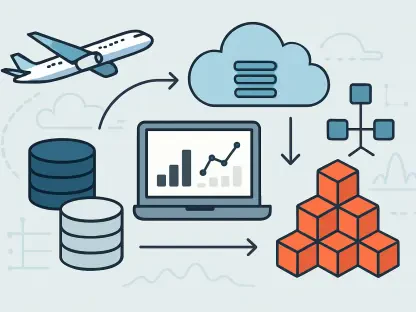

The superiority of a machine learning model often relies less on the complexity of its code and more on the ability to process tens of billions of data rows into clean, usable features without crashing the infrastructure. In the current landscape of enterprise artificial intelligence, the Azure

The global technology sector is currently witnessing a massive recalibration of priorities where high-performance engineering no longer requires a direct allegiance to the most expensive proprietary models developed within the United States. Databricks has sent a significant shockwave through the

Financial institutions across the globe are quickly discovering that the static, point-in-time validation methods that served the industry for decades are no longer sufficient to handle the dynamic risks associated with autonomous machine learning agents. In the current landscape, the traditional

The transition toward decentralized storage solutions often encounters a significant hurdle in the form of latency issues that traditional centralized providers like Amazon S3 or Google Cloud have largely mitigated over decades of refinement. Neo SPCC has addressed this fundamental challenge by

The software engineering community has long recognized that standard representational state transfer paradigms often fall short when reconciling the conflicting demands of strict architectural purity and the practical complexities of modern data retrieval. For years, developers have been forced to

The persistent friction between non-technical stakeholders and the underlying structure of relational databases has traditionally necessitated a human translation layer composed of specialized data analysts. Business intelligence frequently grinds to a halt when decision-makers must wait days for a