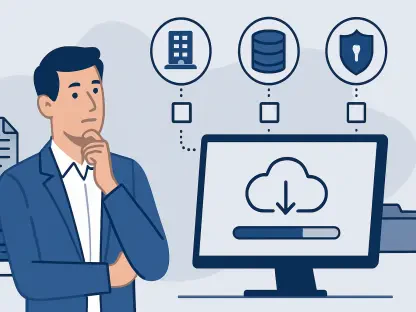

The technological landscape of 2026 has witnessed an unprecedented transformation where natural language serves as the primary syntax for complex architectural software design. Generative AI has moved from a novelty to a necessity, enabling creators to manifest digital products through conversational prompts rather than manual keystrokes. While Vercel’s v0 initially set the standard by mastering the art of generating React components and Tailwind CSS layouts, the maturation of the industry has highlighted specific voids that single-purpose UI generators cannot fill. Developers today are increasingly seeking holistic environments that manage everything from database schema generation to automated deployment pipelines, marking a clear departure from the component-focused workflows of the past. This transition reflects a broader industry trend where the intent of a project is as important as the underlying code, and the tools being adopted now are those that offer comprehensive, full-stack autonomy.
Understanding the Shift from UI to Full-Stack
Limitations: The React-Centric Ecosystem
One major reason professionals are looking for alternatives involves the inherent technical debt created by framework lock-in. Since v0 is heavily optimized for Next.js and React, developers who prefer Vue, Svelte, or even standard HTML often find the platform overly restrictive for their specific production needs. Having the freedom to choose an alternative tech stack is vital for long-term project success, especially when working within existing legacy systems or specialized environments that demand lightweight frameworks. As the industry moves toward more diverse architectures, the demand for tools that support multiple languages has skyrocketed. Relying solely on a React-based generator can lead to a fragmented codebase where the frontend doesn’t naturally align with the organization’s broader technological strategy, ultimately causing more friction than the initial speed gains were worth.
Credit-based pricing models have also become a significant pain point for developers who require high levels of iteration during the creative process. When a builder is refining a complex design, dozens of small adjustments can quickly deplete a monthly credit allowance, making it difficult to forecast the actual cost of bringing a project to completion. This financial unpredictability is a major deterrent for freelancers and small agencies who need to provide fixed quotes to their clients. Furthermore, the lack of native backend support means that even after a beautiful interface is generated, a massive amount of manual labor remains. Builders must still provision servers, set up authentication protocols, and connect databases, which negates much of the efficiency gained by using AI in the first place. This gap has paved the way for solutions that prioritize the entire application lifecycle over simple visual prototyping.
Infrastructure Gaps: Beyond the Frontend
Modern web development requires far more than a polished interface to be considered production-ready; it requires a robust skeleton of data logic and user management. A truly functional application must be able to store information securely, manage complex user permissions, and maintain high performance under heavy traffic spikes. These backend requirements are frequently outside the scope of what a simple UI generator can provide, leaving developers to bridge the gap using third-party services like Supabase or Firebase manually. While these integrations are possible, they often introduce security vulnerabilities or architectural inconsistencies if not handled by an expert. The movement toward full-stack AI tools addresses this by generating the necessary server-side logic alongside the frontend, ensuring that the two halves of the application work in perfect harmony from the very first deployment.
Moving code from a standalone UI generator to a live hosting service often necessitates a frustrating amount of manual configuration and environmental setup. Developers must navigate the complexities of CI/CD pipelines, domain mapping, and SSL certification, which can be a daunting task for those who are primarily focused on product design. For many creators, a platform that handles all of these logistical hurdles in a single, unified workflow is significantly more appealing than a tool that only provides a static code snippet. The industry is seeing a shift where the “deployment” phase is being automated out of existence, allowing builders to move from a chat prompt to a live, global URL in a matter of seconds. This level of integration is becoming the new baseline expectation for any AI-powered development tool in the current market.
Top Platforms for Rapid Application Building
Integrated Environments: Comprehensive No-Code and Browser Solutions
Hostinger Horizons has emerged as a formidable choice for those who wish to bypass the traditional coding process entirely while maintaining high professional standards. It is specifically engineered for entrepreneurs and business owners who need a functional tool without the steep learning curve associated with modern software engineering. The platform treats the application as a complete ecosystem rather than a collection of disconnected parts, managing the hosting, security, and domain registration automatically. This holistic approach allows users to focus on their core business logic rather than worrying about the technical minutiae of server maintenance. It represents a significant evolution in the no-code space, providing a level of polish and reliability that was previously reserved for custom-coded solutions built by expensive development teams.
The platform distinguishes itself by focusing on the entire application lifecycle, offering an integrated backend that includes automated email systems and data storage solutions. Unlike tools that merely provide a code repository, this environment delivers a fully operational website that is ready for public traffic immediately. This makes it an ideal choice for launching a minimum viable product or a internal business tool in a single afternoon without hiring a full-stack engineer. Bolt.new takes a different but equally powerful path by providing a complete development environment directly inside a web browser using WebContainer technology. This allows a developer to run a Node.js server and a terminal without installing any software locally, creating a “zero-setup” workflow. It bridges the gap between AI generation and professional coding, allowing for the creation of entire repositories that can be tested and modified in real-time.
Visual Mastery: Bridging the Gap Between Design and Function
Motiff stands out in the crowded AI landscape by focusing on high-quality designs that adhere strictly to professional systems like Material UI and Ant Design. This design-first approach ensures that the resulting websites are not only aesthetically pleasing but also fully compliant with modern accessibility standards and usability patterns. It is a tool built for teams that prioritize the user experience above all else, providing a bridge between the creative vision of a designer and the technical requirements of an engineer. By supporting direct exports to Figma, it allows for a collaborative workflow where designs can be refined visually before a single line of production-grade code is ever written. This eliminates the “handoff” friction that typically plagues software projects, ensuring that the final product looks exactly like the approved mockups.
Lovable has gained significant traction as a visual-first builder that produces some of the most polished initial results in the industry. It targets a specific niche of “solopreneurs” and visionary creators who have a clear idea but may lack the deep technical expertise to build a custom React application from scratch. One of its most innovative features is the ability to edit live elements through simple chat prompts while viewing the application in real-time. This creates an incredibly fast feedback loop where a user can click on a button or a header and tell the AI to “make this more modern” or “change the color scheme to match a high-end luxury brand.” This interactive refinement process feels far more natural than traditional coding, allowing the user to iterate on the “vibe” of the application until it perfectly matches their mental model.
Advanced Tools for Professional Developers
Agentic Editors: The Evolution of the IDE
Windsurf represents a significant leap forward in the evolution of integrated development environments by introducing the concept of a truly agentic editor. Unlike standard assistants that only suggest the next few words, Windsurf’s “Cascade” feature possesses a deep understanding of the entire codebase and can plan complex, multi-file tasks autonomously. For instance, a developer can ask the agent to “implement a new subscription tier across the entire app,” and the AI will handle the database migrations, the API updates, and the frontend changes simultaneously. This level of systemic awareness reduces the cognitive load on the developer, allowing them to focus on high-level architectural decisions while the AI manages the repetitive and error-prone implementation details across different modules.
The ability of these agentic tools to learn a developer’s specific coding habits and project preferences makes them an indispensable partner for long-term project maintenance. By creating a “memory” of previous decisions and architectural patterns, Windsurf reduces the need for constant re-instruction, making the development process feel like a true collaboration between human and machine. Cursor AI has followed a similar trajectory, gaining a massive following by allowing users to switch between the world’s most advanced AI models depending on the specific task at hand. Built as a fork of VS Code, it maintains a familiar interface while providing hyper-accurate predictions that often anticipate a developer’s next ten moves. These tools are transforming the profession of software engineering from manual labor into a role centered on orchestration and strategic oversight.
Infrastructure Standards: Security and Scalability
GitHub Copilot remains the definitive industry standard for large-scale enterprise teams because of its unparalleled integration with the broader GitHub ecosystem. It has evolved from a simple code completion tool into a sophisticated agent capable of investigating bugs, writing unit tests, and even submitting pull requests on its own. This makes it a reliable choice for organizations that must maintain rigorous security standards and complex CI/CD pipelines while moving at the speed of modern business. Because it is backed by the world’s largest repository of open-source code, its suggestions are often grounded in battle-tested patterns that prioritize stability and performance. It acts as a force multiplier for engineering teams, allowing them to ship features faster without compromising the integrity of the underlying system.
For applications that require massive scalability and real-time data processing, Firebase continues to be the preferred infrastructure choice for developers globally. While it is less about generating the UI and more about providing the engine that powers it, the introduction of AI-specific tools like Genkit has made it easier than ever to build intelligent features directly into the backend. Replit has also carved out a unique space by combining an AI agent with a complete deployment platform that can debug its own errors. If a deployment fails, the Replit agent can read the logs and apply a fix without any human intervention, providing a “self-healing” environment that is perfect for rapid prototyping. These infrastructure-focused tools ensure that the applications built today are not just visual shells but are backed by the power of Google-grade security and global distribution.
Navigating the Future of AI Development
Strategic Shifts: Vibe Coding and Incremental Logic
The prevailing trend in the development industry is moving away from simple code generation and toward the creation of fully autonomous systems. We are no longer in an era where developers simply ask for a specific button or a navigation bar; instead, they are defining high-level business goals and letting AI agents determine the best way to achieve them. This shift is often referred to as “vibe coding,” where the primary focus is on the intent and the user experience rather than the syntactic details of the programming language. This approach allows builders to experiment with complex ideas at a fraction of the previous cost and time, democratizing the ability to create sophisticated software. As these agents become more context-aware, the distinction between a “designer” and a “developer” continues to blur, leading to a more unified creative process.
To achieve the best results in this new landscape, it is essential to provide the AI with clear, incremental tasks rather than overwhelming it with a single massive request. Breaking a project into small, logical components—such as designing a login flow before moving to the dashboard—helps prevent the AI from hallucinating or making architectural errors. This modular approach also makes it easier for humans to review the code and ensure that it meets the necessary performance and security benchmarks. By maintaining a human-in-the-loop strategy, developers can leverage the speed of AI while ensuring the final product remains maintainable and efficient. This balance of automation and oversight is the hallmark of a successful modern development workflow, allowing for rapid innovation without sacrificing the quality of the end-user experience.
Implementing Best Practices: From Prototype to Production
Choosing the correct tool for a project depends entirely on whether the goal is a quick visual prototype or a long-term, scalable professional product. Every platform in the current market has its own specialized strengths, whether it is high-end design fidelity, complex backend logic, or advanced agentic coding features for existing repositories. The key to a successful launch in 2026 is matching the tool to the specific expertise of the user and the ultimate requirements of the application. For a solo founder, a no-code solution that manages hosting and data might be the best path, while a professional engineering team will likely find more value in an agentic editor that integrates with their current IDE and GitHub workflows. Understanding these nuances is what separates a successful launch from a project that gets stuck in the prototyping phase forever.
The transition from traditional development to an AI-assisted methodology was completed as builders realized that the value of software lies in its utility, not the difficulty of its creation. Developers who embraced these tools found that they could spend more time on user research and feature innovation, rather than fighting with configuration files or repetitive boilerplate code. The platforms discussed provided the necessary infrastructure to turn an idea into a live, global application with minimal friction. As the ecosystem matured, the focus shifted from simply writing code to orchestrating complex digital experiences that solved real-world problems. This evolution empowered a new generation of creators to build the next wave of internet technology with a level of speed and precision that was once considered impossible.