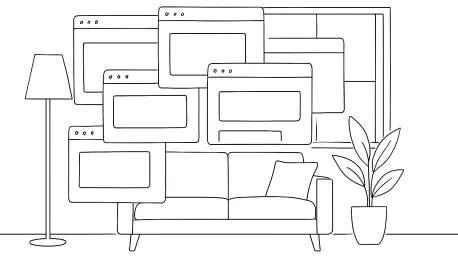

The evolution from virtual reality as a destination to spatial computing as a utility is evidenced by this shift toward persistent, system-managed spaces. This transformation has reached a critical milestone as the OpenXR Working Group, operating under the Khronos Group, officially deployed the Spatial Containers extensions to the global developer community. This API acts as a standardized windowing system for the three-dimensional realm, moving the industry beyond the era of monolithic, isolated applications that previously demanded exclusive control over a user’s entire sensory field. By treating virtual content as modular windows that can coexist within a shared environment, this framework allows for a far more fluid and integrated user experience than ever before. It effectively replicates the versatility of traditional desktop multitasking, but expands it into the physical volume of a room, providing a foundation for persistent digital layers that remain active while a user transitions between various professional and personal tasks in their daily environment.
Industry Collaboration: Unifying the Fragmented XR Landscape
This technological leap was not the product of a single entity but the result of an intensive eighteen-month collaborative effort involving heavyweights such as Google, Meta, PICO, and Collabora, alongside major engine developers like Unity and Godot. The primary motivation behind this collective push was to rectify the fragmentation that historically plagued the extended reality market, where hardware-specific code often siloed developers into choosing one ecosystem over another. With the “build once, deploy everywhere” methodology at its core, the Spatial Containers API ensures that an application developed for a Meta Quest will behave with predictable consistency on a high-end Varjo headset or an Android XR device. This level of cross-platform standardization is vital for the maturation of the market, as it reduces the engineering overhead previously required to port windowing logic between proprietary systems. By establishing these universal rules, the industry is finally moving toward a cohesive ecosystem where software compatibility is the standard rather than the exception.
Beyond the technical interoperability, this standardization serves as a gateway for traditional software creators who previously viewed 3D development as an insurmountable challenge. By providing a mental model that closely mirrors the windowed applications of Windows or macOS, OpenXR has significantly lowered the barrier to entry for millions of 2D application developers. Engine providers like Godot and Unity now offer streamlined tools that leverage these extensions, allowing developers to focus on functionality rather than the complexities of spatial orientation and system resource conflicts. This democratization of development tools is expected to lead to a surge in utility-focused applications, ranging from sophisticated inventory management systems to immersive educational platforms. Furthermore, the open-standard nature of this release prevents any single manufacturer from imposing a proprietary lock-in, which had long been a concern for independent software vendors. This competitive neutrality fosters a healthy environment where innovation is driven by software quality rather than exclusive hardware partnerships.
Transforming Daily Productivity: The Shift to Persistent Utility
The strategic implications of this shift extend far beyond simple multitasking, as they signal a fundamental change in how users perceive and interact with their environment throughout the day. Stakeholders from Google and Meta have pointed out that for spatial computing to become a daily necessity, digital applications must blend into the physical world without requiring the user to be fully “immersed” in a single task. This move toward all-day utility is supported by the ability for windows to remain spatially locked to physical objects or walls, turning a living room into a dynamic cockpit of information. For professional environments, hardware manufacturers like PICO and Varjo are leveraging these extensions to build workspaces that can effectively replace multi-monitor configurations with more flexible, virtual alternatives. These containers allow for a level of data density and organization that was previously impossible, enabling users to manage complex workflows that involve multiple disparate data sources appearing as interactive, high-resolution panels in their immediate surroundings.
As the industry transitioned into this new era, the release of Spatial Containers provided the essential building blocks for a future where hardware like the Steam Frame or other lightweight glasses prioritize persistent, “on-the-go” interfaces. Organizations that adopted these standards early found themselves well-positioned to meet the demands of a workforce that increasingly required digital tools to be as mobile and flexible as the users themselves. The focus shifted away from heavy, tethered headsets toward glasses that functioned as transparent layers over reality, where the software could finally inhabit the same space as the physical tools we use every day. To capitalize on this progress, developers were encouraged to rethink their user interfaces to support non-exclusive spatial placement, ensuring their apps functioned harmoniously with others. By prioritizing interoperability and system-managed persistence, the industry successfully moved from conceptual prototypes to a practical, multi-app reality. These advancements ultimately laid the groundwork for a standardized spatial internet that remained accessible to everyone.