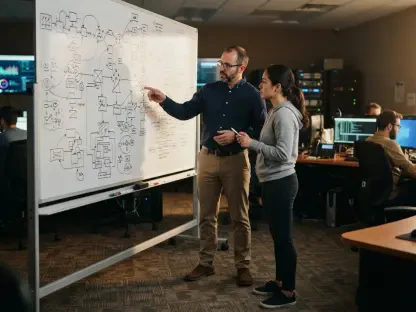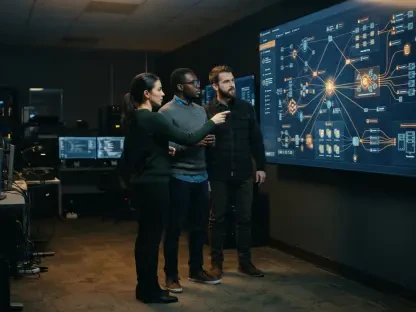

Organizations must reinforce their foundations in traceability to ensure that confidence in AI acceleration is backed by verifiable governance structures. As the integration of artificial intelligence into the software development lifecycle becomes standard practice, a significant rift has emerged between the speed of deployment and the robustness of oversight. While engineering teams leverage large language models and autonomous agents to generate code at unprecedented scales, the mechanisms for validating these outputs remain largely manual or fragmented. This gap creates a landscape where perceived productivity often masks underlying technical debt and security risks. Recent data suggests that while over three-quarters of IT professionals feel optimistic about AI-generated code, less than half have established the automated audit trails necessary to defend that trust during a compliance audit. The primary challenge involves aligning rapid innovation cycles with the rigid safety requirements of modern enterprise environments.
Maintaining Integrity: Risks in High-Stakes Industries
In industries such as global finance, healthcare, and critical infrastructure, the implementation of AI-driven DevOps carries implications that extend far beyond simple software performance. For these sectors, a single unverified line of code generated by an autonomous agent could result in systemic economic instability or even direct threats to human safety. The shift from human-authored code to AI-augmented delivery necessitates a transition from traditional periodic policy reviews to a model of continuous assurance. This approach ensures that every change, whether initiated by a developer or an AI assistant, undergoes rigorous, automated validation against established security and compliance standards in real-time. Building such trust mechanisms is no longer a peripheral goal but a core requirement for operating in an increasingly automated world. By embedding governance directly into the deployment pipeline, these organizations can protect their integrity while still capturing the benefits of modern technological efficiency.
Contrary to the common belief that a lack of sophisticated tooling is the primary hurdle to AI governance, the actual bottlenecks are frequently rooted in organizational culture and human capital. Many enterprises currently face a significant skills gap, where existing staff lack the specialized expertise required to supervise and tune AI models effectively within a DevOps context. Furthermore, responsibility for governance often becomes fragmented across various departments, leading to a situation where security teams prioritize risk mitigation while product groups focus exclusively on speed. This misalignment creates silos that obscure visibility and prevent the implementation of a cohesive oversight strategy. To bridge this gap, organizations must invest in upskilling their workforce to handle the nuances of AI-driven workflows while fostering a culture of shared accountability. Establishing a central point of governance ensures that all stakeholders are aligned on the same safety standards, regardless of their specific functional roles.
Strategic Foundations: DevOps Maturity and AI Safety
There is a powerful correlation between an organization’s DevOps maturity and its ability to integrate artificial intelligence without compromising operational stability. High-maturity teams possess the disciplined engineering practices and automated scaffolding necessary to manage the inherent unpredictability of AI-generated outputs. These organizations move beyond treating data hygiene as a one-time task, instead securing the entire flow of information that feeds into AI training and testing environments. By ensuring that sensitive data is protected and that model inputs are clean, mature teams reduce the risk of AI-driven hallucinations or security breaches in non-production environments. This focus on the foundational elements of software delivery allows these businesses to embed auditability and traceability into the heart of their pipelines. Consequently, they are far more likely to achieve deep integration of AI across the development lifecycle, as their existing automation provides the necessary safety nets for experimenting with new autonomous technologies.
Mature DevOps cultures leverage automated testing and continuous monitoring to create a persistent feedback loop that provides real-time visibility into complex AI systems. Instead of relying on manual quality assurance, these organizations use sophisticated testing strategies to identify anomalies in AI behavior before they can impact production environments. This proactive approach to quality management ensures that as the volume of code increases, the ability to verify its integrity remains constant. By treating governance as an inherent part of the continuous integration and continuous delivery process, teams can enforce guardrails that prevent unauthorized or non-compliant changes from progressing. This systematic alignment between automation and oversight allows organizations to scale their AI ambitions with confidence, knowing that any deviation from established norms will be caught and remediated instantly. The resulting infrastructure acts as a strategic anchor, providing a stable platform for innovation that remains resilient against volatility.
Future Directions: Orchestration and Human Oversight
As artificial intelligence assumes the burden of repetitive tasks such as scripting and basic test execution, the role of the human engineer shifts toward higher-order oversight and quality analytics. This evolution does not minimize the importance of human expertise; rather, it places a greater premium on the ability to direct complex outcomes and manage systemic risks. Professional software developers have transitioned from being primary creators of individual code lines to becoming orchestrators of large-scale automated systems. In this new paradigm, humans are responsible for defining the ethical boundaries and strategic goals that guide AI behavior, ensuring that technology serves the broader interests of the business. Quality assurance professionals have also seen their duties change, moving from manual execution to performing deep-dive analytics on the health and performance of the delivery pipeline. This strategic realignment allows teams to focus on solving complex architecture problems that require nuanced judgment and creative problem-solving skills.
Organizations that successfully navigate this transition take actionable steps to redefine their governance structures by implementing automated guardrails and centralized accountability models. They prioritize the development of internal expertise, ensuring that their engineers are equipped to supervise autonomous agents effectively and intervene when automated decisions drift from intended results. By reinforcing the basics of DevOps maturity, these businesses create a verifiable trail of every action taken by both human and machine actors within the software lifecycle. This commitment to traceability allows them to scale their AI operations safely while meeting the most stringent regulatory requirements of the current landscape. Future considerations involve the refinement of these oversight models to accommodate even more autonomous systems, ensuring that the human element remains the final arbiter of quality and ethics. Ultimately, the focus on reinforcing the foundations of accountability ensures that the promise of AI-driven efficiency is realized without sacrificing the security of the infrastructure.