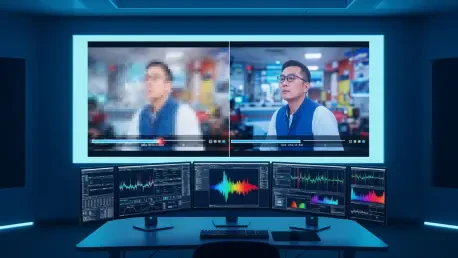

The current digital landscape demands a level of visual fidelity that traditional transmission technologies can no longer support without overwhelming existing network infrastructure across the globe. As high-definition streaming becomes the baseline for consumer expectations, the industry has historically focused on aggressive compression techniques that often sacrifice clarity for the sake of delivery speed. However, a significant shift is occurring as the focus moves from how data is packed to how it is reconstructed at the point of consumption. Nokia has addressed this challenge by launching its Neural Network Post Filtering software, which represents a fundamental pivot in digital media strategy. This technology utilizes artificial intelligence to refine and restore video frames after they have been decoded, effectively decoupling visual quality from raw bandwidth availability. By prioritizing post-processing, this approach enables a high-quality viewing experience that remains resilient even when network conditions are less than ideal. This transition marks the beginning of an era where intelligence, rather than just raw capacity, defines the limits of what is possible in video transmission and consumption for users everywhere.
Structural Foundations of Neural Enhancement
Integration with Universal Coding Standards: A Unified Approach
The technical efficacy of the Neural Network Post Filtering system is deeply rooted in its adherence to established global frameworks like Versatile Video Coding and Versatile Supplemental Enhancement Information. By building on these specific standards, the software ensures that it can function across a wide variety of hardware platforms and streaming services without requiring proprietary modifications. This interoperability is vital in a fragmented market where different manufacturers often utilize competing technologies that do not communicate effectively. The software functions by using specific metadata embedded within the video stream to guide the neural network in its restoration efforts, effectively providing a map for the AI to follow as it repairs details lost during the initial compression phase. Integrating a standard decoder path with real-time inference tools such as Intel’s OpenVINO allows for a seamless workflow that does not interrupt the standard playback process. This method ensures that the enhancement instructions are carried directly within the video bitstream, making the process both efficient and universally applicable to modern media delivery.
Maintaining a standards-aligned approach also allows for greater longevity and scalability in an industry that evolves at a rapid pace. Because the neural network relies on standard metadata, it can be updated and refined over time without requiring a complete overhaul of the existing delivery infrastructure. This flexibility is critical for broadcasters and streaming platforms that must support a vast array of legacy and modern devices simultaneously. The use of the Versatile Supplemental Enhancement Information framework specifically allows the video signal to carry additional data that describes the characteristics of the original source, which the AI then uses to reconstruct fine details like skin textures or complex patterns. This collaborative relationship between the codec and the filtering software creates a more robust pipeline than traditional methods that rely solely on the decoder to produce the final image. By establishing this technical foundation, the industry can ensure that high-end visual improvements remain accessible to a broader audience rather than being limited to specific, closed ecosystems that hinder widespread technological progress.
Optimization for Modern Hardware Architectures: The Role of NPUs
The practical deployment of neural filtering technology is made possible by the rapid evolution of consumer electronics which now feature dedicated hardware for artificial intelligence tasks. Most modern smartphones, tablets, and television sets are equipped with Neural Processing Units that are specifically designed to handle the complex mathematical calculations required for real-time video inference. Nokia’s software is engineered to capitalize on these specific hardware advancements, offloading the heavy computational work from the general-purpose processor to these specialized accelerators. This strategic move ensures that high-quality video enhancement does not come at the cost of excessive power consumption or reduced device performance, which are common concerns for mobile users. As these specialized processors become more powerful and efficient, the ability to run sophisticated neural networks in the background becomes a standard feature rather than a luxury. This synergy between software innovation and hardware development provides the necessary environment for AI-driven visual improvements to become a ubiquitous part of the digital experience.
Furthermore, the integration of real-time inference tools ensures that the software can adapt to the specific performance profile of the device it is running on. This adaptability is crucial because hardware capabilities vary significantly between high-end professional monitors and budget-friendly mobile devices. By optimizing the code for environments like Intel’s OpenVINO, the software can achieve high frame rates and low latency, which are essential for maintaining a smooth viewing experience during live broadcasts or interactive media. The evolution of hardware has reached a point where the bottleneck is no longer the processing power available at the edge, but rather how effectively that power is utilized by the software layer. This release demonstrates a clear understanding of this dynamic, providing a tool that bridges the gap between raw hardware potential and the practical needs of media consumers. As the market continues to transition toward more intelligent devices, the role of dedicated AI acceleration will only grow, making post-processing a standard component of the digital signal chain for all future media implementations.
Transformative Visual Impact on Digital Delivery
Prioritizing Human Perception in Low-Bandwidth Scenarios: Visual Comfort
From the perspective of the end user, the primary benefit of this technological advancement is a noticeable reduction in common digital artifacts that frequently plague streaming content. Traditional compression methods often result in visible blockiness, blurring, and color banding, especially when the available internet connection fluctuates or drops in quality. The neural filtering software acts as a sophisticated restoration engine that identifies these imperfections and replaces them with synthesized details that match the original intent of the content creator. This focus on perceptual quality ensures that the human eye perceives a crisp and stable image, even if the underlying data stream is heavily compressed. By addressing the psychological aspects of how humans process visual information, the software provides a level of comfort and immersion that was previously unattainable on standard networks. This improvement is particularly evident in high-motion scenes where traditional encoders often struggle to maintain clarity, resulting in a much more fluid and professional visual presentation for the viewer.
This shift toward intelligent reconstruction also addresses the growing divide between high-speed urban networks and more limited connectivity in remote or developing regions. Users with slower internet speeds can now enjoy a visual experience that rivals much higher bitrates, as the AI compensates for the lack of raw data by intelligently filling in the gaps. This democratizes access to high-quality information and entertainment, ensuring that the benefits of ultra-high-definition content are not restricted by geographic or economic factors. The software’s ability to maintain image integrity under stress also reduces the need for frequent buffering, as the system can deliver a lower-bitrate stream that the AI then upscales and refines in real time. This leads to a more consistent and reliable service for consumers who have grown weary of the trade-offs between resolution and stability. Ultimately, the goal of these advancements is to make the technology invisible to the user, allowing the content to take center stage without the distractions of digital noise or transmission errors that have historically defined the streaming experience.
Statistical Advancements in Color Depth and Sharpness: Measurable Metrics
The improvements provided by the Neural Network Post Filtering software are not merely subjective but are supported by significant gains in measurable video quality metrics. Laboratory testing has shown that the implementation of this AI-driven approach can lead to a substantial increase in signal fidelity, particularly within the chroma channels that govern color accuracy and vibrancy. In many scenarios, these tests have indicated a more than 70% improvement in chroma signal quality compared to standard decoding methods without filtering. This translates to more lifelike skin tones, more accurate natural environments, and a general richness in the color palette that mimics the original source material. Because these enhancements are achieved at the post-processing stage, they do not require an increase in the bitrate of the transmitted file, making the process incredibly efficient from a data management standpoint. This efficiency allows operators to provide a superior product while simultaneously reducing the load on their server infrastructure and delivery networks.
In addition to color accuracy, the technology provides a measurable boost in sharpness and edge definition, which are critical for the legibility of text and the fine details of complex imagery. The neural network is trained to recognize specific shapes and textures, allowing it to sharpen edges without introducing the “halo” effects often associated with traditional sharpening filters. This precision ensures that the resulting image looks natural rather than digitally manipulated, maintaining the artistic integrity of the original production. By quantifying these improvements through standardized testing, the industry can develop new benchmarks for what constitutes a high-quality stream, moving beyond simple resolution figures to more comprehensive measures of visual excellence. These data-driven results provide a clear roadmap for other developers and hardware manufacturers, proving that AI-based reconstruction is a viable and highly effective solution for the challenges of modern digital distribution. The success of these initial implementations suggests that the industry is on the verge of a widespread adoption of intelligent signal processing as a standard practice.
Strategic Implementation of Post-Processing Tools: Evolutionary Steps
The introduction of the Neural Network Post Filtering code under the BSD 3-Clause Clear License established a new precedent for collaborative development within the telecommunications sector. This strategic move allowed a diverse range of researchers, software engineers, and hardware manufacturers to integrate these advanced tools into their own workflows without the burden of restrictive proprietary agreements. By lowering the barriers to entry, the initiative fostered an ecosystem where smaller platforms could compete with industry giants on the basis of visual quality and technical innovation. This openness encouraged the rapid iteration of the technology, as developers from different backgrounds contributed unique insights and optimizations that benefited the entire community. The decision to prioritize an open-source model demonstrated a long-term commitment to the health of the industry, recognizing that a unified standard is more valuable than a fragmented market of closed systems. This approach successfully accelerated the adoption of AI-enhanced video, making it a standard feature across a wide variety of consumer and professional applications within a relatively short period.
As the industry moved forward, the focus shifted toward the practical integration of these tools into existing content delivery networks and hardware ecosystems. Companies that embraced these post-processing standards early on were able to offer a demonstrably better user experience, which in turn drove higher engagement and customer satisfaction. The move toward intelligent reconstruction required a shift in how engineers approached the problem of video quality, moving away from a pure focus on compression ratios toward a more holistic view of the entire signal chain. Organizations were encouraged to invest in hardware that specifically supported neural processing, ensuring that their infrastructure was prepared for the next generation of media consumption. The successful rollout of this software proved that the path to superior video quality did not lie in more data alone, but in the smarter application of the data already available. This transition established a framework for future innovations, where the synergy between standardized metadata and intelligent edge processing continued to redefine the boundaries of digital communication and entertainment for a global audience.