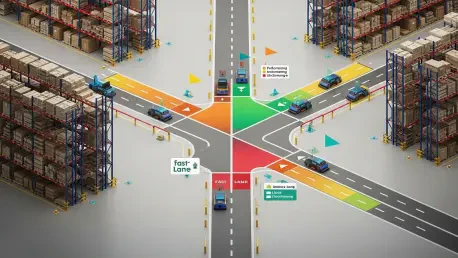

When automated forklifts stall behind a hesitant AMR at a congested aisle, the delay ripples through picking, staging, and dispatch like a tax on throughput that compounds by the minute and clouds the real cost of design choices. Kollmorgen’s new NDC Layout Assistant targets that hidden tax by shifting layout validation earlier and making route performance measurable segment by segment. Instead of discovering slow zones only after floor trials, engineers can examine each corridor, curve, and merge as its own unit, with travel time, vehicle speed, and an optimization score revealing where the flow is brittle. Visual flags spotlight underperforming sections so fixes land where they matter most, not where they are easiest to implement. The result is fewer redesign loops, quicker design sign‑off, and clearer conversations between controls engineers, industrial designers, and operations leaders who need common ground to approve changes at scale.
Why Granular Route Analysis Matters
Traditional route planning often treats a facility map as a monolith, which obscures the mechanics of delay: an overlong decel zone before a blind corner, a merge that starves one lane under peak demand, or a charging detour that forces slow traffic through fast lanes. NDC Layout Assistant breaks that pattern by quantifying each segment’s impact, making bottlenecks evident and actionable. A turn radius that forces AGVs to drop to 0.6 m/s shows up immediately in the segment’s speed profile; a shared path that drives stop‑and‑go behavior throws a low optimization score. Because the tool lives within Kollmorgen’s broader NDC ecosystem, proposed tweaks align with navigation and fleet policies rather than fighting them, which reduces retuning later. This approach naturally leads to targeted changes—retiming intersections, separating charge routes, or nudging beacons and tags—validated in software before floor tape moves.
What Engineers Should Do Next
With the assistant in place, deployment roadmaps were tightened into concrete steps that reduced guesswork and preserved capital. Teams were advised to start with a controlled pilot—one dock, one zone, or a single high‑traffic loop—then baseline KPIs like segment travel time, queue length at merges, and completed missions per hour. Constraints were tagged explicitly: pedestrian crossings, shared forklift aisles, or quality gates that force stops. Layout alternatives were modeled in the assistant, and only those delivering material score gains were promoted to trials. Fleet rules were harmonized—speed caps, passing permissions, and charger logic—so map edits did not conflict with dispatch policies. Finally, peak scenarios were simulated, not just averages, and handoffs to maintenance were documented with before‑and‑after metrics. By working this playbook, facilities had accelerated validation, trimmed redesign cycles, and locked in gains that compounded across shifts.