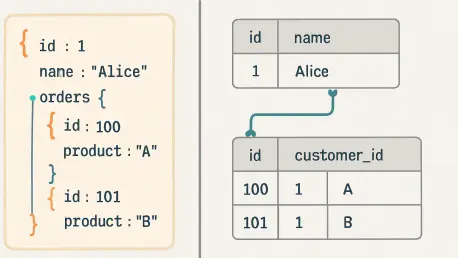

Sophisticated modern applications frequently demand a delicate balance between the uncompromising structural rigor of relational data models and the flexible hierarchical accessibility of JSON documents, creating a persistent tension for architects who must manage both performance and developer productivity. This tension is particularly evident in the current development landscape, where the need for normalized storage conflicts with the demand for document-based data exchange in REST APIs and artificial intelligence interfaces. While traditional relational tables have served as the bedrock of data integrity for decades, the introduction of JSON Duality Views in MySQL has introduced a transformative mechanism to bridge these two worlds. Specifically, with the release of MySQL 9.7.2 Community Edition, the ability to interact with relational data as a single, cohesive JSON document while maintaining the underlying normalized structure has become accessible to a broader range of developers.
Understanding JSON Duality Views and Relational Tables
Relational tables represent the classic paradigm of data management, relying on normalization to eliminate redundancy and ensure consistency through the use of foreign keys and strict constraints. In a typical e-commerce scenario, data is fragmented across various tables such as customers, orders, order_items, and products to ensure that a change in a product description does not require an update across thousands of individual order records. This model ensures that data remains the single source of truth, protected by the InnoDB engine’s robust transactional capabilities and CHECK constraints that prevent invalid entries like negative prices or undefined order statuses. Technologies like Java, Spring Boot 4.1.1, and Hibernate have traditionally managed the interaction with these tables, requiring developers to write complex mapping logic to reconstruct business objects from fragmented rows.
JSON Duality Views, however, serve as a revolutionary abstraction layer that allows the database engine to perform the heavy lifting of data aggregation. Unlike a standard JSON column that stores data as a static blob, a duality view is a dynamic window into the relational tables themselves. In MySQL 9.7.2, these views allow an application to perform a single SELECT and receive a complete JSON document that encompasses information from multiple joined tables. This technology is not merely a read-only convenience; it permits the application to send a modified JSON document back to the database, which then intelligently decomposes the document and updates the corresponding rows in the underlying relational tables. This capability is particularly vital for building AI-friendly Java applications using tools like Ollama and LangChain4j 1.20.0, where language models prefer interacting with structured documents rather than navigating complex relational schemas.
The purpose of implementing these technologies in a 2026 development environment is to simplify the data pipeline for modern microservices and AI-integrated systems. While relational tables provide the necessary durability and integrity for the enterprise, JSON Duality Views offer the agility required for rapid front-end development and seamless integration with large language models. By utilizing MySQL 9.7.2 Community Edition, developers can leverage enterprise-grade features without the historical overhead of proprietary licenses, making it a feasible choice for both startups and established organizations looking to optimize their Java-based stacks. This convergence of technologies ensures that the application layer can remain thin and focused on business logic while the database handles the complexities of data shaping and consistency.
Comparative Performance and Functionality
Mapping Logic and Application Complexity
The primary divergence between traditional relational tables and JSON Duality Views lies in the location and complexity of data assembly logic. When working strictly with relational tables in a Java environment, the responsibility for stitching together data from multiple tables falls squarely on the application layer. Using JDBC or Spring Data JDBC, developers often find themselves writing extensive ResultSet loops or complex Data Transfer Object (DTO) mapping logic to handle “Four Tables, One Screen” scenarios, such as displaying an order with its customer details and a list of line items. This manual assembly not only increases the surface area for bugs but also creates a tight coupling between the database schema and the Java code, necessitating frequent updates to the mapping layer whenever the UI requirements change.
In contrast, JSON Duality Views eliminate this manual assembly by delegating the “stitching” of rows into a single JSON object to the MySQL database engine itself. Instead of the application performing multiple JOIN operations or iterative object building, the database executes a single query against the view and returns a fully formed JSON document. This shift simplifies the Java repository layer significantly, as the code merely needs to handle a JSON string rather than a complex graph of objects. For instance, a support screen requiring a unified view of an order can be populated with one SELECT statement, allowing the database to optimize the construction of the nested hierarchy of items, products, and customer metadata before the data ever reaches the network.
Moreover, the integration with modern Java 25 features such as virtual threads and module imports further enhances the efficiency of using Duality Views. By reducing the number of transformations between the database and the HTTP response, the application can maintain higher throughput with lower latency. While a traditional Hibernate or JPA approach might involve sophisticated “join fetch” strategies to avoid N+1 query problems, the Duality View approach bypasses the ORM’s object-tracking overhead entirely. This makes the database-driven document generation a superior choice for performance-critical REST APIs where the shape of the data is stable and the primary goal is to deliver structured payloads to a client or an AI agent.
Data Manipulation and Write Operations
When considering data manipulation, the traditional relational model requires precise INSERT, UPDATE, or DELETE statements targeting individual tables. To update an order’s status and modify its line items, a developer must coordinate multiple SQL operations, often within a single transaction to ensure atomicity. This procedural approach provides granular control over which fields are updated but places the burden of transactional integrity and sequence management on the developer. Furthermore, managing foreign key relationships during complex updates, such as replacing a list of order items, requires careful deletion of old records and insertion of new ones, which can lead to significant boilerplate code in the service layer.
JSON Duality Views simplify this paradigm through the use of the WITH(INSERT, UPDATE, DELETE) annotations within the view definition. This feature allows an application to perform a single UPDATE operation on the view by providing a modified JSON document. MySQL 9.7.2 then calculates the difference between the provided document and the current state of the database, automatically performing the necessary row-level operations to synchronize the two. This “document-at-a-time” write capability is a powerful abstraction for modern web applications that treat the entire state of a screen as a single unit. However, this convenience comes with “sharp edges” that developers must navigate, such as the mandatory inclusion of primary keys in the view projection to enable row identification and the “PUT-not-PATCH” nature of these updates.
The requirement for a full document replacement means that if a field is omitted from the JSON document sent back to the database, the corresponding data in the underlying table may be deleted or set to null, depending on the view definition. This behavior necessitates a rigorous validation process in the Java controller to ensure that incoming data is complete and accurate. Unlike traditional relational writes, where one can update a single column without affecting others, Duality Views treat the JSON document as the authoritative state of the record. Therefore, while it reduces the amount of SQL code the developer must write, it increases the need for robust client-side state management and server-side validation to prevent accidental data loss.
Concurrency and Data Integrity
Maintaining data integrity in a multi-user environment is a critical challenge that both models address through different mechanisms. In the traditional relational world, integrity is maintained through a combination of database-level constraints and application-level concurrency control. CHECK constraints and foreign keys remain the first line of defense, ensuring that data remains valid regardless of the access method. To handle concurrent edits, Java developers often rely on ORM-specific tools like Hibernate’s @Version annotation, which implements optimistic locking by checking a version column before committing an update. This system works well within the Java ecosystem but is generally invisible to other applications or direct SQL queries that might bypass the ORM layer.
JSON Duality Views introduce a more integrated concurrency mechanism through the _metadata.etag field. An etag is a cryptographic fingerprint of the entire JSON document’s contents at the time it was read. When an application attempts to write a document back to the view, MySQL 9.7.2 compares the provided etag with a newly calculated one based on the current state of the underlying tables. If the data has changed since the last read—perhaps by another user or a background process—the database rejects the write with error 6494. This approach ensures that the application is always operating on a consistent snapshot of the data, providing a built-in safeguard against “lost updates” without requiring additional logic in the Java service layer.
However, it is important to note that these two concurrency systems—Hibernate’s versioning and MySQL’s etag—are not natively aware of each other. If an application uses both a traditional ORM for some operations and Duality Views for others, the developer must ensure that both systems are synchronized or that one is designated as the primary authority. Furthermore, the etag is often an optional component in the write operation; if a developer fails to require it at the API level, the database may accept a stale write, silently overwriting changes made by other processes. This makes the implementation of mandatory etag checks a critical best practice when utilizing Duality Views to maintain the same level of integrity that relational tables provide by default.
Challenges, Limitations, and Technical Considerations
Despite the significant advantages of JSON Duality Views, there are notable performance overheads and technical limitations that must be addressed during implementation. A primary concern is revealed through the use of EXPLAIN plans in MySQL, which show that the database engine may sometimes build all possible documents for a view before applying filters. Unlike traditional relational joins that can leverage indexes to pinpoint specific rows early in the query execution, the materialization of JSON documents can become a bottleneck when dealing with millions of records. While the application code becomes cleaner, the database may be forced to perform significantly more work to “stitch” together data that is ultimately discarded by a WHERE clause, making it essential to monitor query performance as data volumes grow.
The transition of write capabilities from the Enterprise edition to the MySQL 9.7.0 Community edition has democratized this feature, but it has also brought to light several “sharp edges” regarding view definitions. For instance, MySQL currently enforces strict rules on the structure of the FROM clause within a duality view, rejecting definitions that attempt to join multiple tables within a single JSON object without nesting. Error 6455 is frequently encountered when developers try to flatten relational structures into a simpler JSON format, as the engine requires exactly one table per JSON object level. Additionally, error 6469 mandates that the primary key column of every involved table must be projected into the view, which can lead to larger document sizes than might be desired for a specific API response.
Other technical difficulties include the rejection of root-level WHERE filters, the inability to sort nested items directly within the view definition, and the lack of support for composite primary keys. These restrictions mean that developers must often perform additional data manipulation in Java or through database triggers to achieve the desired output format. For example, because the view cannot guarantee the order of nested items, a Java application may need to sort a customer’s orders programmatically before presenting them to a user or an AI assistant. Furthermore, the risk of “stale writes” remains high if the optional etag is omitted, as the database will not automatically prevent a client from overwriting a newer version of a record if the fingerprint is missing from the update statement.
Strategic Recommendations for Implementation
Choosing between manual Java mapping and the automated document generation of Duality Views requires a strategic assessment of the application’s specific needs and the stability of its data structures. JSON Duality Views are an exceptional choice for scenarios where a stable document shape is required for REST APIs or when integrating with AI tools like LangChain4j and Ollama. By providing a clean, structured JSON interface, developers can enable AI agents to interact with complex business data without exposing them to the intricacies of relational joins and foreign key constraints. This approach minimizes the boilerplate code in the Java layer and allows the database to serve as a high-performance document generator tailored for modern front-end frameworks.
However, traditional relational and ORM approaches remain the gold standard for entities that carry complex business logic or require high-performance bulk updates. For tasks like stock reservation, credit checks, or financial auditing, the granular control provided by Hibernate or Spring Data JDBC is often superior to the document-centric model. If a system requires high-frequency updates to individual columns rather than full-document replacements, the overhead of Duality Views may outweigh their benefits. In such cases, maintaining a traditional relational model ensures that the application can leverage precise transactional boundaries and optimized indexing strategies that are not always available through the abstraction of a duality view.
In situations where a static snapshot of data is required—such as an historical invoice that must not change even if the underlying customer or product data is updated—standard JSON columns are a more appropriate choice than Duality Views. While a view always reflects the current state of the database, a JSON column can store a point-in-time representation of an object, providing the necessary audit trail for compliance and reporting. For engineers moving toward a hybrid approach in 2026, a final implementation checklist should include the mandatory use of etags for all write operations, the implementation of database triggers for managing server-side timestamps, and a thorough review of execution plans to ensure that the abstraction of Duality Views does not compromise system scalability.
The integration of MySQL 9.7.2 JSON Duality Views into the Java development stack represented a significant shift in how engineers balanced the requirements of data normalization and document accessibility. By allowing the database to take on the burden of data aggregation and synchronization, the project effectively reduced the complexity of the application layer and provided a more intuitive interface for AI-driven functionality. The technical exploration demonstrated that while the technology simplified many aspects of data management, it also introduced new responsibilities regarding concurrency control and query optimization. Ultimately, the successful deployment of these views depended on a deep understanding of the underlying relational constraints and a disciplined approach to document validation. This evolution in database technology allowed developers to maintain the integrity of their data while embracing the flexibility required for the next generation of software applications.