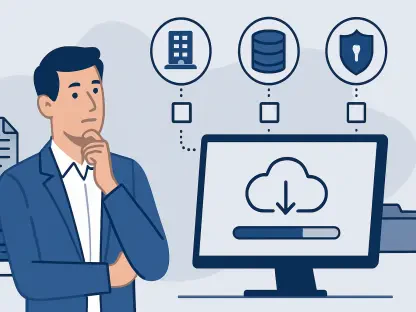

Proactive sharing of trust center links during the initial stages of a deal can pre-emptively satisfy buyer requirements and accelerate the sales cycle. For years, the enterprise software landscape was defined by a grueling dance of spreadsheets and evidence requests that often spanned several weeks, if not months. This manual exchange of information created a significant bottleneck, frequently stalling critical digital transformation projects just as they were gaining momentum. In the fast-paced environment of 2026, where organizational agility is a primary competitive advantage, the reliance on a static, request-response architecture for security validation has become increasingly untenable. Organizations now recognize that the friction inherent in traditional vendor vetting is not merely an administrative nuisance but a genuine risk to business continuity and growth. By moving away from reactive data gathering and toward a model of transparency and automation, companies are finding that they can maintain rigorous security standards without sacrificing the velocity required to remain relevant in a volatile market. This shift marks the beginning of the zero-touch era, where trust is established through verifiable, real-time data rather than defensive posture and repetitive paperwork. As the volume of third-party integrations continues to grow, the ability to automate these assessments is becoming a necessity for any enterprise looking to scale effectively.
The Scalability Crisis: Addressing Structural Failures
The scalability crisis facing modern security teams is largely a byproduct of redundant effort and fragmented compliance frameworks. Most global security standards, such as SOC 2, ISO 27001, and various industry-specific certifications, share a significant degree of overlap in their control requirements. Despite this commonality, vendors have historically been forced to answer nearly identical questions in slightly different formats for every new client they onboard. This cyclical process leads to a massive waste of human capital, as high-priced security engineers spend hundreds of hours each year copy-pasting answers from one spreadsheet to another. The sheer volume of vendors in the average enterprise ecosystem has now reached a point where manual oversight is no longer feasible. When a single organization manages hundreds or even thousands of third-party relationships, the old method of individual, bespoke questionnaires breaks down entirely. This redundancy not only frustrates sellers but also overwhelms buyers, who must then manually parse thousands of rows of data to find relevant insights, often missing subtle red flags in the process. Without a move toward a more unified data exchange, the friction of procurement will eventually grind technological adoption to a halt.
Beyond the sheer volume of work, the traditional questionnaire-driven model suffers from a critical structural flaw: it is inherently a point-in-time assessment. A questionnaire captures a vendor’s security posture at a single moment, providing a static snapshot that may become obsolete within days of completion. In a world of continuous deployment and rapidly evolving threat landscapes, a security review conducted six months ago offers little assurance against a vulnerability discovered yesterday. This lag in data relevance creates a false sense of security, as organizations rely on outdated affirmations to justify ongoing access to their sensitive data. Furthermore, manual responses are notoriously prone to human error, vagueness, and inconsistency, which often necessitates multiple rounds of follow-up communication to clarify specific controls. These delays extend the sales cycle and postpone the implementation of critical business tools, creating a tension between security teams and business units. The realization that manual reviews provide diminishing returns in terms of actual risk mitigation has pushed the industry toward more dynamic, automated alternatives that provide a more accurate reflection of a vendor’s security posture.
Centralized Repositories: The Rise of Trust Centers
Centralizing trust through the use of dedicated security profiles has emerged as the first major pillar in the transition toward a zero-touch environment. These trust centers act as a single source of truth where vendors host all relevant security artifacts, including audit reports, penetration test summaries, and privacy policies. By providing self-service access to these materials, vendors effectively flip the script from reactive data gathering to proactive data publishing. This model allows prospective buyers to perform their initial due diligence without ever having to send an email or wait for a response from a sales representative. The accessibility of these portals significantly reduces the administrative burden on both sides of the transaction, as the necessary evidence is already organized and ready for review. Modern trust centers often feature tiered access controls, allowing vendors to share public-facing information freely while keeping more sensitive documentation behind a non-disclosure agreement or a formal access request. This balance of transparency and control ensures that the most critical security information is available to those who need it, exactly when they need it, fostering a culture of openness in the business ecosystem.
The evolution of trust centers has moved beyond simple document repositories and into the realm of machine-readable data structures. By providing security information in formats that can be ingested by automated systems, vendors allow buyers to bypass the manual review of lengthy PDF reports altogether. This reusable trust model ensures that once a security posture is documented, it can be shared and analyzed thousands of times with zero additional effort from the vendor’s security team. For the buyer, the ability to instantly map a vendor’s controls against their own internal risk framework is a transformative capability. Instead of a security analyst reading a 100-page SOC 2 report to verify a specific encryption standard, an automated system can verify the presence of that control in seconds. This level of interoperability is essential for scaling vendor risk management programs in an environment where the number of software-as-a-service applications used by the average company continues to climb. The shift toward standardized, machine-readable trust data is effectively turning security compliance from a document-heavy hurdle into a data-driven asset that accelerates business growth and strengthens overall security posture.
Advanced Automation: AI and Continuous Monitoring
Leveraging agentic AI platforms has become a cornerstone of the zero-touch movement, specifically in the parsing and validation of complex security documentation. These advanced AI tools are capable of reading through a vendor’s uploaded policies and technical specifications to generate draft responses based on actual evidence, rather than relying on generic templates. By analyzing the nuances of a vendor’s specific security controls, AI can highlight discrepancies or red flags that might fall outside a buyer’s pre-defined risk tolerance. This automated initial pass ensures that human reviewers are not bogged down by routine data entry or the verification of standard controls. Instead, the AI flags only the high-stakes anomalies or missing pieces of evidence that truly require professional judgment. This approach significantly increases the accuracy of security reviews, as AI does not suffer from the fatigue or oversight that often plagues human analysts working through dozens of similar documents. The result is a more consistent and rigorous vetting process that can be completed in a fraction of the time previously required, allowing teams to keep pace with the rapid speed of modern procurement.
In addition to AI-driven document analysis, zero-touch assessments increasingly rely on API-based scanning and continuous monitoring to solve the point-in-time problem. By establishing direct connections to a vendor’s cloud infrastructure or security toolset, buyers can gain real-time visibility into the actual operational state of the vendor’s environment. This always-on validation ensures that security controls are not just promised on paper but are actively functioning in practice. For instance, if a vendor’s cloud storage configuration deviates from established encryption standards, an API-based scan can detect the change immediately and trigger an automated alert. This level of transparency allows for a shared responsibility model where both parties are aware of the vendor’s compliance status at all times. Continuous monitoring shifts the relationship from a periodic audit to an ongoing partnership, where risks are identified and remediated in real-time. This dynamic visibility is crucial for maintaining a resilient supply chain in an era where cyber threats are constant and configuration drift can happen in minutes, making static annual reviews essentially obsolete for high-growth enterprises.
Professional Evolution: The New Role of Security Teams
The transition to a zero-touch model is fundamentally redefining the role of security professionals within the modern enterprise. As automation takes over the repetitive tasks of evidence gathering and initial validation, these experts are no longer relegated to the status of operational executors who spend their days filling out spreadsheets. Instead, they are evolving into strategic overseers who focus on high-level risk management and policy definition. This shift allows security teams to dedicate their expertise to the areas where human judgment is most critical, such as evaluating the implications of complex legal requirements or assessing the strategic importance of a high-risk vendor relationship. By removing the administrative burden of baseline assessments, organizations can better utilize their most talented personnel to address the sophisticated threats that automated tools might miss. This professional evolution also helps in talent retention, as security engineers can focus on challenging, strategic work rather than mundane clerical tasks. The role is now about managing the broader framework of trust rather than micro-managing every individual data point for every vendor.
Managing the nuances of residual risk acceptance is another area where the human element remains indispensable in an automated world. While zero-touch systems can identify where a vendor falls short of a security baseline, they cannot always determine whether that specific gap is acceptable within the context of a particular business case. Security professionals now spend more of their time defining the risk thresholds and logic gates that drive the automation, ensuring that the system reflects the organization’s unique risk appetite. They handle the exceptions and edge cases where a vendor might have a non-standard but effective compensating control that requires a deep-dive manual analysis. This hybrid approach ensures that while the vast majority of assessments are handled automatically, the most critical or unusual partnerships still receive the necessary level of scrutiny. The objective is to build a scalable engine of trust that allows for rapid onboarding while maintaining a human-in-the-loop for high-stakes decision-making. This balance ensures that security remains a rigorous protector of the business without becoming a hurdle that prevents it from adopting necessary innovations that drive future success.
Strategic Implementation: Building a Resilient Ecosystem
For organizations looking to implement a zero-touch assessment strategy, the process begins with establishing a robust and centralized single source of truth for all compliance data. This involves moving away from decentralized folders and fragmented email threads in favor of a unified platform where all security artifacts are kept current. Vendors must take a proactive stance, ensuring their trust profiles are comprehensive enough to satisfy the most common questions from diverse buyer segments. A key best practice is to lead with the trust center link at the very beginning of the sales conversation, which sets a tone of transparency and professionalism. Internally, procurement teams should align with security to define clear, automated workflows for different categories of vendors. A tiered assessment strategy is essential here, as not all vendors present the same level of risk. While a zero-touch approach is ideal for low-to-medium risk SaaS providers, organizations should maintain a roadmap for when more intensive scrutiny is required. By clearly defining these boundaries, companies can ensure that their resources are allocated efficiently while maintaining the highest possible standard of supply chain integrity across the entire vendor life cycle.
The shift toward automated validation delivered a significant improvement in the way enterprises managed their third-party ecosystems. Organizations that adopted these strategies found that they could reduce the time required for security reviews by more than seventy percent, which directly translated into faster revenue recognition and improved operational agility. The move away from manual questionnaires allowed security leaders to refocus their efforts on high-level strategic threats, ultimately strengthening the overall resilience of the supply chain. By prioritizing continuous monitoring over static snapshots, companies mitigated the risks associated with configuration drift and emerging vulnerabilities in real-time. This transformation proved that security did not have to be an obstacle to business speed; instead, it became a facilitator of growth through transparent and verifiable trust. The industry eventually moved toward a model where trust was no longer an annual check-box activity but a constant, automated state. Those who embraced this change early secured a competitive advantage by building more reliable, transparent, and scalable partnerships. As a result, the zero-touch model established itself as the definitive standard for modern security governance, ensuring that business and security interests remained perfectly aligned.