
A regional tech festival turned installation day into a lever for digital sovereignty, as the 22nd Latin American Festival of Open-Source Software Installation drew students, civil servants, and seasoned developers into shared workspaces where operating systems were flashed, drivers tuned, and ideas traded across disciplines. Caracas emerged as a focal point, aligning grassroots initiative with public backing to move beyond rhetoric toward practical outcomes: formatted laptops running free software, teams prototyping with open hardware, and newcomers walking out with reproducible workflows. The model was simple yet forceful—bring a device, leave with fully configured tools—and it revealed how installation support, training, and policy signals could knit together into a coherent path for adoption that persists after the cables are coiled and the rooms fall quiet.
Caracas Sets the Agenda
Program Highlights and Hands-On Momentum
The Caracas program placed a premium on doing the work in public, starting April 29 at the UCV Faculty of Sciences with exhibitions, real-time demos, and a staffed installation table from 8:30 a.m. to 3:00 p.m., where technical volunteers guided BIOS tweaks, partitioning, and hardware detection for attendees’ machines. Workshops added targeted depth: AI-assisted web template design for fast prototyping with open models and toolchains; professional animation workflows in Blender emphasizing rigging and render optimization; and live audio production on GNU/Linux focused on JACK routing, low-latency kernels, and plugin stacks. Seats were free but capped, with registration coordinated via atencion@cnti.gob.ve to manage demand and ensure each participant received hands-on guidance at a workable ratio.
Partnerships, Venues, and a Strategy for Scale
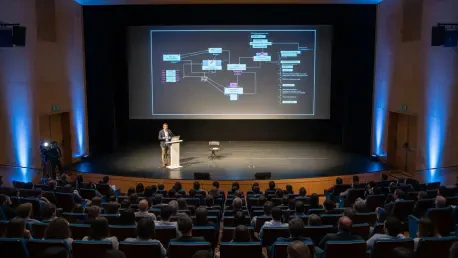
Backed by the National Center for Information Technologies (CNTI) under the Ministry of Science and Technology and hosted with the Central University of Venezuela and the Teresa Carreño Theater, Caracas framed open technologies as a public asset rather than a hobbyist niche. This alignment came into focus on April 30 at the Teresa Carreño, where masterclasses in the José Félix Ribas room ran from 9:00 a.m. to 2:00 p.m., presenting expert talks on sovereign technology in a major national venue. The setting mattered: a high-visibility stage signaled that open hardware and AI are policy-relevant domains with career pathways, supplier ecosystems, and maintenance models. Building on this foundation, the event positioned installation not as the endpoint but as the starting line for reproducible research, public-sector modernization, and small-business tooling.
AI, Open Hardware, and Canaima 8.4
From Ideals to Installers: Why the Stack Matters
A defining thread was the pivot from software adoption toward full-stack capability—AI, open hardware, and local distributions—anchored by the showcase and installation support for Canaima OS version 8.4. On-site teams assisted with multi-boot layouts, GPU drivers, power management, and package repositories, reducing friction for users who needed stable daily drivers rather than weekend experiments. The presence of AI-assisted web design training complemented this base: participants learned how to scaffold interfaces and components while keeping source code portable across toolchains. Pairing Blender animation and live audio production on GNU/Linux showed how creative industries can run end to end on open platforms, connecting content pipelines to standard formats and version control. This approach naturally led to discussions on long-term maintainability, upgrade cadence, and documentation quality.
A Regional Network and the Case for Sovereignty
Caracas did not stand alone. Earlier April events in San Juan de los Morros, Maturín (Monagas), Cumaná, Mérida, and Valencia reinforced a decentralized model attuned to local constraints—connectivity dips, varied hardware vintages, and institutional procurement cycles. By synchronizing with FLISOL sites across Latin America and Spain, organizers amplified reach while keeping the curriculum concrete: device-in-hand installs, reproducible tutorial materials, and shared troubleshooting patterns. Emphasis on open hardware fit this rhythm, enabling participants to prototype with boards and sensors that do not lock firmware or data flows. The result was less a roadshow and more an ecosystem rehearsal, where public entities, universities, and community groups tested how to standardize support desks, pool driver knowledge, and align training with the realities of labs, classrooms, and municipal IT rooms.
Toward Durable Adoption
Next Steps for Institutions and Practitioners
The festival concluded with clear, actionable paths: institutions should adopt a phased rollout of Canaima 8.4 beginning with labs and noncritical endpoints, document driver baselines for common hardware, and publish a quarterly image refresh to stabilize updates. Teams in creative and media roles could replicate the Blender and GNU/Linux audio setups by pinning package versions, exporting portable project templates, and standardizing on open codecs for interchange. Educators gained a blueprint—pair installation days with brief skills sprints, then follow with remote clinics that track issues and produce shared FAQs. Meanwhile, AI-assisted web design workshops pointed to a durable pattern: treat models and prompts like dependencies, capture them in repositories, and verify output against accessibility and performance budgets before shipping. These measures, taken together, would have accelerated adoption without sacrificing reliability.
What to Watch and How to Build on the Momentum
Looking ahead, the most productive move would have been to establish a standing support circle that met monthly, rotated across campuses and agencies, and maintained a living hardware compatibility list tailored to local fleets. A small registry of open hardware kits, matched to community-maintained guides, would have reduced onboarding time for classrooms and pilot projects. For procurement, tying RFPs to open standards and exportable data formats would have protected institutions from tool lock-in as requirements evolved. Finally, connecting regional FLISOL nodes through shared repositories and recorded masterclasses would have transformed one-off events into a continuous pipeline for training and feedback. With that cadence, installs became baselines, workshops seeded specialized tracks, and Canaima 8.4 served as a stable spine for iterative improvements.