
Giving an artificial intelligence its own virtual environment and mouse control necessitates a three-tier visibility system to balance user oversight with agent autonomy. This fundamental shift marks the transition from ephemeral, session-based chatbots to persistent digital entities that inhabit a workspace even when the user is offline. Historically, interactions with large language models were treated as disposable transcripts—fleeting moments of utility that vanished into a sidebar once a prompt was satisfied. However, as the industry moves toward 2027, the focus has pivoted to creating agents with durable identities and long-term memory. This evolution requires a design philosophy that prioritizes the bot as a constant companion rather than a temporary service. By establishing a permanent presence, these agents can manage multi-day projects, maintain context across various workstreams, and develop a specialized understanding of a user’s unique workflows. The challenge lies in moving the user’s cognitive load from managing the process of a task to supervising the partnership of the execution, effectively turning software into a dependable professional partner that exists beyond the current browser tab.
Structural Foundations: The Architecture of Identity
The architecture of these persistent agents is grounded in a framework of five primary primitives: Bots, Chats, Prompts, Tools, and Artifacts. At the very center of this ecosystem is the Bot, which serves as the foundational unit of identity and specialized knowledge. Unlike traditional chat interfaces that list recent conversations as the primary navigation, this new paradigm places a roster of specialized agents in the sidebar. This reflects a shift in information architecture that mirrors a physical office environment, where a user returns to a specific expert for a recurring need. Each agent is designed to hold its own distinct memory and personality profile, ensuring that a financial analyst bot does not conflate its data with that of a creative writing assistant. By anchoring the user experience in the Bot’s identity, the software fosters a sense of continuity. This structural choice encourages users to invest time in onboarding their agents, knowing that the context and preferences established today will remain active and relevant in future interactions, thus building a cumulative repository of collective intelligence.
Within this organizational ecosystem, the interaction between tools and artifacts provides the necessary bridge between abstract conversation and tangible results. Tools allow these digital entities to interact with the external world through integrated web browsers and code execution shells, enabling them to perform research or build software independently. Artifacts, on the other hand, represent the durable outputs—such as documents, diagrams, or codebases—that are created during the process. This structure ensures that the work produced by an agent lives on independently of the chat transcript. It transforms the artificial intelligence from a reactive responder into a proactive worker that manages its own set of resources and outputs over time. By clearly separating the conversational history from the functional output, the design allows users to focus on the evolution of a project rather than scrolling through endless lines of text to find a specific file or decision made three days prior.
Presence as Interface: Solving the Black Box Problem
A significant hurdle in current artificial intelligence design is the psychological friction caused by the black box problem, where users are left wondering about the system’s internal state. Grok Bot addresses this by using a philosophy of presence as interface, where the visual representation of the agent communicates its current cognitive load and activity. Through simple shapes and expressive ocular animations, each agent uses subtle movements to signal whether it is idle, deep in thought, or waiting for human feedback. These micro-reassurances are critical for building trust, as they reduce the user’s urge to micromanage or wonder if the system has stalled. When an agent visibly “kicks into gear” through an animation, it provides a level of clarity and peripheral awareness that a standard loading bar cannot achieve. This visual feedback loop transforms the software from a static tool into a dynamic participant in the creative process, allowing the user to sense the rhythm of the work being performed without needing to read a status log.
The visual identity of these agents was carefully crafted to be instantly recognizable without overwhelming the user with unnecessary visual complexity. By using a system of controlled variations in color palettes and accessories, the design creates a roster of characters that feel distinct yet belong to a cohesive aesthetic family. This psychological approach helps the user mentally categorize different agents, making it easier to switch between tasks. For example, a user might associate a specific blue-themed agent with data processing and a green-themed one with project management. This distinction is not merely cosmetic; it leverages human pattern recognition to streamline the management of multiple autonomous workflows. When a user can identify which agent is working on a specific problem just by a glance at the sidebar or the workspace icon, the cognitive overhead of multitasking is significantly reduced. This creates a more intuitive environment where the artificial intelligence feels like a coworker with a visible, reliable presence.
The Virtual Workspace: Defining Boundaries of Control
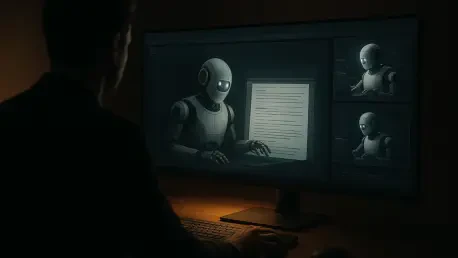
One of the most innovative features of this design is the implementation of a dedicated virtual environment for each agent, effectively giving the bot its own computer. Instead of performing tasks in hidden background processes, the agent operates within a visible sandbox where it can browse the internet, write code, or manipulate files just as a human would. This introduced a unique design challenge: how to show the work without turning the user into a constant, distracted supervisor. The solution was a three-tier visibility system that offers varying levels of engagement. Users can see a simple status indicator for high-level monitoring, a pinned preview panel for peeking at the agent’s current screen, or a full-screen mode for moments when a human needs to step in and take temporary control of the mouse and keyboard. This tiered approach respects the user’s attention while maintaining total transparency, ensuring that the autonomous agent remains accountable for its actions within its digital office.
To further reinforce the separation between the agent’s world and the user’s primary workspace, the designers implemented dynamic environmental elements like virtual wallpapers that change based on the time of day. This subtle detail reinforces the concept that the agent exists in its own space and operates on its own timeline, even when the user is not actively watching. This spatial distinction is vital for true delegation, as it creates a clear boundary between human oversight and autonomous execution. By giving the agent its own desktop and tools, the interface communicates that the bot is a primary actor rather than just an extension of the user’s cursor. This design choice encourages a healthier delegation dynamic where the user provides the goals and the agent manages the environment and technical steps required to achieve them. It marks a departure from the “copilot” model toward a “remote worker” model, where the agent is empowered to organize its own digital surroundings to maximize efficiency.
Information Architecture: Beyond the Chat Window
The traditional model of artificial intelligence interaction often overwhelmed users with long, monolithic blocks of text that required manual parsing and sorting. The Grok Bot interface moves toward a system of heterogeneous transcripts, where the agent provides structured responses using inline cards and interactive widgets. If a task involves a specific schedule, the agent displays an interactive calendar block; if it involves complex data analysis, it presents a functional, real-time chart. This shift makes the information immediately actionable and easy to digest at a glance, moving the interaction away from heavy prose and toward a more efficient, utility-driven layout. These widgets are not just static images but live components that the user can manipulate or expand. This evolution in information architecture ensures that the conversation serves as a high-level coordination layer, while the actual data and functional tools remain organized and accessible within the transcript itself.
As users develop and deploy multiple specialized agents, the system manages their collective intelligence through a hierarchical context model that prevents data silos from becoming unmanageable. Rather than a single, cluttered memory for all agents, the system separates knowledge by specific roles and permissions. A legal agent, for example, does not need to be distracted by the minute technical data of a finance agent, although they can still collaborate in specialized group chats when a project requires a multidisciplinary perspective. This specialized memory management ensures that each agent remains an expert in its specific field, maintaining high performance and relevant context without the risk of hallucination or confusion caused by irrelevant information. By organizing memory this way, the design allows for a scalable ecosystem where dozens of bots can work in parallel, each contributing its unique expertise to a central project without creating an overwhelming amount of noise for the human supervisor.
Proactive Routines: The Shift to High Level Management
The final pillar of the persistent agent experience is the transition from reactive prompting to proactive routines. In a typical artificial intelligence setup, the system only acts when it receives a direct command, but persistent agents are designed to be self-starting. By assigning standing responsibilities, users can set their agents to monitor specific industries, prepare daily briefings, or manage recurring administrative tasks without needing constant intervention. In this model, the conversation is no longer the starting point of the work; it becomes the place where the results of that work are reported and reviewed. This proactive behavior shifts the user’s role from a technical operator who must trigger every action to a high-level manager who sets objectives and reviews outcomes. It represents the ultimate goal of a disappearing interface—a system that requires less manual effort from the human over time as the agents learn the rhythms and requirements of their roles.
This shift to proactive routines creates a workflow where a user might begin their day by reviewing a summary of tasks already completed by their agents overnight. Instead of a blank prompt box, the user is greeted with a series of completed artifacts, research summaries, and a list of items requiring human approval. This fundamental change in the direction of interaction—from human-initiated to agent-reported—is what truly defines the next generation of autonomous software. By prioritizing delegation and presence, the design establishes a stable and intuitive environment where humans and autonomous agents can work side-by-side. The interface serves as the coordination hub for a workforce of digital entities, each operating with a degree of independence that was previously impossible. This paradigm not only increases productivity but also changes the nature of digital work, allowing humans to focus on creative and strategic decision-making while their persistent agents handle the logistical and technical execution.
Future Paradigms: Designing for Long Term Autonomy
The transition to persistent agents necessitated a complete reimagining of how users and machines coexist within a shared digital environment. By focusing on identity, presence, and proactive routines, the design successfully moved away from the limitations of the single-session chat window. It was determined that providing agents with their own virtual workspace and three-tier visibility systems provided the necessary balance between transparency and autonomy. This approach allowed users to trust the system to work in the background, knowing they could peek into the process or intervene whenever necessary. The development of specialized memory and heterogeneous transcripts further supported this by making complex information more accessible and actionable. These innovations collectively moved the industry toward a more collaborative model of artificial intelligence, where software is viewed as a durable asset rather than a temporary utility.
Moving forward, the focus must remain on refining the boundaries of these autonomous environments to prevent user fatigue while maximizing the agent’s utility. Designers should prioritize the development of even more sophisticated “presence” cues that can communicate complex agent states through ambient visuals, further reducing the need for direct monitoring. There is also a significant opportunity to explore how these agents can better collaborate with each other in the absence of human intervention, creating a “mesh” of intelligence that solves multifaceted problems autonomously. Organizations implementing these systems should focus on creating clear “standing orders” for their agents to ensure that proactivity remains aligned with human goals. As these persistent entities become more integrated into professional life, the goal will be to create a seamless experience where the interface effectively disappears, leaving only the results of a high-functioning, autonomous partnership.