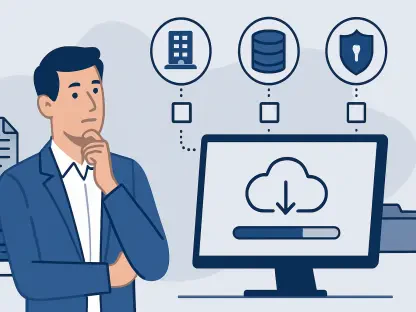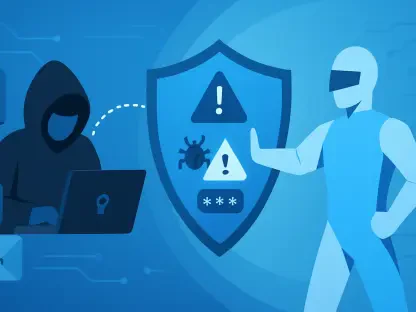

A sudden surge in citizen demand, a critical update to a classified system, and an opportunistic phishing wave can collide within the same hour, creating a perfect storm that only a resilient, hybrid IT posture can withstand without degrading public services or jeopardizing national security. Federal leaders face this reality daily while balancing strict rules, legacy dependencies, and scrutiny over spend, making cloud-only visions attractive but untenable. The latest findings from the SolarWinds Next-Gen Government IT: AI and Observability Insights Report reflect this tension: cloud adoption advanced, traditional data center use receded from its 2023 peak, yet agencies still relied on on-premises platforms that anchor compliance and continuity. The durable answer was not exit, but integration. A steady, governed path that extends mission-proven systems with scalable cloud services—and pairs them with unified observability and AIOps—has increasingly defined how agencies stabilized performance and elevated resilience.
Hybrid by Necessity, Not a Waypoint
Federal workloads include controlled unclassified information, law enforcement evidence chains, healthcare and benefits data, and military telemetry that cannot be risked to lift-and-shift zeal. Many platforms were engineered for deterministic performance, hardened interfaces, and compliance regimes that resist abrupt change, including mainframe-backed case systems and message buses rooted in the 1980s. Agencies therefore treated hybrid as an operating doctrine rather than a step on the way to something else. They mapped sensitive datasets to on-premises enclaves with hardware security modules, data loss prevention, and cross-domain guards, while pushing elastic web tiers, geospatial analytics, or burst compute to FedRAMP High cloud regions. This blend reduced migration risk and let teams modernize interfaces and automation without breaking core records systems.
Building on this foundation, integration patterns matured beyond ad hoc bridges. API gateways, service meshes, and zero trust overlays enforced consistent policy between bare-metal clusters and managed cloud services, ensuring the same identity, encryption, and segmentation controls followed workloads. Storage strategies centralized around immutable backups and object locks, while event streaming stitched telemetry from mainframes, Kubernetes clusters, and SaaS platforms into shared pipelines. Because cloud use continued to grow and data center reliance slipped from 2023 levels, architectural blueprints increasingly assumed multi-cloud by default but preserved authoritative systems of record on-premises. Hybrid ceased to be a compromise; it became the way to meet auditability thresholds and surge capacity simultaneously.
Federal Scale Raises the Stakes
Scale is not a talking point; it is the operating environment. The federal enterprise spans 65 departments, agencies, and commissions and supports more than 4 million personnel in the Executive Branch, with annual IT spending topping $130 billion. Such magnitude multiplies integration surfaces and increases the blast radius of a flawed change or delayed patch. Tools that functioned well in a single datacenter buckled when stretched across regions, clouds, and edge sites aboard ships, aircraft, and field offices. Latency variability, bandwidth contention, and overlapping authorities introduced operational friction. As multi-cloud tenancy spread, shared services like identity and logging had to serve thousands of applications without becoming chokepoints or single points of failure, which demanded deep visibility and consistent automation.
Procurement and budget dynamics added time pressure. Continuing resolutions sliced programs into short funding horizons, making capital-intensive overhauls harder to justify even when the technology case was clear. Acquisition lead times lagged the private sector’s refresh cadence, and roughly 28% of federal IT leaders cited budget constraints as barriers to sustained security improvements. Yet momentum existed. An emerging 6% cohort reported completing digital transformation, showing disciplined execution could overcome headwinds when scoping was narrow, metrics were explicit, and teams leaned on standard platforms. These realities elevated hybrid governance playbooks, enterprise architecture boards, and change advisory processes from paperwork to strategic levers that protected uptime while allowing controlled modernization.
Budget, Procurement, and Policy Realities
The constraint set forced practical choices. Instead of pursuing wholesale replacements, agencies targeted consolidation and workload rationalization to retire redundant tools and shrink licensing footprints. Enterprise agreements for observability, identity, and endpoint protection replaced fragmented contracts, easing audits and unlocking tier-based savings. Cloud financial operations practices paired with automated rightsizing brought utilization under control by turning idle capacity into cost reductions. Policy alignment mattered as much as code: authoritative data catalogs, records schedules, and authority-to-operate templates accelerated delivery by reducing rework and aligning compliance artifacts across programs. Efficiency, not expansion, became the reliable pathway to security and performance gains.
This pragmatism shaped deployment patterns. Mission owners funded high-impact increments that could land within a single budgeting window: containerizing a legacy app tier behind an API rather than replatforming the database; moving non-sensitive analytics to serverless engines while keeping PII stores on encrypted SAN arrays; adopting managed message queues to decouple brittle integrations. Measurable targets—mean time to detect, mean time to recover, change failure rates, and patch latency—guided investment decisions. Technical debt was tackled with guardrails: infrastructure as code applied consistent baselines, and canary releases limited exposure. When procurement cycles slowed, agencies leaned on existing vehicles and shared services to move, using playbooks that packaged architectures, security controls, and deployment steps into repeatable patterns.
Unified Observability as the Strategy
Observability rose as the linchpin that made hybrid feasible at scale. By ingesting metrics, logs, traces, and events from mainframes, hypervisors, container platforms, and cloud-native services into a correlated data model, teams gained a single pane of glass that surfaced health, utilization, and readiness in real time. This was not passive monitoring. Dependency maps revealed how a slow database page read in an on-premises cluster cascaded into timeouts in a cloud API. SLOs tied to mission outcomes replaced device-centric checks, so alerts aligned to user impact rather than raw thresholds. Noise shrank as deduplication, topology awareness, and seasonality modeling suppressed flapping signals and highlighted genuine incidents that deserved action.
Cross-domain telemetry changed coordination culture. ITOps, DevOps, and SecOps shared context from the same datasets, which meant incident bridges started with a common view of facts instead of dueling dashboards. Runbooks linked directly from alerts allowed analysts to pivot from a saturated network interface to packet captures, from a suspicious process hash to EDR timelines, from an anomalous API spike to trace spans identifying the offending code path. Capacity planning shifted from guesswork to demand curves informed by agency events like enrollment seasons, disaster responses, or fiscal year-end surges. Compliance teams benefited too: end-to-end evidence, from control configuration to event histories, flowed into audit packages without bespoke data calls.
Automation and AI as Force Multipliers
AIOps brought scale to sense-making. Correlation engines stitched signals across layers—network jitter, container restarts, IAM anomalies—to propose root causes and confidence scores. Seasonality baselines flagged deviations early, while causal graphs helped distinguish a failing zone from a noisy host. Policy-driven automation closed the loop: if a node pool ran hot beyond a defined window, autoscaling kicked in; if a certificate approached expiration, rotation workflows executed with change tickets created and logs archived. Routine toil dropped as patch pipelines targeted only affected fleets, and incident responders focused on edge cases where human judgment added value.
The effects were concrete. During a benefits enrollment spike, predictive models projected saturation in a read-heavy cache tier; preemptive scaling and query plan adjustments kept response times within SLOs without overprovisioning. When a malformed update caused elevated error rates in a single microservice, canary analysis paused rollout automatically, traced the regression to a configuration flag, and restored the previous state with validated rollback. Teams wrote fewer bespoke scripts as platform automation standardized steps from golden image creation to blue-green cutovers. With AI-assisted summaries, executives received concise incident narratives tied to user impact and recovery actions, streamlining decision-making during tense moments.
Security and Resilience as First-Order Outcomes
Security stakes remained paramount as criminal groups and nation-state actors probed for leverage across hybrid edges. Unified observability shortened dwell time by correlating identity anomalies, lateral movement signals, and process behaviors with network flows and application traces. Deception breadcrumbs planted in low-risk zones provided early tripwires, while analytics compared runtime behavior against signed baselines to catch tampering. Because toolchains shared telemetry, playbooks could isolate a compromised service account by revoking tokens, quarantining affected workloads, and validating integrity via container image attestations—all while preserving service continuity through traffic shifting and graceful degradation patterns.
Resilience advanced beyond uptime metrics into demonstrable readiness. Tabletop exercises evolved into live-fire chaos tests where failover, DNS cutovers, and cross-cloud routing were rehearsed under compliance guardrails. Agencies codified recovery time and recovery point objectives within pipelines, making resilience a property of releases rather than an afterthought. The path forward was clear: invest in a common data fabric for observability, institutionalize SLOs tied to mission outcomes, expand automation with human-in-the-loop approvals for sensitive actions, and retire duplicative tools that obscure rather than clarify. By aligning architecture, telemetry, and policy, agencies positioned hybrid not as technical debt but as strategic advantage, and the resulting playbooks offered concrete steps that could be executed in the next planning cycle.