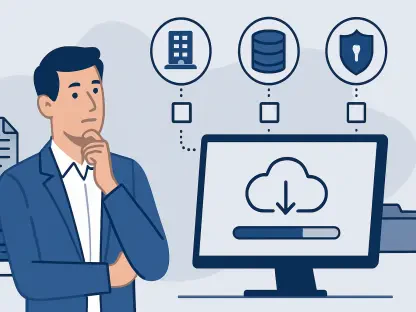

Consistent storage and orchestration across different departments are essential for strengthening recovery confidence in a distributed IT environment. In the current digital landscape, the concept of cyber resilience has transitioned from a specialized technical requirement to a foundational business necessity. As organizations navigate a world where cyberattacks are no longer a matter of if but when, the focus has shifted from mere data backup to the construction of comprehensive, recovery-ready operations. Dell PowerProtect One emerges as a response to this shift, offering a unified platform designed to balance the competing demands of robust security and operational flexibility. By utilizing an open architecture, it allows organizations to protect their data without forcing them into a specific vendor ecosystem or limiting their choice of infrastructure. This unified platform integrates management and orchestration into a single intelligent experience, helping to manage modern chaos efficiently.
Navigating the Intersection: Protection and Operational Choice
Historically, IT leaders faced a frustrating trade-off where they could choose a highly secure but closed system that limited infrastructure choices, or maintain an open, flexible environment that remained vulnerable to sophisticated threats. This dilemma is intensified by an expanding attack surface that includes on-premises hardware, multiple cloud layers, and specialized AI workloads that require constant monitoring. The complexity of managing these disparate systems often leads to inconsistent security policies and fragmented recovery workflows across an organization. Dell PowerProtect One resolves this conflict by offering an architecture that integrates management and storage into a unified experience, ensuring protection without forcing organizations into a specific vendor ecosystem. This approach allows for the inclusion of various cloud platforms and virtual machines while maintaining a rigid security posture that effectively safeguards critical data assets.
By consolidating administrative tasks into a single interface, PowerProtect One significantly reduces management overhead, often by as much as fifty percent. In distributed IT environments where custom tools and fragmented policies are common, this platform provides much-needed centralized visibility across every department. This strategy effectively cuts through the chaos, ensuring that whether an organization uses native tools or third-party software, the underlying protection storage remains consistent. This unification eliminates the uncertainty of managing siloed protocols, providing a significant boost in recovery confidence during a crisis. Furthermore, the platform helps streamline the onboarding of new assets, ensuring that security policies are applied automatically rather than through manual intervention. Such efficiency is vital for maintaining business continuity in a fast-paced environment where downtime has immediate financial consequences.
Establishing the Foundation: The Three Pillars of Continuity
To ensure that businesses can restore operations within minutes rather than days, the platform is built on three core pillars: an unbreakable foundation, frictionless operations, and trusted resilience. The foundation focuses on physical and logical security through data immutability and high-level encryption, ensuring that once data is stored, it cannot be altered by unauthorized actors. Frictionless operations use intelligent automation to remove the operational hurdles that often slow down crisis response, allowing teams to act decisively. Finally, trusted resilience leverages decades of enterprise innovation to ensure the system performs reliably under the extreme pressure of a total system failure or a massive ransomware attack. These pillars work in concert to provide a stable environment where data integrity is prioritized above all else, allowing for seamless transitions during recovery and maintaining high availability across services.
Modern ransomware strategies often target the backup systems themselves to neutralize an organization’s ability to recover, leaving them with no choice but to negotiate. PowerProtect One counters this by treating the last line of defense as a primary target for protection, implementing end-to-end resilience that includes continuous monitoring and built-in malware scanning. By orchestrating backups across diverse environments—including databases, containers, and specialized AI workloads—it ensures that data is not just stored but is verified as recovery-ready and free from hidden threats. This proactive scanning prevents the re-infection of systems during the restoration process, which is a common failure point in traditional recovery plans. By maintaining clean copies of data in an isolated vault, the platform provides a secure fallback point that remains inaccessible to external threats, effectively neutralizing the leverage of cybercriminals during an incident.
Leveraging Intelligent Automation: AI and Threat Detection
Because the modern threat landscape moves too quickly for manual intervention, the platform integrates AI-driven automation for threat discovery and recovery orchestration. A standout feature is its anomaly detection, which monitors behavioral patterns and metadata to identify suspicious activity that may signal a breach before it can spread. This proactive stance allows the system to identify potential issues before they escalate, providing a layer of defense that operates at the speed of the attackers. The integration of machine learning algorithms allows the platform to learn from previous incidents, constantly refining its detection capabilities to stay ahead of evolving threats. This level of automation is essential for managing the sheer volume of data generated by modern enterprises, where traditional manual monitoring would be insufficient to catch subtle signs of infiltration or unauthorized data movements.
When a threat was detected, the AI Assistant provided context and guidance on root causes while recommending specific remediation steps to the IT team. By automating policy enforcement and recovery workflows, PowerProtect One minimized the risk of human error, which remained a leading cause of failed recovery attempts in high-pressure situations. This automation enabled IT teams to move away from routine maintenance and focus on strategic growth, confident that their infrastructure was being proactively safeguarded by an intelligent resilience platform. The AI-driven insights also helped in optimizing resource allocation during the recovery process, ensuring that critical services were prioritized based on business impact. Ultimately, the shift toward proactive, intelligence-led protection storage provided the necessary foundation for long-term stability. The results demonstrated that a comprehensive approach to recovery was essential for surviving and thriving in a digital economy.