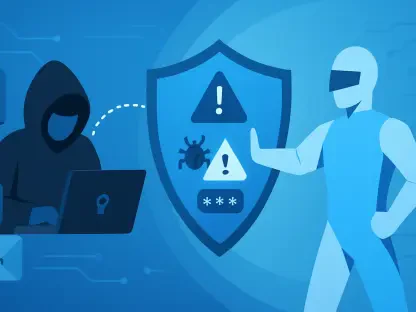

The persistent vulnerability of open-source repositories to malicious pull requests has created a high-stakes game of cat and mouse between maintainers and sophisticated threat actors seeking to hijack automated workflows. For several years, the software supply chain has remained under siege as attackers exploited the very automation meant to streamline development, often using “Pwn Request” techniques to exfiltrate sensitive secrets. GitHub has responded to this escalating threat landscape by releasing Checkout V7, a major update designed to overhaul how runner environments interact with untrusted code during the continuous integration process. This release represents more than a routine patch; it is a fundamental shift in the security architecture of the world’s most popular version control platform. By implementing strict execution boundaries and real-time credential masking, the new version aims to neutralize the risks associated with fork-based workflows. Development teams are now looking at this iteration as the potential definitive solution to a problem that has plagued the ecosystem since 2026.
Enhancing Repository Integrity: The Mechanics of Defensive Automation
The fundamental issue with earlier iterations of the checkout action centered on the permissive nature of the default GITHUB_TOKEN and how it interacted with pull requests from external forks. In many legacy configurations, a malicious actor could submit a pull request containing a poisoned workflow file that, when triggered by a maintainer or an automated system, gained access to the repository’s internal secrets. This vulnerability was compounded by the fact that the checkout process often occurred in an environment where the token possessed write permissions or access to sensitive environments by default. While GitHub previously introduced manual approval gates, these measures often failed due to human error or the sheer volume of daily contributions in large-scale projects. Checkout V7 addresses this by introducing a mandatory “pre-flight” validation layer that scrutinizes the integrity of the incoming code before any environment variables are injected or any script execution is permitted to begin by the runner.
Building on this layer of validation, the latest update utilized a concept known as “Isolated Context Execution” to separate the fetching of code from the execution of CI scripts. In previous versions, the runner would pull the code and immediately begin processing it within a context that might already have access to the broader GitHub Actions environment. Checkout V7 changed this dynamic by ensuring that the initial code retrieval occurred in a sandboxed, read-only state that was completely severed from the runner’s sensitive memory spaces and credential stores. This architectural decoupling ensured that even if a malicious script was embedded within a pull request, it remained dormant and powerless because it could not find or interact with any active tokens. Furthermore, the updated logic now defaults to a minimal privilege state that requires explicit, granular opt-in for every resource the runner needs to access. This move significantly raised the barrier for entry for attackers who previously relied on the platform’s standard configurations.
Security teams observed that the transition to this new standard provided the necessary groundwork for a more resilient development lifecycle that favored proactive isolation over reactive monitoring. Organizations that successfully integrated Checkout V7 reported a drastic reduction in unauthorized credential access attempts throughout the software lifecycle. The implementation process required a comprehensive audit of existing YAML configurations to ensure that all workflows adhered to the new restricted permission models. Engineers moved toward adopting OpenID Connect for cloud provider authentication, which further complemented the security enhancements by eliminating long-lived secrets from the runner environment entirely. By the time the rollout reached maturity, the community shifted its focus from merely preventing attacks to optimizing the speed of secure deployments. This transition solidified the idea that security should not be a secondary consideration but rather a built-in feature of the underlying infrastructure that governs code.