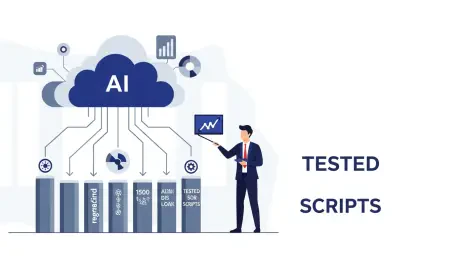

The rapid maturation of generative artificial intelligence has fundamentally altered how engineers approach task automation by introducing natural language as a viable programming interface. While the initial thrill of prompting a large language model to generate complex reports or format datasets in seconds feels revolutionary, the reality of deploying such systems in production often reveals a series of hidden costs and instabilities. Relying on a probabilistic model to execute the same mechanical steps day after day introduces an unnecessary variable known as model drift, where the AI might slightly alter its output format without warning. This unpredictability creates a fragile pipeline that requires constant human oversight just to ensure that the basic structure of the data remains intact. Consequently, a paradigm shift is occurring where developers are moving away from repetitive chat-based instructions toward a more stable methodology: converting those successful prompts into tested, permanent scripts. This strategy preserves the creative spark of AI while grounding the execution in the rigid, reliable world of software engineering.
1. Defining Scope: Identifying Repetitive Tasks and Developing Code
The transition toward a more robust automation framework begins with the pinpointing of repetitive tasks that consistently produce predictable results across various sessions. Within any given enterprise environment, there are countless workflows—such as parsing structured log files, reformatting JSON data, or generating standardized status reports—that follow a rigid set of rules regardless of the specific data content. When a process demonstrates this level of consistency, it no longer requires the dynamic reasoning capabilities of a generative model; instead, it becomes a candidate for hardcoded logic. By documenting these patterns, engineers can distinguish between tasks that require a human-like touch and those that are purely mechanical. Once these patterns are identified, the focus shifts toward developing an actual code file for the process rather than relying on a text-based instruction or a persistent chat prompt. Writing the logic in a standard programming language ensures that the instructions are interpreted identically every time the system runs.
Transitioning from a descriptive paragraph to a formal script allows developers to utilize the full power of established programming paradigms, such as modularity and inheritance. Instead of crossing one’s fingers and hoping the AI understands the nuance of a complex data transformation, a script written in Python or Node.js provides a clear, unyielding path for data to follow. This movement toward deterministic execution eliminates the risk of the AI hallucinating new fields or omitting critical data points that were present in previous iterations. Furthermore, code is inherently more portable and easier to integrate into existing CI/CD pipelines compared to a series of manual prompts. As organizations scale their operations from 2026 into the future, the ability to trigger a script via a simple command-line interface or an API call becomes far more valuable than maintaining a library of text prompts that must be manually copied and pasted. This foundational change ensures that the core logic of the business is preserved in a format that is both readable by humans and perfectly executable by machines.
2. Security and Reliability: Managing Keys and Network Resilience
In the modern landscape of cybersecurity, storing sensitive keys and credentials directly within an AI prompt or a chat interface represents a significant vulnerability that can lead to catastrophic data leaks. To mitigate this risk, it is essential to store sensitive API keys and access tokens in specialized configuration files, such as a .env file, which are loaded into the environment during execution. By keeping these credentials separate from the logic and the AI’s context window, organizations ensure that sensitive information never appears in AI logs or training data. This separation of concerns is a hallmark of professional software development and provides a layer of protection that raw prompting simply cannot offer. When a script manages these keys, it can interact with external services securely, ensuring that only the necessary data is sent to the model for processing. This approach not only protects the organization’s assets but also aligns with global compliance standards regarding the handling of private information and authentication secrets.
Beyond security, the reliability of a system depends heavily on its ability to handle the inherent instability of network communications and external service requests. When an AI model attempts to call an external tool via a prompt, it may not have a sophisticated way to handle rate limits or temporary outages, often resulting in a total failure of the task. By implementing automatic retries and delays within a script, developers can build in the necessary timeouts and backoff logic to ensure the system remains resilient. These scripts can be programmed to wait a specific number of seconds before attempting a failed request again, or to switch to a secondary endpoint if the primary one is unresponsive. This level of granular control over error handling is virtually impossible to achieve through natural language prompts alone. As a result, the automation becomes self-healing and capable of operating autonomously without requiring constant monitoring. This robustness is critical for mission-critical applications where downtime or data loss could result in significant financial or reputational damage.
3. Quality Assurance: Validating Scripts and Human Review Protocols
The primary advantage of moving logic into a script is the ability to validate the entire process through comprehensive unit tests that catch bugs before they reach a production environment. Unlike AI prompts, which are difficult to test in a repeatable manner due to their probabilistic nature, a script can be subjected to thousands of edge cases to ensure it behaves exactly as expected. Developers can write tests that check for specific output types, data ranges, and error conditions, providing a safety net that protects the system against regressions during future updates. This rigorous testing culture ensures that when a change is made to the codebase, the developer is immediately alerted if that change breaks existing functionality. By establishing a baseline of expected behavior, organizations can move faster with confidence, knowing that their automated tools are grounded in verified logic. This transformation from “trust but verify” to “verify then trust” is a critical step in professionalizing the use of automation tools within any technical department.
Once a script has been written and tested, it must still be approved through a standard review process involving human oversight to ensure compliance with internal coding standards. This review provides an opportunity for senior engineers to examine the logic, suggest optimizations, and ensure that the script does not contain any hidden vulnerabilities or inefficient loops. After the code passes this human review, it can be deployed and reused indefinitely without the need for the AI to re-evaluate the core instructions every time a task is executed. This process significantly reduces the cognitive load on the development team, as they no longer need to babysit the AI to ensure it is following the rules. The script becomes a trusted asset in the company’s digital library, providing a level of permanence and accountability that transient prompts can never match. In the long run, this leads to a more sustainable development cycle where the focus shifts from fixing prompt-related errors to building new features and expanding the capabilities of the overall system.
4. Strategic Delegation: Reasoning Layers and Production Auditing
While scripts are superior for mechanical and logical tasks, the true power of modern automation lies in delegating only complex reasoning or selection tasks to the AI model. In this hybrid model, the AI acts as a high-level orchestrator that evaluates messy, unstructured input and decides which specific script needs to be executed to achieve the desired outcome. For example, an AI might analyze an incoming customer email to determine its intent and then call a specific Python script to pull the relevant data from a database. This approach allows the model to handle the nuances of human language while the script handles the precise, mechanical work of data retrieval and formatting. By using the AI for judgment rather than calculation, organizations maximize the strengths of both technologies. This creates a highly efficient workflow where the AI’s token consumption is minimized, leaving more room in its memory for relevant context and complex decision-making, which ultimately leads to higher quality results and lower operational costs.
To truly optimize these systems, developers must continually examine current production skills to replace manual steps with automated logic through a comprehensive audit of existing workflows. This involves identifying prompts that have become stable enough to be converted into direct API calls or specialized scripts, thereby reducing the dependency on expensive model reasoning for simple tasks. During this audit, engineers often find that large portions of their AI interactions are redundant and could be handled more efficiently by a traditional software component. By systematically replacing these manual steps, the organization increases the speed of its operations and reduces the potential for human error. This proactive approach to system maintenance ensures that the automation stack remains lean and cost-effective. As the technology landscape continues to evolve from 2026 to 2028, those who successfully bridge the gap between AI reasoning and scripted execution will be best positioned to lead their industries in efficiency and innovation.
5. Strategic Outcomes: Future Considerations for Scalable Automation
The transition from unpredictable prompts to tested scripts represented a fundamental advancement in how digital infrastructure was managed and scaled. By grounding volatile AI capabilities in the stability of traditional software engineering, developers successfully reduced the operational friction that previously plagued early automation attempts. This shift prioritized the creation of deterministic pathways, which allowed for the seamless integration of machine intelligence into high-stakes business environments. Organizations that adopted these practices found that their systems were not only more reliable but also significantly more cost-effective over the long term. The elimination of redundant token usage and the reduction in manual troubleshooting hours provided a clear return on investment. Ultimately, the move toward scripted logic ensured that the focus of innovation remained on solving new problems rather than repeatedly fixing the same errors caused by model inconsistencies.
Looking ahead, the next steps for any technical team involve a rigorous review of all existing AI-human touchpoints to identify where hardcoded logic can further streamline operations. The implementation of a central repository for approved scripts, combined with a robust version control system, will be essential for maintaining a coherent automation strategy. Moving forward, it is recommended that teams prioritize the development of wrapper functions that can be easily called by AI orchestrators, creating a library of “tools” that the model can use with high precision. This modular approach will allow for the rapid swapping of underlying scripts as external APIs or business requirements change, without needing to rewrite the overarching AI logic. By continuing to treat automation scripts as first-class citizens in the software ecosystem, engineers will build more resilient and adaptable systems. The focus should remain on building a foundation where logic is fixed and reasoning is flexible, ensuring a balanced and powerful technological future.