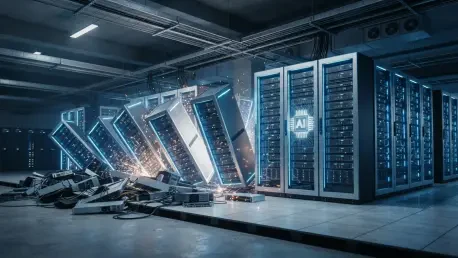

While large corporations can weather the slow return on AI investments, specialized startups are already feeling the pressure of high interest rates and falling valuations. The neocloud sector, once seen as the frontier of the artificial intelligence boom, is now facing a period of severe financial distress as the initial speculative hype begins to fade into a more demanding economic reality. With over 200 players currently competing in this narrow niche, the market has become over-saturated with providers that lack the diversified revenue streams necessary to survive a sustained credit crunch. Analysts point to a widening disconnect between the massive capital expenditures required to maintain cutting-edge data centers and the actual revenue generated by specialized workloads. As venture capital becomes increasingly discerning in 2026, many specialized firms find themselves without the safety net of secondary income sources to absorb operational losses. This instability is leading to a major market shakeout where only the most efficient organizations will manage to endure the transition.
The Financial Crisis: Analyzing the Neocloud Collapse
Credit Scarcity: The End of Easy GPU Capital
Elon Musk recently highlighted a critical shift in the global credit markets, noting that debt financing has effectively evaporated for companies that lack diversified revenue streams outside of their AI data centers. This change marks a fundamental turning point for neocloud providers that relied heavily on high-interest loans to purchase expensive Nvidia hardware during the initial gold rush. Musk predicts a significant wave of failures and mergers, suggesting that many of these firms are now caught in a struggle for survival where only the largest will remain. Without the ability to secure investment-grade funding, smaller players are finding it impossible to service their existing debt or continue their aggressive expansion plans. This financial squeeze is creating a landscape of stranded compute where unfinished facilities are left with rapidly depreciating assets. The disappearance of easy capital is forcing a reckoning in the industry, as lenders pull back from high-risk AI ventures in favor of more stable corporate giants with proven cash flows.
Asset Depreciation: The Threat of Hardware Obsolescence
The risk of asset obsolescence presents a significant challenge for specialized providers, as the speed of AI infrastructure development often outpaces their ability to recoup initial investments. Projections suggest that nearly 80% of current neocloud providers may cease independent operations by 2030 because they cannot maintain the pace of technological change. The primary issue is that massive spending on current-generation GPUs cannot be recovered before the next cycle of semiconductors makes existing hardware less competitive and more expensive to operate. When a startup’s entire valuation is tied to a specific set of processors, the rapid cycle of innovation becomes a liability rather than a competitive advantage. This continuous need for reinvestment is difficult to sustain without the consistent cash flow provided by broader technology ecosystems. Consequently, many specialized firms are in a race against time to reach scale before their infrastructure becomes technologically irrelevant to the evolving needs of high-end developers.
Strategic Alternatives: Building a Sustainable Path
Market Dominance: Why Hyperscalers Maintain the Lead
Hyperscalers like Amazon, Microsoft, and Google continue to dominate the landscape because they can leverage diversified income to subsidize their massive AI infrastructure projects. In contrast, specialized neoclouds like CoreWeave and Nebius are highly vulnerable to stock market volatility and sudden shifts in investor sentiment. Musk pointed to the ability of established corporations to secure tens of billions in funding, bolstered by revenue from stable services like satellite internet or cloud software, as a model for infrastructure sustainability. Specialized startups lack this luxury and are often forced to take on more expensive, high-risk debt to compete for the same hardware. This structural disadvantage makes it difficult for them to survive prolonged periods of high interest rates or slower-than-expected growth in AI demand. The current market volatility underscores the fundamental instability of the specialized cloud model, where a lack of ancillary services leaves providers exposed to every minor fluctuation in the broader tech economy.
Future Resilience: The Shift Toward Integrated Software
The industry observed that the transition toward a more stable AI cloud market required a focus on operational efficiency and the development of unique software value beyond raw compute. Successful organizations concluded that technical innovation alone was insufficient without a foundation of financial resilience and diversified service offerings. It was noted that the most effective next steps involved forming deep partnerships with established hyperscalers or pivoting toward niche markets with higher profit margins. By prioritizing capital sustainability over rapid, debt-fueled expansion, firms identified a pathway to endure the market correction that began to sweep through the sector. Leaders recognized that the consolidation of the neocloud sector was a necessary step toward building a more mature infrastructure for the global economy. Ultimately, the market favored those who integrated their compute resources into broader, more resilient business models. These strategic shifts ensured that the surviving entities were better prepared for long-term growth.