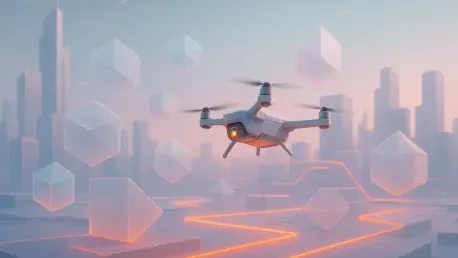

The fundamental insight driving the development of SkySim is that an autonomous navigation algorithm cannot distinguish between physical motors and their accurately modeled digital counterparts. This concept serves as the bedrock for a new era of robotics where the “field-test dread”—the paralyzing fear of a single line of code destroying thousands of dollars in hardware—is replaced by the safety of a high-fidelity digital sandbox. Developers in 2026 are increasingly moving away from the logistical nightmare of manual flight logs and battery cycles. Instead, they are embracing environments that provide “honest” sensor data, ensuring that an AI model feels the same aerodynamic forces in a browser tab as it would in the open sky. This shift does more than just save money; it democratizes the complex world of aerial robotics. By removing the barriers of physical hardware ownership and regulatory compliance, the platform allows for a pure focus on algorithmic logic, accelerating the pace of innovation within the industry without the constant threat of mechanical failure.
Overcoming the Challenges of Physical Flight
Part 1: High Financial Risks of Real-World Testing
Traditional drone development has long been hindered by a frustratingly slow feedback loop where every minor software update necessitates a full-scale physical deployment. In the current landscape of 2026, engineers are finding that the time spent charging batteries, traveling to authorized flight zones, and waiting for optimal weather conditions often outweighs the time spent actually coding. This inefficiency is compounded by the inherent risks of experimental flight logic; a small error in a PID controller or an undetected bug in an obstacle avoidance routine can lead to a catastrophic crash. Beyond the immediate financial loss, such incidents cause significant project delays as replacement parts are sourced and hardware is rebuilt. The wear and tear on components, particularly the degradation of lithium-polymer batteries through high-cycle usage, adds a layer of hidden costs that makes rapid prototyping in the physical world unsustainable for many modern research institutions.
Part 2: Accelerating Development Through Digital Iteration
SkySim addresses these bottlenecks by offering a controlled, repeatable environment where a developer can execute hundreds of simulated flights in the same amount of time it would take to prepare a single physical drone for takeoff. This digital-first approach eliminates the “hardware tax” that has historically throttled progress in autonomous systems. By simulating the internal states of the drone with high precision, the platform allows developers to push the boundaries of what is possible without the looming specter of hardware failure. This isolation from the physical world means that even the most aggressive or unstable flight policies can be tested to the point of failure without real-world consequences. Consequently, the focus remains entirely on the data-centric loop of sensing, processing, and reacting. Engineers can refine their navigation stacks through a continuous integration pipeline, ensuring that every software iteration is vetted before it ever touches a physical motor.
Part 3: Mastering Complexity: Simulating Environmental Dynamics
To be truly effective, a simulator must go beyond simple visual representations and delve into the complex physics that define flight. SkySim functions as a physics-driven harness that accurately models variables such as wind turbulence, ground effect, and varying atmospheric pressure. These factors are not merely aesthetic additions; they are critical stressors that challenge the robustness of an autonomous navigation algorithm. For instance, a drone attempting to maintain a stable hover in a narrow corridor must account for the erratic air currents generated by its own propellers. By introducing these variables into the simulation, the platform provides a level of complexity that mirrors the unpredictability of the outdoors. This allows developers to observe how their code reacts to sudden gusts or changes in air density, providing a depth of insight that was previously only available through high-risk field tests, ensuring a twin of reality.
Part 4: Safety Protocols: Stress Testing Through Edge Cases
The commitment to environmental realism enables a robust debugging process where edge cases—those rare but critical scenarios like sensor noise or sudden motor failure—can be tested repeatedly. In a simulated environment, a developer can programmatically induce a sensor malfunction or simulate a dropped telemetry packet to observe the drone’s recovery logic. Achieving this level of reliability in the physical world would require hundreds of flight hours and potentially several sacrificial drones. By contrast, the simulator allows for the “brute-forcing” of safety scenarios, ensuring that the flight controller demonstrates extreme stability before a physical takeoff is even considered. This systematic validation of safety protocols is essential for building trust in autonomous systems, especially as they move into complex urban airspaces. The ability to reproduce these cases exactly provides diagnostic clarity that is impossible with unrepeatable data.
Technical Foundations of Browser-Based Simulation
Part 5: Transitioning Toward Web-Native Accessibility
The evolution of SkySim into a high-performance tool involved a strategic pivot from a traditional desktop application toward a streamlined, browser-based architecture. Early versions were built as cross-platform applications using the Godot engine, but this approach introduced friction in the form of complex installations, driver dependencies, and varying hardware configurations. To solve these issues, the development team transitioned the core logic toward WebAssembly. This shift allowed the simulator to run natively within any modern browser tab while maintaining the high-speed execution necessary for accurate aerodynamic calculations. By leveraging C++ for the heavy physics lifting and compiling it to WebAssembly, the platform delivers near-native performance without requiring the user to download a single file. This accessibility means that a researcher in a remote location can access the same advanced tools as a laboratory.
Part 6: Performance Optimization: The High-Speed C++ Core
Moving the simulation into the browser also facilitates a more collaborative and integrated development experience. Engineers can share specific simulation scenarios through simple URLs, allowing for instant peer review of flight behavior and algorithmic performance. This web-native approach naturally aligns with the modern developer’s workflow, where tools are increasingly hosted in the cloud and integrated through standardized web protocols. Despite the move away from a standalone desktop app, the simulator does not sacrifice the fidelity required for professional-grade testing. The underlying architecture ensures that the computational resources are managed efficiently, preventing the browser from becoming a bottleneck during intensive flight maneuvers. This balance between ease of access and technical rigor is a hallmark of the platform’s design philosophy, ensuring the physics engine is available to the widest possible audience.
Part 7: Deterministic Communication: The Lockstep Protocol
A critical requirement for any research-grade simulator is determinism, which ensures that the same inputs always result in the same outputs regardless of the underlying hardware’s speed. To achieve this, SkySim utilizes a rigorous communication protocol based on WebSockets and a lockstep JSON messaging system. In many real-time simulators, the physics engine continues to run even if the control algorithm is lagging, which can lead to unpredictable behavior and ghost collisions. SkySim avoids this by implementing a synchronous handshake; the physics engine pauses its calculations and waits for a specific command from the navigation algorithm before proceeding to the next time step. This synchronization is particularly vital for reinforcement learning, where an agent might need to pause and process complex neural network layers between actions, providing a stable foundation for training models without timing jitter.
Part 8: Reproducibility: A Scientific Approach to Flight Research
This lockstep architecture also makes every test run perfectly reproducible, a feature that is indispensable for scientific research and rigorous software debugging. If an autonomous agent exhibits an unusual behavior or crashes during a simulation, a developer can re-run that exact scenario with the same initial conditions and expect an identical result. This reproducibility allows for the frame-by-frame analysis of an algorithm’s decision-making process, making it much easier to pinpoint the exact moment a logic error occurred. In 2026, as flight algorithms become more complex and rely more heavily on deep learning, the ability to isolate variables in this manner is the only way to ensure system safety. Furthermore, the deterministic nature of the platform facilitates large-scale parallel testing in the cloud to evaluate new flight policies across a vast array of conditions, ensuring that results remain consistent.
Advanced Perception and Synthetic Data Generation
Part 9: Efficiency in Raycast-Based Depth Sensing
In the pursuit of autonomous perception, SkySim makes a deliberate design choice to prioritize raycast-based depth sensors over traditional RGB camera simulations. While high-definition graphics are visually appealing, they are computationally expensive and often unnecessary for the initial training of navigation algorithms. Raycast sensors provide the drone with a way to see its environment by measuring the distance to objects in three-dimensional space, returning a clean stream of mathematical data. This approach is significantly more efficient than rendering a full visual scene and then using computer vision techniques to extract depth information. For an AI agent, a point cloud or a depth map is often a more direct and useful representation of reality than a collection of colored pixels. By focusing on these lightweight but highly accurate sensors, the simulator can maintain high frame rates on most hardware.
Part 10: Training AI Agents: From Gymnasium to Deployment
SkySim functions as more than just a testing ground; it is a sophisticated data factory designed to generate the massive datasets required for modern machine learning. By wrapping the core simulation engine in a Gymnasium-compatible API, the platform integrates seamlessly with standard reinforcement learning libraries. This allows researchers to treat the drone simulation as a standard environment for training agents in tasks such as stable hovering or complex obstacle navigation. The ability to run these simulations at speeds much faster than real-time means that an agent can experience years of flight time in a matter of days. This accelerated learning is the key to developing the sophisticated behaviors required for next-generation autonomous drones. As the industry in 2026 shifts toward more autonomous systems, the demand for high-quality synthetic training data continues to grow, making tools like SkySim essential.
Part 11: Domain Randomization: Preparing for the Real World
To further bridge the gap between simulation and the physical world, the platform employs a technique known as domain randomization. This involves programmatically varying the environmental factors during the training process, such as shifting the drone’s mass, altering surface friction, or introducing random sensor noise. By forcing the AI agent to succeed in a wide variety of simulated universes, developers can create algorithms that are more resilient to the unpredictability of the real world. A policy that has learned to hover despite random shifts in wind speed and center of gravity is much more likely to perform safely when it finally encounters a physical gust. This method of training prepares the algorithm for the messiness of reality without requiring the developer to model every single physical nuance perfectly. The result is a more versatile and capable autonomous system that can adapt to changing conditions.
Engineering Integrity and Future Outlook
Part 12: Lessons From Systems Engineering and Reliable Code
The development of SkySim was a rigorous exercise in systems engineering that provided several valuable lessons regarding the importance of code stability. One significant challenge involved navigating the subtle differences between various C++ compilers, which occasionally caused the simulator to behave inconsistently on different operating systems. This experience highlighted the dangers of relying on clever but fragile programming techniques that can lead to silent failures—bugs that do not crash the program but introduce small errors in physics calculations. In response, the development team adopted a more conservative and boring codebase that prioritizes cross-platform validation and rigorous unit testing. This focus on reliability ensures that the simulation remains a trusted source of truth for developers. By choosing stable patterns, the project created a foundation that is easy to maintain and extend in the world of robotics.
Part 13: Advancing the Sim-to-Real Frontier: Actionable Strategy
The implementation of this simulation strategy ultimately redefined the standard for autonomous flight safety. Development teams transitioned away from high-risk manual testing and favored the precision of virtual verification. This shift enabled the identification of critical software flaws long before they could cause physical damage. Engineers relied on the platform’s deterministic feedback to fine-tune their navigation stacks, resulting in a new generation of drones that operated with unprecedented reliability. By the end of the project, the focus had shifted from merely avoiding crashes to optimizing complex mission profiles in diverse environments. The use of synthetic data sets became the primary method for training robust neural networks, significantly lowering the barrier to entry for innovators in the field. This evolution proved that a disciplined, simulation-first approach was the most effective pathway to achieving true autonomy.