
Boardrooms did not debate whether agents would arrive; they debated how to make them useful, governable, and economical at scale without breaking security or data architecture in the process. That pressure framed Google Cloud Next ’26, where the company put forward an “agentic” strategy that joined autonomy with observable controls, open model choice, and a data-first foundation. Rather than pitching one hero model, Google stacked together a builder’s platform, a no-code app for everyday creators, silicon and networks tuned for many parallel agents, a fabric for real-time context, and defense tooling that used agents to fight threats. The pitch was pragmatic: give teams the means to build agents, run them for long horizons, audit their moves, and tie actions to the systems where real work actually happens.
The Agentic Era at a Glance
Google cast agents as governed collaborators that could move from intent to action across sales, support, finance, and operations, while remaining bounded by policy and audit. The framing rejected “chat as destination” and leaned into long-running, multi-step processes with human-in-the-loop checkpoints. A unifying message tied together governance planes, secure sandboxes, and oversight consoles so nontechnical stakeholders could inspect and steer outcomes. The approach connected to a broader industry turn: pick the right model for the job, keep data in place, and make performance-per-dollar a first-class constraint. In this view, autonomy only counted if it was observable, reversible, and compliant.
This platform stance surfaced across end-user tools as well as developer suites. Agentic capabilities were woven into Workspace so that Docs, Drive, Meet, and Gmail no longer felt like separate islands. Ask Gemini in Chat synthesized content across repositories and executed tasks—drafting briefs, scheduling reviews, or delegating next steps—without jumping between apps. Meanwhile, security moved in lockstep with autonomy. Google paired its security assets with Wiz to automate detection and response using specialized agents, acknowledging that machine-speed threats demanded machine-speed defense. The net effect linked action, context, and control: agents could do more, with humans retaining oversight when it mattered.
Platforms for Builders and Business Users
At the center sat the Gemini Enterprise Agent Platform, a unified environment for building, governing, and scaling agents. Model access was not monolithic: Gemini 3.1 Pro handled complex workflows, Gemini 3.1 Flash Image—nicknamed “Nano Banana 2”—processed visual content, and Lyria 3 produced professional-grade audio. An open stance added Anthropic’s Claude Opus 4.7, letting teams match capabilities to tasks and risk profiles. Agent Studio provided a low-code path where technical teams and business specialists assembled tools, data connectors, and guardrails with guided configuration. Controls for evaluation, policy, and observability lived alongside build tools, focusing attention on production realities rather than demos.
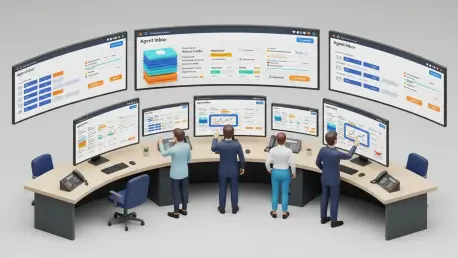
The companion Gemini Enterprise app took the democratization further. A no-code Agent Designer let frontline teams craft trigger-based workflows—“when inventory drops, reconcile POs and alert sourcing”—without touching code. Long-running agents executed in secure cloud sandboxes, handing off between tools and services as they advanced through multi-step processes. An Agent Inbox acted like a mission control, surfacing status, exceptions, and decision points so product managers, legal reviewers, or support leads could interject. Early deployments gave the vision practical shape: The Home Depot used Gemini for phone and in-store expertise; Papa John’s deployed an Ordering Agent that remembered “the usual,” accelerating repeat purchases; Unilever orchestrated agents across global functions.
Compute and Data for Scaled Agents
Autonomy at scale demanded silicon and networks that balanced throughput, latency, and cost. Google’s AI Hypercomputer stitched together compute and storage as a purpose-built system for fleets of agents and large model training. The eighth-generation TPUs split roles: TPU 8t for rapid training, and TPU 8i for inference with a stated 80% performance-per-dollar lift, signaling attention to operating costs. The stack embraced NVIDIA’s Vera Rubin NVL72 and continued support for existing GPU lines, while Axion processors added energy-efficient compute options. Virgo, a custom high-speed network, connected supercomputing clusters, and Managed Lustre pushed data movement up to 10 terabytes per second, relieving bottlenecks for training and data-heavy inference.
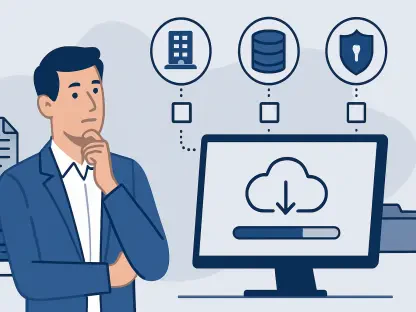
Data was treated as the substrate agents needed to act with confidence, not an afterthought. The Agentic Data Cloud introduced a Knowledge Catalog that automatically mapped enterprise information, tagging and linking assets with company-specific vocabulary so agents stayed aligned with current context. A Cross-Cloud Lakehouse built on Apache Iceberg enabled “query in place,” including data resident on AWS, reducing friction from migrations and preserving existing architectures. By unifying metadata, access patterns, and governance, Google aimed to collapse the lag between raw data and decision-ready context. This was where the agentic promise met reality: without fresh, permissioned signals, even the smartest agent produced eloquent but brittle output.
Security and Workflow Integration
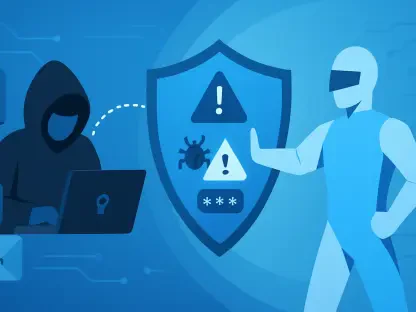
As agents took on operational roles, security shifted from perimeter checks to continuous, AI-native defense. Google’s integration with Wiz brought “agentic defense” to life through specialized agents that automated threat workflows. A Threat Hunting agent proactively searched for indicators and authored detection rules. A Detection Engineering agent looked for gaps and suggested new detections to close them. A Third-Party Context agent enriched investigations with external datasets, streamlining triage. Coverage expanded across multicloud PaaS, data platforms such as Databricks, and AI studios, while a Technology Intel Center centralized product changes, migrations, and end-of-life notices to shrink blind spots for platform and security teams.
Embedding agents where people already worked avoided context loss and sped up decisions. In Workspace, Ask Gemini in Chat acted as a connective tissue across Docs, Drive, and Gmail, turning fragmented threads into coordinated tasks—draft a customer remediation plan from a deck, propose dates from calendar constraints, spin up an approval flow, and track completion. Governance and access controls traveled with the user, keeping sensitive data scoped correctly. Real deployments underlined the operational stakes: Mars accelerated marketing research cycles; Citadel Securities applied AI tools to market-making analytics; and Unilever’s company-wide orchestration pointed to multi-domain rollouts. Each example suggested that agents gained legitimacy when they closed loops from insight to action, inside the tools employees trusted.
Practical Next Steps: From Pilot to Production
The path to production had been clearer than hype suggested: start with governed design, not model fascination. Teams should have inventoryed high-friction workflows, defined human checkpoints, and mapped tool access with least privilege. Adopting the Gemini Enterprise Agent Platform and Agent Studio would have let builders standardize evaluation, policy, and observability from the outset, while the Gemini Enterprise app’s Agent Designer would have allowed business owners to iterate on triggers and guardrails. A runbook should have captured when the Agent Inbox escalated decisions to humans, which metrics defined success, and how exceptions were audited. These steps kept autonomy visible and reversible, satisfying compliance without stalling progress.
Infrastructure and data decisions also demanded discipline. Pilots should have benchmarked inference on TPU 8i versus the existing GPU fleet to validate the performance-per-dollar claims, and tested long-running agents on the AI Hypercomputer to size concurrency needs. Data leaders should have lit up the Knowledge Catalog to align tags with business taxonomy, then rolled out the Cross-Cloud Lakehouse on Iceberg to “query in place” across stores, including AWS, before touching migrations. Security teams should have operationalized Wiz’s agentic defense, assigning ownership for Threat Hunting and Detection Engineering outputs, and wiring the Technology Intel Center into change-management. Taken together, these moves turned autonomy from a promise into a controlled, measurable operating capability.