
Behind the sleek interface of a high-performance cloud dashboard, a subtle architectural misalignment often lurks within the binary foundations of Go-based microservices, waiting for a single credential rotation to trigger a cascading failure across the production environment. This vulnerability is not a flaw in the encryption itself but rather a disconnect in how applications consume dynamic data. While Azure Key Vault excels at managing the lifecycle of sensitive information, the applications relying on those secrets frequently remain static, anchored to the values they retrieved at the moment of initialization.
The Silent Failure of the Midnight Secret Rotation
A critical security patch often triggers an automated secret rotation in Azure Key Vault during the early hours of the morning. On the administrative dashboard, the transition appears flawless: the new version of a database password or API key is active, and the previous version is marked as deprecated. However, a Go microservice running in the cluster may begin throwing authentication errors or continue to operate using cached, stale credentials that should have been retired. This common architectural blind spot occurs because most Go applications are designed to fetch secrets exactly once during the boot sequence, creating a dangerous gap between the source of truth in the cloud and the runtime state of the service.
This failure mode is particularly insidious because it does not always result in an immediate crash. Instead, the application might enter a degraded state where it intermittently fails to communicate with downstream dependencies as the old credentials are slowly deactivated by the identity provider. Monitoring systems may report rising latency or sporadic 401 Unauthorized errors, but the root cause remains hidden within the immutable configuration memory of the Go binary. Without a mechanism to detect changes in the external vault, the service remains a prisoner of its own startup configuration, necessitating manual intervention to restore full functionality.
Why Manual Restarts Are No Longer a Viable Security Strategy
In the fast-paced cloud-native environments of 2026, expecting engineers to manually redeploy or restart a fleet of services every time a secret changes is both inefficient and fundamentally risky. The traditional fetch-once pattern forces a difficult trade-off between security and availability, often leading teams to set excessively long rotation intervals simply to avoid the operational friction of coordinated restarts. This hesitation leaves credentials exposed for longer durations, contradicting the core principles of modern security posture.
As organizations move toward zero-trust architectures and the use of short-lived credentials, the ability for a Go application to dynamically synchronize with Azure Key Vault without downtime has become a requirement. Relying on human intervention introduces a significant margin for error, especially when managing hundreds of microservices across multiple geographic regions. A automated system must be in place to ensure that the application runtime is as ephemeral and reactive as the infrastructure it inhabits, allowing for seamless security updates that do not disrupt the user experience.
Transitioning From Static Fetches to Dynamic Reconciliation With Mamori
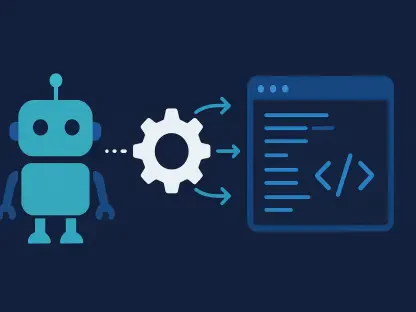
The introduction of the mamori library shifts the paradigm from pulling secrets to watching them through a specialized URI scheme. By defining secrets using azure-kv:// identifiers, the library establishes a reconciliation loop that transforms static configuration into a living process. This system leverages a specialized secret string type to ensure that sensitive data is redacted from logs by default, while a jittered polling strategy ensures the application stays current without overwhelming the Azure Key Vault API. Furthermore, the library supports flattening complex JSON secrets directly into nested Go structs, allowing for sophisticated configuration management that remains type-safe.
This architectural shift allows the application to treat the vault as a dynamic stream rather than a static file. When a secret is updated in Azure, the reconciliation loop identifies the version change and prepares the application for an update. By abstracting the complexity of the Azure SDK into a simple, watchable interface, developers can focus on business logic while the library handles the nuances of token acquisition and credential caching. This results in a cleaner codebase where security concerns are handled by a dedicated, tested middleware layer.
Expert Insights on Maintaining Resilience During Credential Shifts
Security researchers emphasized that the moment of rotation was often the most vulnerable point for high-availability services. By utilizing atomic updates, mamori ensured that if a newly fetched secret failed internal validation, the application continued to use the last known good configuration rather than crashing or entering an invalid state. This validation-first approach prevented malformed secrets from propagating through the system, acting as a circuit breaker against configuration errors.
The use of the DefaultAzureCredential allowed for seamless authentication across local development, Managed Identities on virtual machines, and Workload Identities on Kubernetes clusters. This consistency ensured that security protocols remained identical from a developer’s laptop to the production cluster, reducing the likelihood of environment-specific bugs. By prioritizing resilience, architects built systems that could survive transient network blips or temporary vault unavailability without losing access to their critical operational credentials.
Strategies for Integrating Automated Secret Monitoring in Go
To eliminate stale secrets, developers first replaced standard string types with redacted secret types to prevent accidental leaks in diagnostic outputs. Implementing a dynamic watcher involved mapping Key Vault URIs to a centralized configuration struct and utilizing the built-in reconciliation loop to handle background updates. This transition allowed the service to remain perfectly synchronized with Azure security policies while maintaining 100% uptime during credential rollovers.
The development community shifted its focus toward resilience frameworks that automated the reconciliation of cloud state. Organizations integrated mamori to bridge the gap between static code and dynamic environments, ensuring that credentials remained fresh without manual intervention. This transition prioritized a validation-then-update workflow, which preserved system stability even when upstream providers experienced latency or configuration errors. Ultimately, the adoption of these specialized Go libraries transformed how security policies were enforced at the edge of the service mesh.