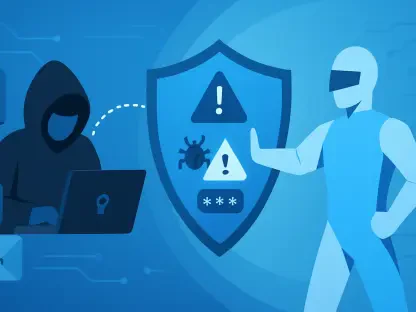

Modern enterprises currently face a barrage of polymorphic malware and sophisticated phishing campaigns that bypass legacy security protocols with alarming frequency, necessitating a shift toward more intelligent defensive tools. Vigolium emerged as a direct response to this instability, positioning itself not merely as a scanner but as an adaptive ecosystem that learns from the specific network environments it inhabits. Unlike previous generations of software that relied on rigid databases of known vulnerabilities, this AI-driven platform utilizes predictive modeling to anticipate how a hacker might exploit a logic flaw or a misconfigured container. The system analyzes traffic patterns and code repositories simultaneously to identify weak points before they are even exposed to the public internet. By moving security “left” in the development process, the tool eliminates the reactive nature of IT maintenance, providing a proactive shield that evolves with the threats.
Automated Threat Detection
Neural Engine Architectures
At the core of this technological shift is a proprietary neural network architecture designed to process massive datasets from global threat intelligence feeds in real-time. This engine does not simply search for matching code strings; it evaluates the behavioral intent of execution paths to identify suspicious deviations from the norm. For instance, when a service suddenly requests elevated privileges or attempts to communicate with an unrecognized external IP address, the system cross-references this activity with historical data and industry trends. This allows the scanner to flag potential zero-day vulnerabilities that have not yet been documented by standard regulatory bodies. The efficiency of this deep learning model ensures that large-scale infrastructure audits, which previously took weeks of manual labor, are completed in minutes. Consequently, security engineers focus on remediating confirmed high-priority risks instead of sifting through thousands of benign alerts.
Semantic Logic Interpretation
Accuracy remains the primary metric for any vulnerability scanner, and Vigolium addresses this through advanced semantic analysis that understands the context of a programming language. Many automated tools fail because they flag intentional design choices as security risks, leading to a breakdown in trust between development and security teams. This platform avoids such friction by examining how variables and functions interact across different modules, ensuring that a detected vulnerability is actually reachable and exploitable in the specific environment. By mapping out the entire data flow of an application, the software provides a clear visualization of the attack surface, highlighting the exact path a malicious actor would take to gain unauthorized access. This level of granular detail allows for more precise patching strategies, as developers see the immediate impact of a fix on the rest of the system. This contextual awareness bridges the gap between raw data and actionable intelligence.
Secure Development Cycles
Pipeline Integration Standards
Integrating high-speed scanning into the continuous delivery pipeline has become a standard requirement for organizations aiming to maintain rapid release cycles without sacrificing safety. Vigolium facilitates this by offering native plugins for popular development environments, allowing security checks to occur every time a developer commits new code. Instead of waiting for a monthly audit, teams receive immediate feedback on the security posture of their latest builds, which prevents vulnerabilities from ever reaching the production environment. This real-time feedback loop encourages a culture of shared responsibility, where security is no longer a final hurdle but an integral part of the creative process. Building this foundation within the DevOps workflow ensures that as the codebase grows, the security infrastructure scales automatically. This approach has reduced the cost of fixing bugs, as addressing an issue during the initial coding phase is cheaper than responding to a live breach after deployment.
Strategic Implementation Protocols
Strategic leaders prioritized the deployment of these AI-enhanced tools by establishing clear protocols for automated response and human oversight to ensure operational integrity. Organizations successfully transitioned their security operations by first mapping their critical assets and then allowing the autonomous scanner to establish a baseline of normal behavior. Technical teams conducted a series of simulated attacks to verify the platform’s detection accuracy and refined its internal weighting algorithms to match their specific risk tolerance levels. By the conclusion of the implementation phase, the system effectively handled the majority of routine monitoring tasks, which freed up senior analysts to conduct deeper forensic investigations into complex persistent threats. Decisions were made to invest in ongoing training for personnel to better interpret the complex outputs provided by the neural engine, ensuring that human expertise remained at the center of the defensive strategy for years.