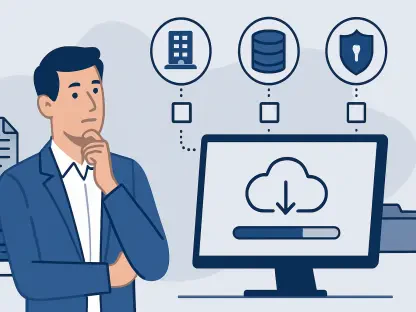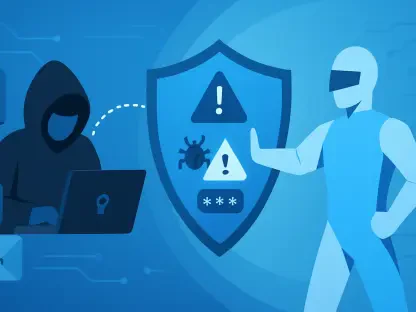

Developers can now add natural-language search to existing applications without building custom interfaces by using Oracle’s new embeddable search widget. This advancement represents a broader shift in how modern enterprises handle data accessibility and security protocols. Historically, the barrier between complex data structures and the end user required specialized knowledge or rigid interfaces that often slowed down decision-making processes. Today, the focus has moved toward creating a natural-language front door that simplifies interaction while maintaining administrative control. Organizations are increasingly looking for ways to bridge the gap between their employees and the vast silos of information they manage daily. By mapping human queries to curated targets, companies ensure that the move toward intuitive interfaces does not compromise security. The goal is to provide a seamless experience.
Introduction: The New Standard for Secure Data Accessibility
Predictability remains the fundamental cornerstone of modern governance strategies within high-value enterprise environments. While early iterations of artificial intelligence prioritized generative flexibility, current professional standards emphasize structured retrieval from validated information sources. This methodological shift ensures that accuracy and reliability remain the primary metrics for organizational success. Security administrators coordinate multifaceted protocols to maintain administrative control over data accessibility. Consequently, the integration of sophisticated metadata allows for seamless interaction without jeopardizing established security architectures. Every strategic interaction aligns with organizational policies, providing a comprehensive framework for professional data management. Stakeholders prioritize architectural integrity to mitigate potential complications.
The Convergence: Harmonizing AI Innovation with Enterprise Governance
Modern technical enhancements have further refined how these systems interpret user intent without exposing the backend to vulnerabilities. Large Language Models are now utilized for sophisticated input extraction, allowing platforms to automatically identify and validate necessary parameters within a user’s query. For instance, a system can distinguish between geographic regions, specific product categories, or fiscal time periods without requiring a rigid syntax from the user. This level of automation reduces the friction of data retrieval while ensuring that the parameters passed to the underlying database are sanitized and verified against existing business logic. Furthermore, the use of LLM-powered re-ranking allows administrators to prioritize search results based on contextual relevance rather than simple keyword matching. This ensures that the most pertinent information reaches the user quickly.
The implications of these developments extend deep into the open source ecosystem, which serves as the foundation for the majority of enterprise software stacks. Maintainers are currently facing a significant increase in the volume of contributions, many of which are assisted by automated tools. This surge has introduced new attack surfaces, necessitating a more rigorous approach to vulnerability management and code review for projects that support global infrastructure. To address this, specialized programs have begun investing heavily in open source projects to establish practical and scalable responses to security challenges. By providing financial support and expert mentorship, these initiatives help maintainers move beyond reactive troubleshooting toward proactive threat modeling. The integration of AI into the security lifecycle allows for faster investigation and prioritization of flaws.
Security improvements in one sector of the open source world frequently create a ripple effect across the entire industry. For example, projects focused on machine learning and intelligent systems have become foundational components for production environments. Securing these frameworks is vital because they handle the complex data pipelines and agent frameworks that power modern automation. This collaborative approach recognizes that the stability of software is linked to foundation health. Similarly, the tools used for developer productivity, such as linting software and package managers, play a crucial role in maintaining the integrity of the software supply chain. Strengthening these foundational libraries provides a non-linear benefit to the millions of downstream applications that depend on them. When core languages are hardened against potential exploits, the global ecosystem becomes resilient.
To maintain operational efficiency in these high-stakes environments, organizations are adopting hybrid search strategies that combine different retrieval methods. The use of vector search alongside lexical retrieval allows for high-speed matching while only applying complex models selectively for tasks like candidate re-ranking. This ensures that the system remains cost-effective and responsive, even as the scale of data increases, maintaining the performance standards expected by users. Additionally, the integration of Single Sign-On protocols ensures that user access remains strictly aligned with established identity management systems. By leveraging existing security frameworks, enterprises can deploy natural-language interfaces that do not require an entirely new governance model. Advanced telemetry and testing tools also play a role, enabling administrators to validate search behavior.
As artificial intelligence continues to accelerate the development lifecycle, the focus on securing the software bill of materials has intensified. Modern organizations require transparency regarding every component within their applications, from core libraries to transient dependencies. AI-driven tools are now being used to automate the generation and auditing of these documents, ensuring that vulnerabilities are identified long before they can be exploited in a production setting. This shift toward automated transparency allows security teams to manage the vast complexity of modern software stacks more effectively. By integrating security checks directly into the continuous integration and delivery pipelines, developers can receive real-time feedback on the risks associated with specific code changes. Moreover, the ability of AI to summarize complex vulnerability reports has reduced the time to remediation.
The concept of a human-in-the-loop model remains a fundamental principle in the current security landscape. While automation can handle the bulk of triage and data processing, the nuanced understanding of architectural context and downstream impact still requires experienced professionals. This balance ensures that the speed of innovation does not outpace the necessity of safety. Maintainers and security experts use AI as a force multiplier rather than a replacement for critical thinking. The successful implementation of this model involves training security personnel to work alongside intelligent agents, treating them as specialized consultants for specific tasks. This collaborative environment fosters a culture of shared responsibility, where both automated tools and human experts contribute to a more resilient defense posture. By focusing on decision-making, security teams address strategic threats.
Infrastructure security has also evolved to include specific protections for the distributed systems that manage cloud environments. Projects that handle networking and web infrastructure are receiving targeted support to ensure they can withstand the unique challenges of the AI era. This includes hardening API endpoints and securing the data exchange between various microservices that comprise modern enterprise applications, preventing lateral movement by potential malicious actors. Furthermore, the adoption of zero-trust architectures has been facilitated by the improved visibility provided by AI-driven monitoring tools. By constantly analyzing traffic patterns and user behavior, these systems can detect anomalies that might indicate a breach or a misconfiguration. This proactive stance is essential for maintaining the integrity of cloud-native environments where traditional measures are insufficient.
Finally, the role of community and collaborative funding cannot be overstated in the pursuit of a secure digital ecosystem. Partnerships between major technology firms and non-profit security foundations have created a sustainable model for long-term project health. This economic support allows maintainers to dedicate the necessary time to security-focused tasks that were previously neglected in favor of feature development, ensuring a more balanced approach to software growth. These investments also fund the creation of educational resources and best practices that benefit the entire community. By sharing knowledge about threat modeling and secure coding, the industry raises the baseline level of security for all participants. This collective effort ensures that innovations are built on a solid foundation of safety, protecting both the organizations that deploy software and the users.
Conclusion: A Strategic Roadmap for Resilient Security Frameworks
Technological advancements necessitated sophisticated implementation strategies regarding organizational infrastructure. Responsibility remains paramount whenever administrative professionals coordinate multifaceted cybersecurity operations. Significant transformations occurred throughout industrial sectors as stakeholders prioritized architectural integrity over temporary convenience. Systematic evaluations demonstrated that collaborative environments fostered substantial resilience against emerging vulnerabilities. Consequently, professional practitioners established comprehensive methodologies designed to mitigate potential complications. Institutional knowledge provided indispensable guidance during periods of rapid transition. Furthermore, the integration of automated assistance facilitated enhanced productivity without jeopardizing established security protocols. These developments ensured that digital transformation remained sustainable. Every strategic decision reinforced the commitment to long-term stability and reliability. Ultimately, the methodology supported robust frameworks.