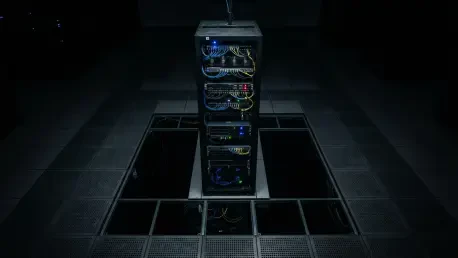

Deploying cybersecurity software in a dark environment requires tools that can operate effectively without ever calling home to a cloud-based server. This fundamental constraint defines the architecture of the modern air gap, a strategy that remains the ultimate line of defense for the world’s most sensitive technological ecosystems. In an age where digital interconnectedness is typically viewed as a prerequisite for progress, the air gap represents a deliberate, physical rejection of the external network. It is not merely a software configuration or a strict firewall rule; it is a “terminus technicus” that signifies a complete lack of physical or wireless connection between a secure local network and any unsecured entity, including the public internet. This isolation creates a closed-loop environment where critical hardware, sensitive servers, and essential operational technology can function in a state of absolute digital solitude. By stripping away the medium of transfer—the cables, the signals, and the shared frequencies—organizations aim to render remote, network-based exploitation impossible. As critical infrastructure faces an increasingly complex threat landscape in 2026, the reliance on these physical barriers has intensified, serving as a foundational pillar for national defense, energy stability, and public safety.
The Technical Divide: Defining Physical Isolation Versus Logical Segmentation
The distinction between true physical isolation and logical network segmentation is often misunderstood, yet it represents the difference between a minor obstacle and a formidable fortress for a cyber adversary. Network segmentation is a software-defined practice that utilizes firewalls, Virtual Local Area Networks, and Demilitarized Zones to partition a larger network into smaller, more manageable pieces. While this approach is highly effective at slowing down an attacker’s lateral movement and containing a breach within a specific zone, it inherently relies on the integrity of the software governing those rules. In a segmented environment, a digital path still exists between the various zones, meaning that a sufficiently skilled attacker who manages to exploit a vulnerability in a gateway or a protocol can eventually find a way to jump from a less secure area to a more sensitive one. This structural reality makes segmentation a valuable but ultimately permeable layer of defense that cannot offer the same level of assurance as a physical disconnection.
In contrast, air gapping operates by removing the physical infrastructure required for communication altogether, replacing logical barriers with a literal void. Where segmentation functions like a series of locked internal doors within a building that share the same foundation and ventilation, an air gap is akin to placing the sensitive assets in a separate building on a different island with no bridge. By eliminating the hardware level connection, such as Ethernet ports or Wi-Fi antennas, this strategy ensures that there is no “road” for a malicious packet to travel upon. This physical removal of the attack surface means that the vast majority of automated, internet-scale threats—including common ransomware, botnets, and remote access trojans—are neutralized before they can even reach the perimeter. For the most critical systems, this level of isolation provides a unique form of security that software-based controls simply cannot replicate, as it shifts the burden of penetration from the digital realm to the physical one, requiring adversaries to engage in high-risk, proximity-based operations.
Industrial Foundations: Why Critical Sectors Demand Absolute Security
The implementation of air-gapped environments is most prevalent in sectors where the “cost of failure” is measured not just in financial loss, but in threats to public health and national stability. In the healthcare sector, the Health Insurance Portability and Accountability Act (HIPAA) has long mandated stringent controls over the privacy and integrity of medical records. By placing core patient databases and diagnostic imaging systems in an air-gapped environment, healthcare administrators can ensure that even if the facility’s administrative networks or public Wi-Fi zones are compromised by a breach, the most sensitive clinical data remains unreachable. This level of protection is vital for maintaining the continuity of life-saving medical services, preventing malicious actors from altering patient records or disrupting the operation of connected medical devices. As healthcare technology becomes more integrated, the intentional isolation of core systems acts as a final safeguard against the cascading effects of a large-scale cyberattack.
Furthermore, the energy and manufacturing industries rely heavily on Industrial Control Systems and Programmable Logic Controllers to manage the complex physical processes that power modern civilization. These systems, often referred to as operational technology, are increasingly being targeted by sophisticated state-sponsored actors who recognize that disrupting a power grid or a water treatment facility can have devastating societal impacts. In 2026, the integration of smart sensors and automated management tools has expanded the attack surface of these utilities, making the air gap an essential tool for preventing remote sabotage. By isolating the control networks that manage high-speed rail signals, urban flood gates, or maritime crane operations, infrastructure operators can provide a layer of safety that is immune to the vagaries of the public internet. This defensive posture ensures that the fundamental utilities upon which the public depends are shielded from the geopolitical tensions that often manifest as cyber warfare, maintaining operational stability even in times of crisis.
Operational Friction: The Paradox of Security and Connectivity
While the security benefits of an air gap are undeniable, the strategy introduces a significant amount of operational friction that can complicate the management of modern industrial systems. In the current industrial landscape of 2026, connectivity is frequently synonymous with efficiency and productivity. Organizations are constantly under pressure to bridge their isolated networks to allow for remote oversight of remote facilities, such as offshore wind farms or distributed solar arrays. The ability to monitor performance in real-time and troubleshoot issues from a centralized location can save significant costs in terms of travel and downtime. However, every time a temporary connection is established or a remote access tool is introduced, the integrity of the air gap is potentially compromised. This tension between the need for high-level security and the desire for streamlined operations creates a constant challenge for cybersecurity teams, who must find ways to facilitate data flow without opening the door to external threats.
Moreover, the rapid advancement of machine learning and artificial intelligence has created a new set of demands for data accessibility that often run counter to the principles of physical isolation. AI models typically require massive datasets and significant computational power, much of which is hosted in cloud environments. For an air-gapped system to benefit from these technologies, data must be manually extracted, sanitized, and moved across the gap, a process that is both time-consuming and prone to human error. This arduous maintenance cycle extends to basic security tasks as well, such as applying software patches and updating virus signatures. Because these updates cannot be automated via a direct internet connection, they often rely on physical media like USB drives, which are themselves a notorious vector for malware. The resulting “maintenance lag” can leave isolated systems vulnerable to known exploits for longer periods than their connected counterparts, highlighting the reality that an air gap is not a panacea but a complex trade-off that requires meticulous management.
Historical Realities: Analyzing Breaches within Isolated Systems
The history of cybersecurity is punctuated by landmark incidents that have proven air-gapped systems are not invincible, particularly when human interaction is involved. The most famous example remains the 2010 Stuxnet attack, which targeted a nuclear enrichment facility by exploiting the very methods used to maintain its isolated network. The attackers utilized a combination of social engineering and infected removable media to introduce a highly specialized worm into the facility’s environment. By compromising the personal computers and USB drives of trusted contractors, the malware was able to “hitch a ride” across the air gap and eventually reach the industrial controllers it was designed to sabotage. This incident served as a wake-up call for the entire industry, demonstrating that even the most secure physical barriers can be bypassed if the human and logistical processes surrounding them are not equally resilient.
Building on the lessons of Stuxnet, subsequent attacks like the 2017 TRITON incident on a petrochemical plant highlighted the dangers of “half-measure” isolation and poorly defined boundaries between information technology and operational technology. In the TRITON case, the attackers exploited a weakness in the engineering station that served as a bridge between different segments of the network, eventually gaining access to safety-instrumented systems designed to prevent industrial disasters. Although the attack was ultimately thwarted before it could cause physical harm, it underscored the fact that an air gap is only as strong as its weakest link. These historical failures have led to a consensus among security experts that isolation must be treated as a dynamic process rather than a static state. If an organization relies on an air gap without implementing rigorous internal monitoring and strict controls over the data transfer process, they may find themselves with a false sense of security that sophisticated adversaries are more than happy to exploit.
Modern Adversaries: Tactical Evolution in Bypassing Physical Barriers
In the present landscape of 2026, advanced persistent threat groups have developed even more modular and sophisticated toolsets specifically designed to jump the air gap with minimal human intervention. Research into groups such as GoldenJackal has revealed a highly strategic approach to penetrating isolated environments, utilizing specialized malware that can lie dormant on internet-connected machines for months while waiting for an opportunity to migrate. These tools, such as GoldenDealer and GoldenRobo, are designed to monitor for the insertion of USB drives and other removable media. When a drive is detected, the malware silently copies itself onto the device, along with specific payloads intended for the target air-gapped system. Once the infected drive is moved by an unsuspecting employee or contractor into the secure environment, the malware executes, exfiltrates sensitive data back to the drive, and waits for it to be reconnected to an internet-facing machine to complete the data transfer.
This modularity allows attackers to maintain a persistent presence within an isolated network without ever needing a direct digital connection. By exploiting the inherent necessity of physical data transfer for updates and backups, modern adversaries have turned a routine maintenance task into a high-utility attack vector. This evolution in tactics means that the “island” approach to security requires far more than just pulling a plug; it demands a comprehensive understanding of every piece of hardware that crosses the threshold. Threat actors are no longer looking for a single point of entry but are instead orchestrating complex, multi-stage campaigns that leverage the supply chain and the daily workflows of authorized personnel. As these groups become more patient and their tools more refined, the effectiveness of an air gap increasingly depends on the organization’s ability to detect anomalous behavior within the isolated network itself, rather than just relying on the physical barrier at the perimeter.
Strategic Evolution: Building a Resilient Architecture for Secure Isolation
To effectively protect critical infrastructure in 2026, organizations must transition from a passive reliance on physical isolation to an active, layered defense-in-depth strategy. This evolution begins with the deployment of cybersecurity tools that are purpose-built for “dark” environments, capable of performing advanced threat detection and behavioral analysis without needing to communicate with cloud-based intelligence feeds. Building a resilient framework requires the implementation of on-premises threat detonation zones, where any file or update destined for the air-gapped network can be safely executed and analyzed in a controlled, local sandbox. This proactive approach ensures that any malicious code hidden within a firmware update or a configuration file is identified before it can touch the core systems. By localizing the security stack, infrastructure operators can maintain a high level of vigilance while respecting the physical constraints of their isolated environment.
The management of removable media must also be transformed from an ad hoc practice into a formalized and strictly governed protocol. This involves the use of dedicated, hardened transfer stations that scan and sanitize every byte of data entering or leaving the secure zone. Furthermore, the implementation of “immutable” backups within the air-gapped network provides a final layer of resilience, ensuring that even if a breach occurs, the organization can restore its systems to a known-good state without fear of corruption. Moving forward, stakeholders should prioritize regular auditing of their isolation protocols and engage in frequent red-teaming exercises to identify potential human-centric vulnerabilities. The successful protection of critical assets in the modern era depended on recognizing that while the air gap remained a vital tool, its true power lay in the rigorous human and technological processes that managed the bridge between the secure island and the outside world. This comprehensive mindset ensured that the most vital systems remained resilient against even the most determined and sophisticated global adversaries.