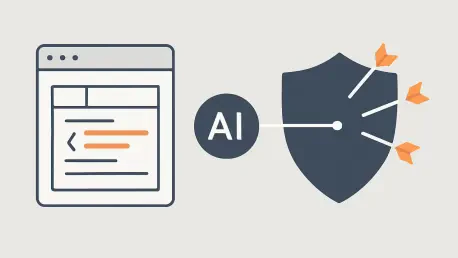

Despite deploying a sophisticated arsenal of security tools meticulously designed to shield applications from attack, today’s development and security teams often find themselves paradoxically buried under an avalanche of alerts that obscures more genuine threats than it reveals. This deluge of data, generated by individually powerful but fundamentally disconnected technologies, creates a constant state of operational friction and uncertainty. The central challenge is no longer a lack of information but an inability to synthesize it into a clear, prioritized, and actionable view of risk, forcing teams to question which vulnerabilities truly matter.
When Two Security Powerhouses Don’t Talk Who Pinpoints the Real Threats
The daily reality for modern application security professionals is one of overwhelming noise. They are tasked with navigating thousands of findings from Static Application Security Testing (SAST) and Dynamic Application Security Testing (DAST) tools, each providing a different piece of a complex puzzle. Without a connecting thread, these teams are forced into a manual, time-consuming effort to correlate a potential flaw in the code with an observable weakness in the running application. This struggle to separate genuine, exploitable risks from theoretical possibilities leaves organizations in a constant state of reactive defense.
This operational disconnect has profound consequences that extend beyond wasted effort. It creates a significant bottleneck in fast-paced development cycles, fostering friction between security mandates and developer velocity. When developers are presented with a long list of potential vulnerabilities, many of which turn out to be false positives, they begin to lose trust in the security tooling. This erosion of confidence leads to alert fatigue, where critical threats can be overlooked amidst the background noise, leaving the organization unknowingly exposed to significant risk.
The Widening Chasm Understanding the SAST vs DAST Disconnect
At the heart of this challenge lie the inherent limitations of SAST and DAST when they operate in isolation. SAST, often called a “white-box” tool, excels at analyzing an application’s source code or binaries early in the development lifecycle. Its primary advantage is the ability to identify coding flaws like SQL injection or hardcoded secrets before a single line of code is deployed. However, its Achilles’ heel is a complete lack of runtime context. It cannot determine if a flagged vulnerability is actually reachable or exploitable in a live environment, leading to a high volume of false positives that drowns developers in irrelevant alerts.
In contrast, DAST functions as a “black-box” tester, probing a running application from the outside in, much like a real-world attacker would. Its strength is in identifying vulnerabilities that only manifest at runtime, providing valuable confirmation of exploitable weaknesses. The fundamental flaw of DAST, however, is its inability to see the underlying code. When a vulnerability is discovered, it provides little to no information about the root cause, leaving developers to manually hunt through the codebase to find and fix the responsible lines—a process that is both inefficient and prone to error.
The Cloud-Native Complication Why Modern Architectures Amplify the Problem
The disconnect between code analysis and runtime reality is significantly amplified by the very nature of modern cloud-native architectures. Today’s applications are rarely monolithic; instead, they are complex, distributed systems built on microservices, APIs, containers, and serverless functions. This distributed architecture dramatically expands the application’s attack surface, creating countless new entry points for potential attackers, many of which are poorly documented or monitored.
This new paradigm introduces unique security challenges that traditional tools were not designed to handle. The ephemeral nature of containers and serverless functions, which can be created and destroyed in seconds, makes consistent runtime visibility a moving target. Furthermore, the relentless velocity of CI/CD pipelines eliminates any time for the manual review and correlation processes that teams once relied upon. Compounding this issue is the rise of Infrastructure as Code (IaC), which introduces another layer of potential misconfigurations and risks that legacy SAST and DAST tools often miss entirely.
The AI Revolution Enhancing SAST and DAST from Within
To address this widening gap, Artificial Intelligence is fundamentally reshaping the capabilities of both SAST and DAST from the inside out. For SAST, AI moves beyond simple pattern matching, which is a primary source of false positives. Modern AI-powered SAST employs a deep, semantic understanding of code, using sophisticated data flow analysis to trace how user-controlled input travels through the application. By meticulously tracking this data to “sensitive sinks”—locations where it could be executed or cause harm—it can accurately assess real-world risk. By also learning from historical code fixes, AI models can predict likely execution paths, dramatically reducing noise and providing developers with precise, context-rich feedback.
Similarly, AI brings a new level of intelligence to dynamic testing. Traditional DAST relies on predefined scripts and brute-force attacks that often miss complex vulnerabilities. AI-driven DAST, in contrast, builds adaptive behavioral models of the application. It learns the normal patterns of authentication, data handling, and API communication, allowing it to simulate more realistic and sophisticated multi-step attacks. This intelligent approach enables it to uncover hidden or undocumented APIs and provide critical context that classifies findings as blocked by other controls, mitigated, or truly exploitable, transforming raw data into actionable security intelligence.
Building the Bridge A Practical Framework for AI-Driven Correlation and Prioritization
The most transformative impact of AI lies in its ability to act as an intelligent correlation layer, finally bridging the chasm between SAST and DAST. Instead of treating code analysis and runtime testing as separate, siloed activities, AI synthesizes their outputs into a single, unified view of risk. It achieves this by mapping vulnerable code paths identified by SAST directly to the live endpoint behaviors and exploit attempts observed by DAST. This establishes definitive “code-to-runtime” visibility, providing concrete proof of whether a static vulnerability can be breached in a live production environment.
This unified perspective revolutionizes risk prioritization. Teams can now move beyond generic metrics like CVSS scores, which often lack real-world context, and instead prioritize vulnerabilities based on hard evidence of exploitability and potential business impact. By focusing on the small subset of vulnerabilities that are confirmed to be reachable and exploitable, organizations can direct their limited resources to fixing the issues that pose a genuine threat. This AI-driven correlation provides developers with a clear and cohesive narrative, tracing a confirmed runtime exploit directly back to the exact lines of responsible code, empowering them to fix what truly matters with speed and confidence.
The integration of disparate security signals through an intelligent AI layer marked a pivotal shift from a high-noise, reactive security model toward a proactive, risk-based approach. By providing a unified view that connected code-level flaws with real-world exploitability, this evolution streamlined security workflows and fostered a more collaborative relationship between development and security teams. Ultimately, this AI-driven synthesis empowered organizations to build and deploy more secure software at the accelerated pace modern business environments demanded.