
Fieldwatch lowers the barrier to entry for surveillance detection by eliminating the need for DIY hardware projects and custom microcontrollers. As urban environments become denser with digital observers, the quiet proliferation of Automatic License Plate Recognition systems has fundamentally altered the expectation of privacy in public spaces. These systems, particularly those spearheaded by industry leaders like Flock Safety, create a persistent web of monitoring that records vehicle movements across thousands of jurisdictions. While proponents argue that this infrastructure is essential for modern law enforcement and community safety, the scale and lack of federal regulation have prompted a sharp rebuttal from civil liberties advocates. This tension has catalyzed the development of “privacy-tech,” a specialized sector of software designed to restore the balance of power between the observer and the observed. Fieldwatch stands at the forefront of this movement, providing a sophisticated, open-source solution that allows individuals to reclaim awareness of their digital surroundings. By turning the very device in a user’s pocket into a powerful sensor, the application offers a level of transparency that was previously accessible only to those with advanced technical backgrounds or expensive, specialized equipment.
Turning a Smartphone into a Passive Radio Scanner
Utilizing Wi-Fi and Bluetooth Signals
The fundamental architecture of Fieldwatch relies on repurposing the internal components of a standard Android smartphone to act as a sophisticated receiver for ambient radio signals. Modern surveillance hardware, while often physically inconspicuous, is frequently chatty in the digital spectrum, broadcasting specific identifiers as part of its operational routine. The application functions by passively monitoring the 2.4 GHz and 5 GHz bands, looking for “beacons” or data packets that announce the presence of networked cameras. This process is entirely non-intrusive, meaning the smartphone does not send out any signals that could alert the surveillance system to the user’s presence. Instead, it acts as a silent observer, cataloging the radio environment and cross-referencing detected signals against a massive, built-in library of known hardware signatures. This method allows the app to identify specific brands and models of cameras, such as those used in large-scale municipal license plate reading networks, simply by analyzing the unique way these devices communicate with their parent networks.
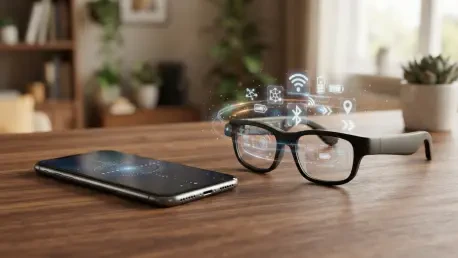
Beyond stationary infrastructure, the digital landscape of 2026 is populated by an increasing number of mobile and wearable recording devices that pose unique challenges to personal privacy. Smart eyewear, such as the latest iterations of Meta Glasses, relies heavily on Bluetooth Low Energy to sync data and maintain a connection with a primary mobile device. Fieldwatch is engineered to recognize these specific Bluetooth signatures, alerting users when a recording-capable wearable is active in their immediate vicinity. This capability is particularly vital in social settings or public gatherings where traditional cameras might be absent, but personal surveillance tools are prevalent. By detecting these mobile signals, the application provides a necessary layer of awareness, ensuring that users are not caught off guard by devices that can record audio and video with minimal visual cues. The software provides a real-time visualization of these signals, allowing users to understand the density of surveillance in their immediate environment without needing to physically spot every hidden lens or discrete sensor mounted on a nearby structure.
Advanced Detection: Identifying Manufacturer Patterns
The technical sophistication of Fieldwatch is most evident in its ability to parse Media Access Control prefixes and specific naming conventions used by surveillance manufacturers. Every piece of networking hardware is assigned a unique identifier that often includes a segment specific to the company that produced it. The application utilizes a comprehensive database of these prefixes to flag devices that originate from known surveillance providers. For instance, when the scanner detects a Wi-Fi access point with a name like “Flock-” or specific hardware identifiers associated with license plate readers, it immediately categorizes these as high-priority alerts. This level of granularity is essential because it moves beyond generic device detection and into specific hardware identification. It allows the user to understand not just that a Wi-Fi network exists nearby, but that the network belongs to a specific type of law enforcement or corporate monitoring tool. This intelligence is crucial for navigating modern cities where invisible data collection has become a standard, yet largely unseen, part of the daily experience.
Furthermore, the application provides detailed insights into the signal strength and frequency of these detected devices, which helps in understanding their operational range. As the user moves through a neighborhood, the application tracks the persistence of these signals, offering a clearer picture of how extensively an area is being monitored. This data is processed entirely on the device, ensuring that the user’s own movements and findings are never shared with a central authority. The ability to distinguish between a standard consumer router and a specialized surveillance node is what sets Fieldwatch apart from general-purpose network scanners. It essentially translates the complex and often obscured language of radio frequencies into actionable information for the layperson. This empowerment is a direct response to the “black box” nature of modern surveillance, where the public is often unaware of what data is being collected, by whom, and where the sensors are located. By making the invisible visible, the application serves as a digital counterweight to the expanding reach of automated monitoring systems.
Advanced Tools for Tracking and Verification
Specialized Operational Modes
One of the most innovative aspects of Fieldwatch is its suite of specialized operational modes, which are designed to handle specific privacy threats that a simple list of devices cannot address. The “Moving With You” filter is a prime example of this advanced logic, specifically targeting the problem of mobile trackers and stalking. In an environment where small, inexpensive finder tags are frequently misused to follow individuals without their consent, this mode serves as a critical defensive tool. It works by identifying Bluetooth signals that maintain a consistent proximity to the user over a period of time and through various locations. While a stationary camera will show a signal that increases and then decreases as the user passes by, a tracker moving in a vehicle or a pocket will show a signal strength that remains relatively stable. By isolating these persistent signals, Fieldwatch can alert a user to the presence of a device that is likely following them, providing a much-needed warning system in an era where digital stalking has become an increasingly accessible and dangerous reality for many.
For situations where a user needs to physically locate a detected surveillance device, the application features a dedicated “Hunt Mode.” This functionality transforms the smartphone into a high-precision directional sensor, utilizing Received Signal Strength Indication to guide the user toward the source of a transmission. As the user moves their device or changes their location, the application provides visual and haptic feedback based on the fluctuating strength of the radio signal. This creates a “hot and cold” dynamic, similar to a digital Geiger counter, which is incredibly effective for pinpointing the exact pole, building facade, or hidden compartment where a surveillance camera or radio hub is mounted. This tool is invaluable for researchers and privacy advocates who wish to document the physical location of surveillance infrastructure for public mapping or advocacy purposes. By providing the means to verify the physical presence of a device through its digital emissions, Hunt Mode bridges the gap between the virtual and physical worlds, allowing for a more complete understanding of the surveillance landscape.
Hardware Accessibility and Open Source
The development of Fieldwatch represents a significant departure from the previous era of surveillance detection, which often required users to build their own hardware from scratch. In the past, those concerned with privacy frequently had to source ESP32 microcontrollers, learn to solder, and navigate the complexities of flashing custom firmware to create a functional detector. This created a high barrier to entry that limited these tools to a small circle of highly technical enthusiasts. Fieldwatch eliminates these obstacles by leveraging the high-quality Wi-Fi and Bluetooth radios already present in any Android smartphone running version 10 or newer. This democratization of technology ensures that anyone with a modern phone can access professional-grade surveillance detection tools without any additional financial investment or specialized knowledge. The software is designed to be intuitive, presenting complex radio data in a format that is easy for the average user to interpret, thereby bringing advanced privacy protection to a much broader audience.
Central to the project’s mission is its commitment to an open-source philosophy, which is vital for building trust within the privacy community. Because the application’s source code is publicly available on platforms like GitHub, it is subject to continuous scrutiny and auditing by independent developers and security experts. This transparency ensures that the app does not contain hidden backdoors, malicious code, or unauthorized tracking mechanisms—a critical consideration for a tool dedicated to protecting user privacy. Furthermore, Fieldwatch operates under a strict “no-data-collection” policy, which means it does not require user accounts, does not display advertisements, and does not transmit any detected data to external servers. All processing and storage occur locally on the user’s device, giving them total control over their information. The ability to operate entirely offline further enhances this security, allowing the app to function in remote areas or in situations where the user has intentionally disabled cellular data to prevent their own location from being tracked by third parties.
Comparing Real-Time Detection to Crowdsourced Maps
Live Verification: Real-Time versus Static Databases
While crowdsourced mapping services have traditionally been the go-to resource for identifying surveillance zones, they possess inherent limitations that Fieldwatch is specifically designed to overcome. Services like MapQuest and other community-driven databases rely on human volunteers to manually spot, photograph, and upload the coordinates of surveillance cameras. While this creates a valuable historical record and allows for pre-trip route planning, it is often plagued by delays and inaccuracies. A camera might be installed, moved, or deactivated, and it could take weeks or even months for a human reporter to update the database. This latency creates a false sense of security for users who might assume an area is clear of surveillance simply because it doesn’t appear on a map. Static databases are, by their very nature, a reflection of the past, and they often struggle to keep pace with the rapid deployment of modern monitoring networks that can be expanded or reconfigured in a matter of hours.
In contrast, Fieldwatch provides a dynamic, real-time assessment of the local environment based on the actual physical emissions of nearby hardware. It does not matter if a camera was installed ten minutes ago or if it is mounted on a mobile unit that is constantly changing locations; if the device is active and broadcasting, the application will detect it. This live verification is the only way to ensure an accurate understanding of current surveillance threats. By scanning the radio spectrum, users can see through the “camouflage” of modern camera housings that are often designed to look like standard street lights or utility boxes. The application identifies the digital presence of the device regardless of how well it is hidden from the naked eye. When used in conjunction with traditional maps, Fieldwatch provides a comprehensive security solution: the map offers a general guide for planning, while the active scanner provides the immediate, ground-truth verification necessary for navigating the world with confidence and maintaining personal anonymity.
Installation Outside the Play Store
The distribution of Fieldwatch highlights the ongoing conflict between privacy-focused developers and the restrictive policies of major corporate app stores. Due to its ability to detect and categorize other networking equipment, the application is not available on the official Google Play Store. Tech giants often implement broad policies that restrict or ban applications which “interfere” with other systems or provide functionalities that could be deemed sensitive by government or corporate partners. This gatekeeping often results in the censorship of tools that are perfectly legal and highly beneficial for consumer protection. By bypassing these traditional distribution channels, the developers of Fieldwatch ensure that their software remains uncensored and that its features are determined by user needs rather than corporate guidelines. This approach requires users to “sideload” the application by downloading the Android Package Kit directly from a trusted repository, which is a common practice among those who prioritize software freedom and independence.
Sideloading, while requiring a few extra steps in the device settings, offers a level of autonomy that is increasingly rare in the modern mobile ecosystem. It allows users to run software that has not been modified or restricted to comply with the commercial interests of a platform provider. This method of distribution also fosters a more direct connection between the developers and the user community, as updates and new features can be pushed out without waiting for a lengthy and often opaque approval process from a corporate entity. For Fieldwatch, this independence is crucial because it allows the app to stay ahead of the curve in terms of identifying new surveillance hardware and protocols. As manufacturers change their broadcast signatures to evade detection, the open-source community can quickly update the signature catalog and distribute the new version of the app. This agility is a key component of the ongoing technological “arms race” between surveillance providers and those seeking to maintain their privacy in an increasingly monitored society.
Strategic Directions: The Future of Asymmetric Privacy Tools
The emergence and continued refinement of Fieldwatch from 2026 to 2028 demonstrated a significant shift in the landscape of digital autonomy. The findings from this period showed that as surveillance infrastructure became more pervasive and sophisticated, the demand for accessible, high-tech countermeasures grew exponentially. The application successfully democratized a set of skills that were previously reserved for radio frequency experts, proving that a standard smartphone could be repurposed as a powerful shield against invasive monitoring. This era of development established a clear precedent: privacy is not merely a legal or philosophical concept, but a technical one that requires active defense. The widespread adoption of these asymmetric privacy tools provided a necessary check on both public and private surveillance entities, forcing a higher level of accountability and transparency. By rendering the invisible visible, the software empowered individuals to make informed decisions about where they traveled and how they interacted with their urban environments, effectively ending the era of unchallenged, “stealth” data collection.
In conclusion, those seeking to maintain their privacy in the modern age should prioritize the use of decentralized and open-source tools that do not rely on corporate intermediaries. The most effective strategy for the future involves a multi-layered approach, combining real-time radio scanning with an understanding of physical surveillance patterns and the limitations of digital systems. Individuals are encouraged to actively participate in the auditing and improvement of these tools, ensuring that the technology remains robust against evolving threats. Moving forward, the focus must remain on local processing and the elimination of central data repositories that could be exploited or subpoenaed. By adopting a proactive stance and utilizing the hardware already at their disposal, citizens can ensure that the rapid advancement of technology does not come at the cost of their fundamental right to move through the world without being tracked. The success of these initiatives ultimately depends on a vigilant and technically literate public that values anonymity as a cornerstone of a free society.