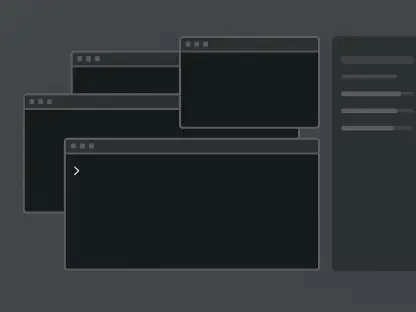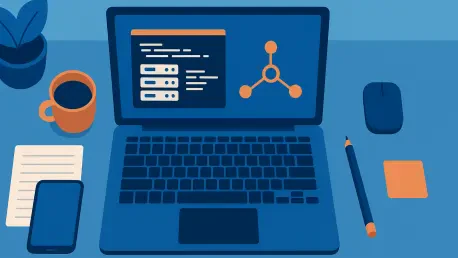

Relying on PuTTY for shell commands and WinSCP for file transfers forces administrators to navigate disjointed sessions and re-enter credentials across multiple software platforms. This fragmentation often breaks the technical focus of developers who must juggle disparate interfaces to accomplish simple administrative duties. In the fast-paced landscape of 2026, where infrastructure is increasingly complex, the overhead of managing the management tools themselves has become a point of contention. Traditionally, a Windows user would open a terminal for command execution and a separate SFTP client for file movements, often leading to a desktop cluttered with windows that do not communicate with one another. Submarine introduces a shift toward a more cohesive environment by consolidating these essential functions into a single, unified workspace. This open-source project provides a modern alternative that treats the remote server as a singular destination rather than a series of disconnected services. By bridging the gap between shell access and file management, it addresses the broken stride that occurs when an engineer has to leave the command line to perform a graphical file edit or establish a network tunnel. The initiative represents a significant attempt to modernize the legacy toolkit that has remained largely unchanged for decades, offering a streamlined path for those who value operational continuity.
Integrated Architectures: Bridging the Fragmented Management Gap
Submarine is built on an MIT-licensed foundation, making it an accessible and transparent choice for security-conscious professionals who prioritize open-source software. Its cross-platform architecture ensures that whether an administrator is working on Windows 11, macOS, or a Linux distribution, the user experience remains consistent across all environments. During initial deployment, the software mandates the creation of a profile protected by a master password, which serves as an encrypted vault for all sensitive data. This approach secures hostnames, usernames, and private keys within a single protected entity, preventing the need for external password managers or insecurely stored plain-text configurations. While the software is currently distributed as an unsigned binary in its early versioning phases, the underlying structure shows a sophisticated understanding of modern security requirements. Users must often bypass local security warnings during the first installation, yet once the application is active, it provides a robust framework for managing hundreds of server profiles without the clutter associated with legacy tools. This centralization is a direct response to the sprawl of configuration files often found in environments where different utilities store their session data in unique, often incompatible formats.
The authentication process within Submarine further emphasizes its role as a centralized management hub by integrating standard protocols directly into its core interface. Unlike the traditional reliance on PuTTYgen for generating cryptographic keys, this modern client features a built-in SSH key generator that simplifies the process of establishing secure, passwordless connections. By handling both RSA and Ed25519 key types within the app, it removes the friction of switching to external utilities just to set up a new server. This integrated approach ensures that when a server profile is created, the administrator can generate, store, and assign keys in one continuous motion. Once the connection parameters are defined, the application manages the handshake and keeps the session active across all functional panels, including the terminal and file browser. This prevents the redundant task of logging into the same server multiple times to perform different types of work. Such a streamlined entry point is particularly beneficial for those managing large-scale Virtual Private Servers or complex home laboratories, where the time saved on authentication adds up significantly over the course of a project.
Operational Efficiency: Merging Terminal and File System Interactions
The terminal experience in Submarine represents a significant departure from the single-window paradigm that has characterized PuTTY for decades. By adopting a tabbed interface, the software allows users to maintain several active shells within a single workspace, which is essential for monitoring multiple processes or managing various servers simultaneously. Each tab operates independently yet remains part of the global session context, allowing for easy navigation without losing the command history or output of previous tasks. This persistence is a key differentiator, as it enables the administrator to toggle between the terminal and other specialized views without rebuilding the connection from scratch. The interface is designed to feel more like a modern integrated development environment than a simple serial console, providing a clean and organized layout that reduces visual fatigue. Because the terminal is context-aware, it understands which server is currently active, ensuring that any subsequent actions taken in the file browser or networking panels are automatically mapped to the correct host. This logical grouping of functions around the server connection eliminates the cognitive load required to keep track of which window belongs to which remote machine.
File management is where the benefits of a unified interface become most apparent, specifically through the split-view SFTP browser that places local and remote filesystems side-by-side. This arrangement facilitates intuitive drag-and-drop interactions, allowing for the rapid movement of scripts, logs, and configuration files between the Windows host and the remote Linux environment. A particularly powerful feature is the Edit (auto-upload) capability, which streamlines the modification of remote files by leveraging the user’s local text editor. When a remote file is opened for editing, the software creates a temporary local version and monitors it for changes; as soon as the user saves the file in their local application, Submarine automatically pushes the updated version back to the server. This mimics the seamless remote development experience found in high-end editors like Visual Studio Code but remains lightweight and focused on administrative tasks. Additionally, the graphical permissions editor allows users to modify file attributes through a visual menu, providing a clear alternative to the command-line syntax of chmod. This combination of visual tools and automated syncing creates a highly efficient workflow for engineers who need to make quick, frequent changes to server configurations without the overhead of manual uploads.
Advanced Networking: Simplifying Tunnels and Container Visibility
Networking tasks such as port forwarding, which are often buried in deep configuration submenus in legacy tools, are brought to the forefront through a dedicated graphical panel. This simplifies the process of creating local, remote, and dynamic tunnels, making it easier for administrators to access private databases or web interfaces that are not exposed to the public internet. By providing a clear log of the forwarding path and the real-time status of the tunnel, the software removes much of the guesswork associated with complex SSH command-line flags. Users can map a local port on their Windows machine to a private port on the remote server with just a few clicks, and these rules are saved directly into the server profile for future use. This persistence ensures that once a tunnel is configured, it can be toggled on or off instantly whenever the connection is active. Such accessibility is a major advantage for developers who frequently work with containerized applications or microservices that require secure, temporary access to internal ports. The clarity of the graphical interface ensures that even those who are not experts in SSH tunneling can successfully manage complex network paths without risking security misconfigurations.
In addition to standard connectivity, Submarine incorporates specialized monitoring tools that provide a snapshot of system health and container activity. The integrated info panel displays real-time statistics for CPU usage, memory consumption, and network throughput, allowing administrators to verify the impact of their commands without running separate monitoring utilities like top or htop. This immediate visibility into the remote system’s resource allocation is complemented by a dedicated Docker panel, which identifies active containers and their statuses. For those operating in containerized environments, the ability to inspect logs and jump into an interactive shell within a specific container directly from the management app is a transformative feature. These capabilities extend the software’s utility beyond that of a traditional SSH client, positioning it as a comprehensive dashboard for modern server infrastructure. By including these quality of life features, the project recognizes that modern server management involves more than just shell access; it requires ongoing visibility into the health and orchestration of the entire system. This holistic approach ensures that the administrator has all the necessary data to make informed decisions without ever leaving the primary application window.
Strategic Implementation: Navigating Maturity and Transition Paths
While the advantages of consolidation are significant, it is important to acknowledge that Submarine is still a maturing project and may not yet replace the specialized features of legacy tools for every user. WinSCP, for example, maintains a superior position in areas such as advanced directory synchronization, automated scripting, and support for a wider variety of file transfer protocols. For power users whose workflows depend on decades of hardened stability and granular customization, moving away from a tried-and-tested setup like PuTTY may feel premature. The current early-stage versioning of the project means that certain bugs or missing niche features could hinder the productivity of those with highly specific requirements. Furthermore, the lack of signed binaries in the initial releases may give pause to security teams in strict corporate environments where software integrity is scrutinized through automated policies. However, for the majority of standard administrative duties—ranging from basic configuration editing to routine log monitoring—the convenience and speed of a unified interface often outweigh the need for deep, specialized protocol support. The choice between these tools ultimately depends on whether an administrator prioritizes the specialized depth of independent applications or the integrated breadth of a modern, all-in-one client.
The evaluation of Submarine demonstrated that a consolidated approach to server management significantly reduced the administrative overhead typically associated with fragmented workflows. By integrating the terminal, file system access, and network tunneling into a single context-aware application, the project successfully addressed the persistent friction of switching between disconnected utilities. Those who adopted this unified model found that they could maintain a higher level of focus on their primary tasks, as the need to re-authenticate and re-navigate across multiple windows was effectively eliminated. The actionable results suggested that for small to medium-sized infrastructure management, the trade-off between legacy depth and modern integration favored the latter. Moving forward, administrators were encouraged to test this open-source solution within non-critical environments to assess its stability and feature parity with their existing toolsets. This transition highlighted a broader trend in software development where the user’s time and cognitive load were prioritized through better interface design and logical functional grouping. Ultimately, the shift away from a multi-app toolkit proved that even fundamental administrative tasks could be refined and simplified through thoughtful architectural consolidation, paving the way for a more streamlined future in remote server operations.