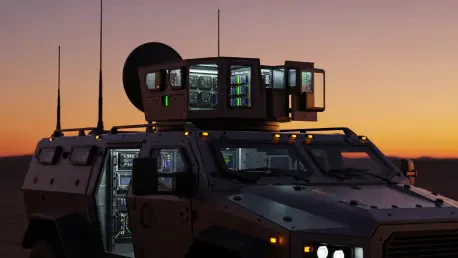

The fundamental reality of modern combat is rapidly shifting toward highly contested environments where digital connectivity can no longer be taken for granted by military commanders. Initium Technologies is currently spearheading a strategic pivot toward edge artificial intelligence to protect critical U.S. military operations from systemic failure. By relocating massive processing power away from vulnerable, centralized cloud data centers and placing it directly onto the edge—such as naval vessels or tactical ground units—the military ensures its software remains fully functional even when satellite links are jammed or severed. This transition directly addresses the grave danger of relying on fixed commercial infrastructure that remains easily targeted by sophisticated adversaries. The primary goal is to ensure that technological advantages do not vanish the moment a network connection drops. This approach creates a redundant and resilient digital architecture for the battlefield, ensuring that tactical superiority remains a constant factor despite enemy interference or infrastructure damage.
Moving from Cloud Dependence to Local Resilience
Over the past few years, the Department of Defense has accelerated its reliance on consolidated commercial cloud contracts, such as the Joint Warfighting Cloud Capability, to manage its vast data requirements. While these systems provide unmatched efficiency during peacetime, they operate under the dangerous assumption of a permissive environment where communication links remain unbroken and physical data centers stay safe from kinetic strikes. Recent conflicts involving strikes against fixed infrastructure have demonstrated that these massive, stationary facilities are high-priority targets for any near-peer adversary. Relying on a handful of centralized hubs creates a single point of failure that could potentially paralyze the entire military software ecosystem during a high-intensity engagement. When a central server goes offline, every connected unit loses its intelligence advantage, transforming a digital asset into a liability. This vulnerability necessitates a departure from the traditional cloud-first mentality.
To mitigate these glaring vulnerabilities, a new engineering philosophy has emerged that prioritizes decentralized nodes over centralized products. This strategic shift operates on the rigorous assumption that any resource beyond the immediate physical device—whether it is a ship-based server or a handheld unit—could be completely inaccessible during combat. By building self-sufficient systems that do not require external verification or data retrieval, the military is better equipped to navigate the three Ds of modern warfare: environments that are disconnected, denied, or intermittent. Furthermore, this localized approach prioritizes electronic silence, which is a critical survival factor in the age of signal-based targeting. Using advanced AI on-site allows tactical teams to process intelligence without emitting the tell-tale radio signals that would reveal their precise location to enemy sensors. This ensures that the use of high-tech tools does not inadvertently lead to the compromise of a mission or a position.
Tactical Implementations in Maritime and Ground Operations
The practical application of this decentralized architecture is best exemplified by the Maritime Autonomous Neural Triage and Inference System, currently deployed across various naval platforms. MANTIS allows Navy ships to process staggering amounts of data collected from uncrewed aircraft and sensor buoys directly on the vessel, rather than transmitting raw files back to a distant land-based center for analysis. Since a carrier strike group functions as a mobile and heavily defended target, it effectively serves as a resilient, floating mini-data center that moves with the mission. This setup ensures that even if regional communication hubs or domestic server farms are neutralized, the fleet maintains its intelligence-gathering capabilities and decision-making speed while at sea. The ability to identify threats and classify targets locally reduces the latency that often plagues satellite-dependent systems. By keeping data processing within the strike group, the Navy maintains a continuous operational picture regardless of external network health.
In a similar vein, the IRIS system provides specialized edge AI capabilities for ground-based special operations, where the element of surprise is the most valuable asset a team possesses. During high-risk building-breach scenarios, IRIS performs complex computational tasks such as facial recognition and person detection in real-time without needing an active network connection to a cloud database. By enabling sophisticated analytics in a state of total radio silence, the system provides elite teams with a situational awareness advantage that does not compromise their covert status. Decisions are made at the speed of the mission rather than the speed of a fluctuating network link, allowing operators to identify high-value targets or civilian bystanders instantly. This localized intelligence removes the gamble of waiting for a remote server to return a match during a firefight. Consequently, the edge-based logic of IRIS ensures that technical superiority remains an active force multiplier even in the most hostile environments.
Establishing a Resilient Technical Foundation
The strategic evolution from cloud-centric to edge-centric warfare highlights a fundamental truth: the quality of military software is irrelevant if the physical infrastructure supporting it can be neutralized. By treating every individual unit as an independent and self-sustaining node, the military preserves its technological edge even when broader networks are compromised or entirely unavailable. This shift toward localized compute power ensures that tactical autonomy remains possible under any conditions, making the ability to process information on-site the defining factor in surviving the next era of conflict. The transition is not merely about hardware updates but represents a deep cultural shift in how developers build defense applications. Software is now designed to fail gracefully, reverting to local logic when the global network vanishes. This ensures that a soldier or sailor is never left with a loading screen in the middle of an engagement. The resilience of the individual node becomes the resilience of the entire force.
Looking back at the initial implementation phases of these edge systems, the focus shifted toward establishing a standardized framework for hardware interoperability across all branches. Military leaders recognized that the next logical step involved the mass production of ruggedized, high-performance chips that could withstand extreme environments while maintaining low power consumption. The defense industry moved toward open-architecture designs that allowed for rapid AI model updates via secure, physical transfer if wireless methods remained too risky. Developers focused on refining the compression of neural networks so they could fit onto smaller, more efficient devices without losing accuracy. These efforts ensured that the tactical edge became more than a backup; it evolved into the primary foundation for all mission-critical software. By prioritizing localized intelligence, the strategic community secured a future where digital dominance was no longer tied to the safety of a distant server farm. This path forward solidified the necessity of decentralized computing.