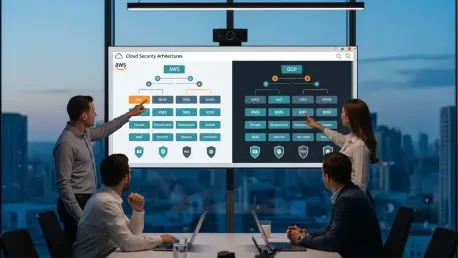

Breaches rarely begin with a brilliant exploit; they start with a missed control, a misaligned role, a public endpoint that never should have existed, or a key that lived longer than the workload it protected, and that is why practical cloud security demands clear ownership, reliable guardrails, and repeatable runbooks that hold up under real pressure. For teams split across AWS and GCP, the fastest path to resilience grows from a shared understanding of who secures what, then moves decisively through identity, encryption, segmentation, and visibility. From there, the task becomes disciplined operations: reduce attack paths, validate baselines, and automate decisions where human delay creates risk. This guide follows that arc with grounded examples and named services, mapping the same playbook across both clouds so that controls reinforce one another rather than collide. It favors short-lived credentials over static keys, private connectivity over public exposure, and default-deny posture over exceptions that compound, with a focus on what stops unauthorized access and keeps data moving safely.
1. Shared Responsibility Model: Foundations
Before tools or dashboards, clarity about responsibility prevents costly confusion when incidents hit. AWS and Google secure the underlying cloud—physical facilities, server hardware, core networking, and the control plane that delivers managed services. That duty extends to hypervisors, regional availability, and the mechanisms that patch and harden the provider’s fleet. Customers inherit the rest. Anything configured or deployed—permissions, network paths, encryption choices, runtime policies—sits firmly on the tenant side. The amount of lift depends on the service model. Infrastructure primitives such as Amazon EC2 or Google Compute Engine place OS hardening, patching, host firewalls, and application configuration on the customer. Fully managed services reduce toil but still require strong identity, encrypted connectivity, and guardrails against data exfiltration.
Translating this model into daily practice means assigning named owners per account, project, and workload. In AWS, Organizations with Service Control Policies (SCPs) set guardrails that child accounts cannot bypass; in GCP, Organization Policies apply platform-wide constraints like disallowing external IPs. These meta-controls prevent anti-patterns from landing in production. For authentication, centrally managed identities through AWS IAM Identity Center or Google Cloud Identity unify workforce access, while workload identities rely on IAM roles or GCP service accounts with conditions. The result is a layered contract: the provider keeps the platform trustworthy; the tenant makes precise, auditable choices about who can reach which resources, over what paths, and under what cryptographic protections. This foundation supports the steps that follow and keeps remediation focused when something goes wrong.
2. Risk Evaluation: Assets, Threats, and Compliance
Risk work starts with facts on the ground. Build an inventory that ties resources to owners and environments—production, staging, development—and tag consistently. On AWS, enumerate S3 buckets, EBS volumes, RDS clusters, EKS namespaces, ALB/NLB endpoints, and IAM roles; in GCP, map GCS buckets, Persistent Disks, Cloud SQL, GKE clusters, and project-level IAM. Include data classification tags that identify regulated or sensitive stores. Feed this catalog to automation so policies can target “PCI:production” or “Pii:all” without manual exceptions. With assets in view, design threat models that reflect cloud-native attack paths. Replace static diagrams with attack path simulations and ATT&CK mappings: use AWS Well-Architected Security Lens and Access Analyzer to surface privilege escalation routes; in GCP, Security Command Center’s Attack Path Simulation (Enterprise) shows lateral moves and exfiltration pivots, especially across shared VPCs and interconnects.
Compliance aligns risk incentives with concrete controls. Map scope to frameworks like SOC 2, ISO 27001, PCI DSS, or HIPAA, then use provider-native evidence pipelines. On AWS, Security Hub aggregates CIS and PCI checks and normalizes findings; Audit Manager turns control narratives into testable procedures with artifacts. In GCP, Security Command Center centralizes misconfigurations with severity and remediation, while Assured Workloads applies region and personnel restrictions for regulated data. Policy-as-code lifts governance into Kubernetes and IaC: enforce guardrails with Gatekeeper/Policy Controller on GKE and OPA-based admission on EKS; validate Terraform and CloudFormation against organization baselines before merge. The outcome is living risk documentation where new resources inherit controls, violations raise actionable findings, and auditors can replay history without guesswork. This step reduces unknowns and channels engineering energy to the most probable failure modes.
3. Access and Identity Controls: Least Privilege to PAM
Identity stops intrusions early when privileges are right-sized and credentials are hard to steal. Build around least privilege and zero trust. In AWS, rely on IAM roles for compute, short-lived federated sessions via IAM Identity Center, permission boundaries for delegated admins, and Organizations SCPs to ban risky APIs like disabling CloudTrail. IAM Access Analyzer highlights unintended external access and cross-account trust. In GCP, assemble access with IAM primitive and predefined roles, apply IAM Conditions for attribute-based controls (time, IP, resource), reinforce guardrails with Organization Policies, and validate with Policy Analyzer to reveal grant chains. Short-lived tokens beat long-lived keys; where keys remain, expire aggressively and rotate. Eliminate legacy auth and require device posture checks for admins touching production.
Strong authentication seals the model. Enforce multi-factor everywhere—prefer FIDO2/WebAuthn or platform authenticators over SMS to cut off phishing kits. Place bastionless access in standard pathways that record activity: AWS Systems Manager Session Manager provides audited shell access without inbound ports; in GCP, Identity-Aware Proxy brokers authenticated, context-aware connections. Govern privileged elevation with just-in-time models: AWS IAM Identity Center with approver workflows or GCP’s Privileged Access Manager grant time-bound roles with explicit tickets. Secrets must live in managed stores—AWS Secrets Manager or Parameter Store; GCP Secret Manager—tied to KMS keys and rotation policies. Finally, schedule quarterly access reviews. Use AWS Credential Reports and IAM last-used data to purge dormant users and keys; correlate GCP Cloud Audit Logs with IAM binding deltas to prune unused service accounts. These routines cut standing privilege and turn account compromise from catastrophe into a containable event.
4. Data Protection and Network Safeguards: Encryption and Segmentation
Data in motion should never ride unencrypted links. Enforce TLS 1.2+ end to end with modern cipher suites and consider mTLS for service-to-service trust in microservices. Terminate and re-encrypt at load balancers—AWS Application or Network Load Balancers and Google Cloud Load Balancing—to centralize certificate management and offload CPU. Where services talk privately, prefer AWS PrivateLink or GCP Private Service Connect; both deliver private, regional connectivity to first- or third-party services without exposing public endpoints. For inter-service communication across clusters, use service meshes—Istio or Anthos Service Mesh on GKE, AWS App Mesh on EKS—to enforce mTLS, rotate identities, and apply traffic policies consistently. These patterns bind identity to transport and squeeze the window for man-in-the-middle or token replay.
At rest, make encryption the default with customer-managed keys (CMEK) wherever controls or regulations require provenance and rotation. On AWS, KMS supplies symmetric keys and aliases for S3, EBS, RDS, EFS, and Redshift; HSM-backed keys through CloudHSM meet stricter assurance. In GCP, Cloud KMS protects CMEK for GCS, Persistent Disks, Cloud SQL, and BigQuery; Cloud HSM raises the bar for protected operations. Rotate keys on a defined cadence, separate key usage by environment, and isolate key admin roles from data operators. Beyond cryptography, reduce risk through minimization and isolation. Tokenize sensitive identifiers before storage; assign regulated data to dedicated accounts or projects with tight org policies. On GCP, add VPC Service Controls service perimeters to constrain data exfiltration from APIs like BigQuery or Cloud Storage. On AWS, steer egress through NAT gateways or firewalls with explicit allowlists. Segment VPCs and tiers—web, app, data—with Security Groups and NACLs in AWS, and hierarchical firewall policies in GCP. This segmentation breaks lateral movement and keeps impact zones small.
5. Observability, Key Services, and Automated Response: Logs to WAF
Visibility converts suspicion into evidence. Turn on org-wide logging by default. On AWS, CloudTrail at the organization root captures API activity; ship to a central S3 bucket with write-once protections and enable CloudTrail Lake for queries. Pair with CloudWatch Logs/Metrics, VPC Flow Logs, ALB/NLB access logs, and S3 server access logs. Activate GuardDuty for managed intel across CloudTrail, VPC Flow Logs, and DNS. In GCP, enable Admin, Data Access, and System Event logs; route Cloud Logging to BigQuery or Pub/Sub for downstream SIEM. Add VPC Flow Logs and Cloud IDS for network insights, and consolidate posture findings in Security Command Center. Whether AWS Security Lake, Google Chronicle, or third-party SIEMs like Splunk and Datadog, centralize high-fidelity telemetry and preserve time sync to reconstruct sequence and scope.
With data in hand, automate detection and first response. Baseline normal patterns—auth volume, role creation rate, egress destinations—and alert on deviations. On AWS, use GuardDuty for anomaly and threat intel, Inspector to scan EC2/ECR/Lambda, Detective to analyze entity relationships, and Macie to surface S3 sensitive data exposure. In GCP, combine SCC’s Security Health Analytics, Event Threat Detection, and Cloud DLP to flag risky buckets, excessive permissions, and PII drift. Key security services anchor defenses across layers: WAF at the edge—AWS WAF on CloudFront/ALB/API Gateway; Cloud Armor WAF on External HTTP(S) Load Balancing—filters OWASP Top 10 attacks and rate limits bots. VPC Flow Logs and load balancer logs illuminate ingress, egress, and east–west flows. KMS centralizes key lifecycle and envelope encryption, while Cloud Audit Logs and CloudTrail provide immutable who-did-what trails. When alerts fire, responders should trigger Lambda or Cloud Functions that quarantine by flipping Security Groups or firewall tags, snapshot volumes or disks, and revoke sessions, cutting attacker dwell time without waiting for a human approval chain.
6. Actionable Roadmap: Drills, Hygiene, and Immediate Wins
Prepared teams write playbooks and practice until response feels routine. Assign named owners by service, escalation paths, and secure comms channels for incidents; store runbooks alongside infrastructure code. Automate early containment: in AWS, Lambda responders and SSM Automation can snapshot EBS, detach compromised ENIs, or tag-and-quarantine resources; Detective aids pivot analysis. In GCP, Cloud Functions or Cloud Run responders can snapshot Persistent Disks, update firewall rules via tags, and enable Packet Mirroring to capture forensic traffic. Schedule quarterly tabletop exercises and game days that include identity compromise and data exfiltration drills; follow each with tuning of alerts and access policies. Parallel to response, enforce configuration hygiene. Patch on schedules using AWS Systems Manager Patch Manager and GCP OS Config/VM Manager, maintain golden AMIs or base images, and apply CIS baselines—AWS via Inspector or SSM docs, GCP via OS Policy. In containers, scan images in ECR or Artifact Registry, enforce OPA/Gatekeeper policies, and keep EKS/GKE control planes and nodes current.
Continuous posture closes residual gaps and shines light on data movement. Run CSPM through AWS Security Hub and GCP Security Command Center, and complement with third‑party depth—Prowler, Scout Suite, Wiz, Prisma Cloud, Lacework, or Orca—to map toxic combinations of misconfigurations. Adopt DSPM to bring order to sensitive datdiscover stores, classify with Macie for S3 or Cloud DLP for GCS/BigQuery, assess risk, and drive remediation with KMS, bucket policies, and VPC‑SC. Reduce identity risk with CIEM: right-size roles using AWS Access Analyzer and GCP Policy Analyzer, pruning privilege automatically where safe. For edge security, implement a concrete WAF build to stop SQL injection: create a Web ACL in AWS WAF, attach it to CloudFront or an ALB, add a SQLi match rule, and set the action to block with rate limits; deploy, simulate a SQLi request, and verify in WAF logs. Round this out with a fast checklist: enable org-wide CloudTrail and Cloud Audit Logs, force FIDO2 MFA, kill long‑lived keys, enforce SCPs and Org Policies, require TLS and CMEK with rotation, turn on GuardDuty/Detective and SCC/ETD, lock down egress, scan images, and run playbooks quarterly. Taken together, these steps had turned sprawling clouds into predictable systems where unauthorized access was contained, data in transit and at rest stayed encrypted by default, and resilience grew from tested automation rather than hope.