
The days of engineers staring at green-and-red dashboards to find a needle in a haystack are quickly vanishing as autonomous reasoning takes the driver’s seat in modern infrastructure. This shift is not merely a technical upgrade but a fundamental reimagining of how digital stability is maintained

Software engineering teams have long grappled with the friction that exists between high-level project management and the actual execution of code within a repository. The shift of the GitHub Copilot cloud agent’s connectivity with the Linear workspace into the general availability phase marks a

The traditional boundaries of the software development lifecycle have dissolved into a fluid ecosystem where autonomous agents move beyond static code generation to navigate the complexities of live execution environments. In the current landscape, the linear progression of planning, coding,
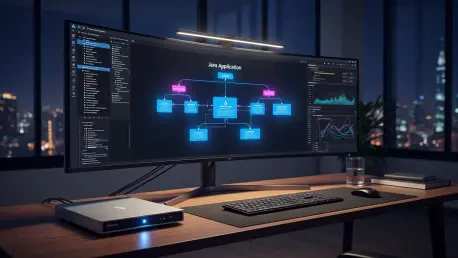
Traditional AI coding assistants often struggle with the dynamic nature of enterprise applications, remaining disconnected from the actual runtime environment where code must perform. While tools like GitHub Copilot or Claude have become adept at suggesting syntax, they operate in a vacuum, lacking

In the rapidly evolving world of enterprise AI, few names carry as much weight in software architecture as Vijay Raina. As a specialist in enterprise SaaS and a seasoned architect, Vijay has spent the last eighteen months hands-on in the trenches, designing MoJoCo—an agentic modernization platform

Software delivery pipelines have reached a point where the traditional boundary between development and deployment is almost entirely indistinguishable due to the sheer velocity of automated code generation. As frontier models streamline everything from initial design to production-ready