
When fraud signals age by even a few hundred milliseconds, loss curves bend sharply, customer experiences suffer, and risk models drift away from the operational truth, so Coinbase rethought how features for fraud detection, anti–money laundering, and personalization should be computed at the moment decisions are made. The company had tuned Spark Structured Streaming in microbatch mode to the edge, wringing out feature freshness in the 800–900 millisecond range. Yet periodic spikes, executor churn, and state checkpoints still introduced jitter that undercut online/offline parity and model recall. ETL-centric microbatching remained excellent for high-throughput transformations, but it fought the grain of sub-second inference. The choice was stark: keep overprovisioning clusters and intricate scheduling to chase tail latencies, or adopt a streaming posture aligned with the temporal budgets of real-time ML.
The Constraint: Why Microbatches Missed the Mark
Microbatch mode looked pragmatic because it consolidated ETL and streaming on one engine, but the compromise surfaced at the boundary that mattered most: end-to-end decision latency. Even after aggressive coalescing, trigger tuning, and specialized autoscaling, the system carried an operational tax—careful window sizing, checkpoint grooming, and shard orchestration—to keep P99s steady. Under real traffic, those knobs could not fully mute head-of-line blocking and shuffle bursts, so feature values delivered to the online store were sometimes seconds newer than those reflected in the offline training sets. That inconsistency hurt calibration in fraud screens and AML rules, with downstream effects that toggled false negatives during volume spikes and false positives when replay lag crept in. Costs climbed too, as dedicated, heavily provisioned clusters were kept warm to mask variance rather than remove its root cause.
The Pivot: Real-Time Mode on Databricks
Coinbase moved to Spark Structured Streaming Real-Time Mode on Databricks and treated the shift as a trigger change rather than a rewrite, preserving business logic and developer ergonomics. Pipelines swapped microbatch triggers for RTM, then integrated natively with the existing feature store, allowing the same definitions to back both online and offline use. Platform guardrails shouldered the risk: CI orchestrated schema checks and replay tests; canary rollouts limited blast radius; and AI agents automated feature setup, lineage wiring, and test generation. Engineers did not need to internalize RTM internals to unlock its benefits. Building on this foundation, observability tightened with per-feature latency SLOs, deterministic backfills, and state introspection that made late data handling explicit rather than incidental. The unified Spark runtime now powered over 250 features spanning stateless enrichments and stateful aggregations without branching frameworks.
The Payoff: Latency, Consistency, and Cost
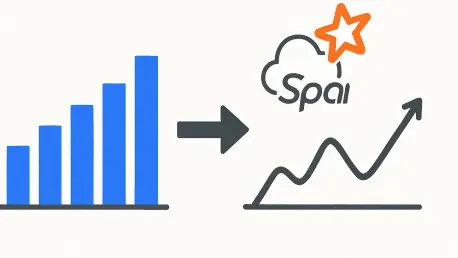
Results landed on three pillars that matter to production ML. Latency fell by more than 80 percent, pushing end-to-end P99s below 100 milliseconds at scale. Stateless streaming aggregations stabilized around 150 milliseconds, while stateful workloads held near 250 milliseconds, even during demand surges. Feature freshness improved in lockstep, which drove online/offline consistency to roughly 99 percent. That alignment reduced training-serving skew, lifted model fidelity to operational systems, and sharpened fraud and personalization outcomes where millisecond drift translates into real money. In parallel, specialized microbatch clusters were decommissioned. Compute bills dropped by an estimated 51 percent on an annual basis—amounting to hundreds of thousands of dollars—while reliability improved and operational toil receded. Instead of spending engineering cycles on mitigation, teams shipped features faster under a single, converged engine.
What Comes Next: Practical Guidance for Data Teams
This migration offered a template that other ML platforms could adapt without a blank-slate rewrite. Start by quantifying freshness budgets per decision point and lining them up against observed P99s, not averages. Pilot RTM by switching triggers on a narrow, high-impact pipeline, using canaries to validate P99s, state size, and watermark behavior under realistic replay. Invest early in CI guardrails that run contract tests on schemas, backfill determinism, and online/offline parity; the fastest path to confidence is automating these checks so developers ship features, not firefights. Treat the feature store as the nexus—shared definitions, governance, and lineage—so streaming and batch remain two access patterns on one semantic layer rather than divergent code paths.
Equally important, plan for state with intent. Define retention windows that reflect compliance and model needs; budget for compaction; and test failure modes including executor loss, checkpoint corruption, and network partitions. Keep rollbacks cheap with immutable inputs and versioned feature views. For cost, size clusters to tail latency targets and watch queue depth, not only CPU. Finally, assume success will expand scope: codify SLOs per feature, wire alerts to user-visible impact, and schedule periodic replay audits. Taken together, these steps turned real-time streaming from an aspirational buzzword into a disciplined capability, aligning infrastructure with decisions that had been made in milliseconds and priced accordingly.