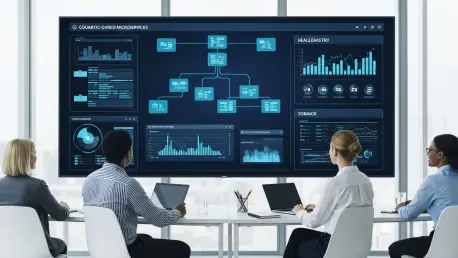

The digital silence that follows a sudden drop in transaction volume during peak traffic hours is often more terrifying than the loudest server room alarm because it signals a breakdown that existing tools might not be capturing. When a critical production service falters, the clock does not just represent lost revenue; it tracks the cognitive exhaustion of engineers toggling between half a dozen disconnected browser tabs. In these high-stakes “war room” scenarios, the barrier to resolution is rarely a lack of data, but rather the manual labor required to stitch together a coherent story from infrastructure metrics in one tool, application logs in another, and distributed traces in a third. This fragmentation creates a systemic “context gap,” where the most experienced developers are reduced to human middleware, trying to synchronize timestamps and trace IDs across proprietary silos while the system remains dark.
The cognitive load imposed by this fragmentation acts as a hidden tax on every engineering department, slowing down innovation and burning out high-performing talent. When an incident spans multiple microservices, the inability of tools to share context—such as trace IDs or synchronized timestamps—forces engineers to manually assemble a mental model of the failure. This manual synthesis is not only time-consuming and error-prone but increasingly unsustainable as system complexity reaches a breaking point. The transition toward a more unified approach aims to eliminate the “guessing game” that characterizes modern troubleshooting by ensuring that every piece of data emitted by a system is inherently linked to its neighbor.
Ultimately, the goal of moving beyond these disconnected rituals is to foster a culture where observability is an inherent property of the system rather than an afterthought. By bridging the gaps between different telemetry types, organizations can move from a state of reactive firefighting to one of proactive system understanding. This shift ensures that the focus remains on customer experience and system health rather than the administrative burden of managing a sprawling, uncommunicative toolset. The focus transitions from simply seeing that a problem exists to understanding exactly why it is happening across the entire architectural landscape.
The High Cost of the Six-Tab Troubleshooting Ritual
The pervasive nature of the “six-tab troubleshooting ritual” is more than just a minor inconvenience for IT departments; it is a structural deficiency that drains resources and complicates recovery efforts. Every time a developer switches from a metrics dashboard to a logging interface, they lose the mental thread of the investigation, forcing them to re-establish context in a new environment. This loss of momentum is especially damaging during high-priority incidents where every second counts toward the recovery of the mean time to resolution. The fragmentation of data means that valuable insights are often buried under layers of incompatible formats, leaving teams to rely on tribal knowledge rather than verifiable, integrated facts.
Beyond the immediate impact on incident response, this ritualized data gathering creates a barrier to entry for junior engineers who lack the historical context to navigate disparate systems effectively. In a fragmented environment, the “hero culture” flourishes because only a few veterans know which specific log file correlates with which specific metric spike. This reliance on a small number of experts creates a bottleneck in the organization, preventing broader teams from participating in the maintenance of system health. By failing to provide a single source of truth, organizations inadvertently lock themselves into a cycle of reactive maintenance that stifles professional growth and prevents the democratization of technical knowledge.
Furthermore, the operational expense of maintaining these disconnected silos is often obscured by the sheer volume of data being processed. Companies frequently pay multiple vendors for the same data points, once for metrics, once for traces, and once for logs, with no easy way to deduplicate the information or find synergies between them. This redundancy does not lead to better visibility; instead, it leads to “data exhaustion,” where the sheer volume of information makes it impossible to find the signal in the noise. Eliminating the ritualized hopping between tabs is not just about improving the user interface; it is about re-engineering the very way telemetry is synthesized to provide a coherent, actionable narrative for the entire engineering organization.
The Evolution of the Accidental Monitoring Stack
Modern observability infrastructure is rarely the result of a deliberate architectural blueprint designed in a vacuum. Instead, most organizations inherit an “accidental stack” formed through decentralized decision-making and the lingering remnants of mergers and acquisitions that occurred over several years. As different departments prioritize different features—some favoring the speed of metrics while others require the depth of distributed tracing—they often procure specialized tools that operate in isolation. Over time, these individual choices coalesce into a sprawling ecosystem that lacks a unifying philosophy, leading to a landscape where data is trapped in proprietary silos that refuse to communicate with one another.
One of the most significant burdens of this accidental evolution is the “silo tax,” which manifests during cross-boundary incidents where a failure in a single microservice ripples through the entire architecture. While these specialized tools function exceptionally well within their specific domains, they fail to provide the horizontal visibility required to trace a request as it hops across different languages, frameworks, and cloud providers. This lack of interoperability means that an error in a Java-based payment service might never be successfully linked to a bottleneck in a Python-based inventory system without manual intervention. The result is a fractured view of the user journey that makes it nearly impossible to optimize the system for performance or reliability.
The trap of vendor lock-in further complicates this evolutionary path, as many organizations find themselves tethered to legacy providers despite rising costs or declining performance. Historically, instrumenting an application required deep integration with vendor-specific agents, making the cost of switching platforms prohibitively high for most enterprises. This dependency limits the ability of teams to adopt more modern, cost-effective solutions because the “refactoring debt” required to change instrumentation is viewed as too risky. As the industry moves toward more open frameworks, the limitations of these accidental stacks are becoming increasingly apparent, highlighting the need for a standardized approach that decouples data generation from the tools used for analysis.
Deconstructing OpenTelemetry: A New Standard for System Legibility
OpenTelemetry represents a fundamental pivot from proprietary data collection to a vendor-neutral, unified specification managed by the Cloud Native Computing Foundation. It is not merely another tool added to the stack, but a standardized framework designed to ensure that telemetry data remains consistent from the moment it is emitted by an application to the moment it is analyzed in a backend. By providing a common set of APIs, SDKs, and protocols, it allows developers to instrument their code once and send the resulting data to any number of analysis platforms. This decoupling is essential for maintaining agility in a rapidly changing technological landscape where the best tool for the job today might not be the best one tomorrow.
The architecture of OpenTelemetry is built around the OpenTelemetry Protocol, which serves as the universal language for metrics, traces, and logs. This protocol ensures that context is preserved as data moves through the system, enabling the seamless navigation that was previously impossible in fragmented environments. One of the most powerful features of this framework is the use of standardized headers, such as the traceparent ID, which ensures that every signal carries the same “DNA.” This allows a metric spike to be instantly correlated with the specific trace that caused it, and that trace to be linked directly to the relevant log lines, creating a unified narrative of system behavior.
At the heart of this ecosystem sits the OpenTelemetry Collector, a standalone service that acts as the primary linchpin for data processing and routing. The Collector receives telemetry from various sources, applies transformations or filters, and then exports it to the desired backends, providing a centralized point of control for the entire observability pipeline. This architecture allows organizations to enrich their data with metadata, perform sophisticated sampling, and ensure compliance with security policies before the data ever leaves their infrastructure. By standardizing the “how” of data collection, OpenTelemetry makes the inner workings of complex systems legible to everyone, regardless of the specific vendor tools they choose to use for visualization.
Industry Perspectives on the Transition to OTel
The rapid ascent of OpenTelemetry is backed by significant industry momentum, with current trends indicating that nearly half of global organizations have moved the framework into production environments as of this year. Experts argue that this shift is driven as much by economic necessity as it is by technical merit, as the rising cost of data ingestion forces companies to find more efficient ways to manage their telemetry. By adopting an open standard, organizations are finding that they can reduce their operational overhead while simultaneously increasing the quality of their visibility. This broad consensus across the tech industry suggests that observability is finally being recognized as a core architectural pillar rather than a reactive add-on.
Real-world case studies demonstrate that the transition to a unified model democratizes the troubleshooting process, allowing junior engineers to perform tasks that previously required senior-level intuition. When telemetry is correlated by default, the barrier to understanding a complex system is significantly lowered, as the tools themselves provide the links between disparate data points. Organizations have reported that this shift leads to a more collaborative culture, as teams can share the same data and dashboards without needing to translate between different vendor terminologies. This democratization not only speeds up incident resolution but also fosters a more inclusive engineering environment where everyone has the tools to contribute to system reliability.
The economic shift brought about by the framework is equally transformative, particularly through the implementation of tail-based sampling. This technique allows organizations to intelligently choose which data to store, enabling them to keep 100% of the traces related to errors while sampling only a tiny fraction of healthy traffic. This approach directly addresses the ballooning costs associated with high-cardinality storage, allowing companies to maintain high-resolution visibility without breaking their budgets. As the market for observability tools continues to evolve, the ability to switch between backends without re-instrumenting code provides a level of financial leverage that was previously unheard of in the enterprise software space.
Strategies for Implementing a Unified Observability Framework
Transitioning to a unified model requires a deliberate move away from “direct export” patterns toward a robust, pipeline-based approach that treats telemetry as a first-class service. Successful organizations are increasingly adopting the “Collector-as-a-Service” model, where a dedicated team manages the OpenTelemetry Collectors and provides them as a utility to the rest of the company. This centralization ensures that instrumentation remains consistent across different microservices and that best practices for data enrichment and security are applied globally. By treating the observability pipeline with the same rigor as the production applications themselves, teams can ensure that their visibility remains intact even during the most severe outages.
Bridging the legacy gap remains one of the most significant challenges for organizations during this transition, particularly when dealing with proprietary message queues or older frameworks. While modern protocols are easily handled by auto-instrumentation agents, older parts of the stack often require manual instrumentation to ensure there are no blind spots in the telemetry path. Teams must prioritize these manual efforts based on the criticality of the service, slowly expanding the unified footprint until the entire system is covered. This phased approach allows the organization to realize value early in the process while systematically retiring the technical debt associated with older, siloed monitoring tools.
Cost optimization through intelligent sampling should be integrated into the framework from the very beginning to prevent the common pitfall of data overload. By implementing sampling logic at the Collector level, organizations can fine-tune their data ingestion to match their specific business needs and budget constraints. Furthermore, as logging is the most recent signal to reach full maturity within the specification, teams should focus on integrating their existing log pipelines with the new metric and trace correlations. This gradual integration ensures that the most valuable connections are made first, providing an immediate boost to troubleshooting capabilities while the organization works toward a fully unified, multi-signal observability strategy.
The transition toward a unified observability model through the adoption of OpenTelemetry proved to be a pivotal moment for the industry, as it finally reconciled the need for deep system visibility with the reality of distributed complexity. Organizations that embraced the framework moved away from the chaotic accumulation of specialized tools and toward a structured, intentional pipeline that prioritized data correlation over data volume. This shift allowed engineering teams to reclaim the time previously spent on manual data synthesis, refocusing their efforts on building more resilient and performant software. By standardizing the way telemetry was collected and processed, the industry successfully reduced the cognitive burden on developers and significantly lowered the costs associated with monitoring modern cloud environments. The shift made it clear that true observability was not about having the most data, but about having the most connected and actionable information possible. In the end, the move toward an open, vendor-neutral standard provided the necessary clarity to navigate the inherent intricacies of microservices with confidence and precision. This evolution ensured that when systems failed, the path to resolution was already paved with integrated insights, making the once-dreaded troubleshooting ritual a thing of the past. Moving forward, the focus remained on refining these pipelines to support even more complex architectures and increasingly diverse data types. Engineers utilized the newfound transparency to optimize performance and predict potential failures before they impacted the end user. The focus turned toward sustaining a high level of operational excellence across every layer of the modern stack. Consequently, observability became a foundational element of the development lifecycle, empowering teams to innovate at a faster pace without sacrificing stability.