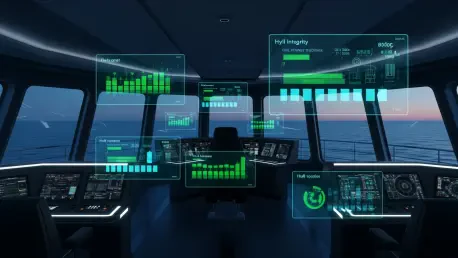

Modern naval warfare has transcended the traditional boundaries of kinetic engagement, shifting toward a complex environment where a single line of malicious code can be as devastating as a well-placed torpedo. As maritime operations become increasingly digitized, the United States Navy has recognized that the integrity of its surface fleet depends on the ability to detect and neutralize cyber threats in real-time. This realization led to the deployment of the Situational Awareness, Boundary Enforcement, and Response system, an initiative that bridges the gap between high-level cybersecurity expertise and the daily operational reality of sailors at sea. By focusing on the protection of hull, mechanical, and electrical systems, this technology ensures that the backbone of naval power remains resilient against sophisticated state-sponsored actors. The transition toward this integrated defensive posture marks a significant milestone in military readiness, moving away from reactive patching toward a model of autonomous, continuous vigilance that secures critical mission systems from the engine room to the bridge.
Integrating Fragmented Defenses: The Evolution of SABER
The development of this unified cybersecurity framework was not an overnight achievement but rather the result of over a decade of rigorous technical innovation and strategic consolidation. Historically, the Navy relied on several independent projects, such as the SEACHANGE initiative, which laid the initial groundwork for maritime situational awareness, and the Cyber Backfit Solution designed for aircraft carriers. Another critical component was the Afloat Navigation Cyber Hardening, Observation, and Response project, which specifically targeted the vulnerabilities inherent in modern vessel navigation. By synthesizing these once-disparate efforts into a single, cohesive architecture, the Johns Hopkins Applied Physics Laboratory and its partners created a “best-of-breed” design. This integration allows for a comprehensive defensive front that eliminates the silos typically found in legacy military infrastructure. The current implementation represents a streamlined approach that addresses vulnerabilities across all major functional domains, ensuring that no critical system is left unmonitored during high-stakes deployments in contested waters.
Central to this strategic evolution is the adoption of the MOSAICS framework, a modular architecture that enables the Navy to scale its cybersecurity defenses with unprecedented flexibility. This common afloat design provides a standardized blueprint that can be adapted for a wide variety of platforms, ranging from smaller littoral combat ships to massive amphibious assault vessels. Because the system is built on modular principles, it allows for the rapid integration of new defensive tools as cyber threats continue to evolve from 2026 through the end of the decade. This adaptability is crucial for maintaining mission assurance, as it allows the fleet to incorporate aviation enclaves and other afloat components into a unified security umbrella. By maintaining a consistent architecture across the entire fleet, the Navy reduces the complexity of maintenance and training while ensuring that every vessel operates under the same high standard of digital protection. This shift toward a modular Program of Record signals a permanent commitment to treating cybersecurity as a core component of maritime engineering rather than a secondary consideration.
Empowering the Fleet: Autonomous Monitoring and Sailor Response
The operational heart of the new system lies in its ability to provide continuous and autonomous monitoring of a vessel’s most essential components, including its mechanical systems and combat suites. In the past, identifying a digital intrusion within the complex web of a ship’s hull and electrical systems required manual data analysis that could take hours or even days to complete. The current technology automates this process by constantly scanning for anomalies that deviate from established operational baselines, providing instant visibility into the health of the ship’s internal network. When a potential threat is detected, the system does not merely flag the issue; it provides context and situational awareness that allows command staff to understand the severity of the intrusion. This level of granular detail is vital for protecting the navigation tools that guide the fleet through crowded or hostile shipping lanes. By securing these underlying systems, the Navy ensures that its kinetic capabilities remain functional even when facing sophisticated electronic warfare or cyber-attacks.
Perhaps the most transformative aspect of this initiative is its ability to empower “cyber-novice” sailors, enabling them to defend their vessels without requiring an advanced degree in computer science. The system generates real-time alerts that translate complex technical data into actionable defensive and remediation strategies that can be executed by the crew on duty. This accessibility bridges the talent gap in specialized cybersecurity roles, ensuring that readiness is not dependent on the presence of a few highly trained experts. Sailors receive clear instructions on how to isolate affected systems or mitigate the impact of an ongoing attack, which maintains the operational tempo during critical missions. By democratizing cybersecurity in this manner, the Navy has created a culture of digital responsibility where every member of the crew plays a role in the ship’s defense. This shift in personnel capability is a primary driver for the fleet-wide rollout, as it provides a practical solution to the shortage of specialized cyber personnel while significantly enhancing the overall resilience of the surface fleet.
Strategic Longevity: Sustaining Mission Assurance Through 2046
As the program transitions into a formal Program of Record, it is positioned to serve as the primary toolset for naval cybersecurity for at least the next two decades. This long-term vision focuses on sustaining mission assurance in increasingly contested digital environments where traditional boundaries are constantly challenged. The strategic shift toward a permanent, fleet-wide standard ensures that future ship designs will incorporate these defensive protocols from the very beginning of their construction. Moving forward from 2026 to 2030, the Navy plans to further refine the autonomous capabilities of the system, potentially integrating advanced machine learning to predict and preempt attacks before they even reach the vessel’s perimeter. This proactive stance is necessary to counter the rapid development of offensive cyber tools used by global adversaries. By establishing a robust and scalable foundation today, the military leadership is securing the operational confidence of its maritime forces for a generation, ensuring that the United States remains the dominant power in both the physical and digital domains of naval warfare.
The implementation of the SABER system effectively established a new benchmark for maritime defense by prioritizing the integration of autonomous monitoring and crew empowerment. Naval leaders recognized that the path to true digital resilience required a shift away from isolated defensive silos and toward a unified, modular architecture capable of protecting all critical shipboard functions. This transition proved that sophisticated cybersecurity could be made accessible to the average sailor, thereby increasing the readiness of the entire surface fleet. For future success, the focus shifted toward the continuous updating of threat signatures and the expansion of these protocols to include unmanned aerial and undersea vehicles. Commanders emphasized that the true value of the system lay in its ability to provide mission assurance under fire, allowing vessels to maintain their combat effectiveness despite persistent digital interference. By standardizing these defenses, the Navy ensured that its fleet remained a formidable force, ready to navigate the complexities of modern warfare while maintaining an unshakeable defensive posture.