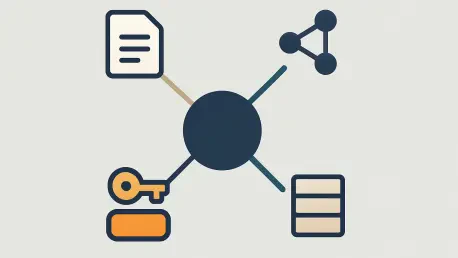

For well over a decade, enterprise Java applications have thrived on the stability and standardization offered by specifications like Jakarta Persistence for relational databases, but the modern data landscape has fundamentally shifted. The explosion of distributed architectures and diverse data access patterns has ushered in an era where using multiple, specialized data stores within a single system—a practice known as polyglot persistence—is no longer a niche strategy but a mainstream necessity. This architectural evolution created a significant gap in the enterprise Java ecosystem, leaving developers to navigate a complex web of proprietary drivers and inconsistent APIs for NoSQL databases. This fragmentation increased cognitive overhead, hindered portability, and created a barrier to productivity. The Jakarta NoSQL specification emerged as a direct response to this challenge, aiming to provide a vendor-neutral, standardized framework to seamlessly integrate the burgeoning world of non-relational databases into the fabric of enterprise Java.
The Genesis of Jakarta NoSQL
The adoption of NoSQL databases was not driven by any failure of relational systems but was a pragmatic response to a profound evolution in application architecture. As systems became more distributed, data volumes grew exponentially, and access patterns became increasingly varied, the limitations of a monolithic, relational persistence model became evident. This led to the rise of specialized data stores, each tailored to a specific purpose: document databases for simplifying aggregate storage, key-value stores for optimizing low-latency access at scale, column-family databases for managing massive datasets, and graph databases for modeling complex relationships. This trend toward polyglot persistence created a critical void in the enterprise Java landscape, as standard APIs like Jakarta Persistence (JPA) were deeply rooted in relational assumptions, leaving developers without a common language for this new world.
This architectural fragmentation left developers to fend for themselves, relying on a patchwork of database-specific drivers and proprietary APIs. The result was a landscape of inconsistent programming models, where interacting with a document store felt vastly different from a column-family store, even for basic operations. This lack of a standard increased the learning curve for teams, made applications brittle and difficult to maintain, and severely compromised portability. An application tightly coupled to one vendor’s key-value store could not be easily migrated to another. Jakarta NoSQL was conceived to fill this exact void, offering a standard, vendor-neutral specification designed to bring consistency and predictability to Java’s interaction with the wide array of NoSQL databases, all without forcing them into an ill-fitting relational paradigm.
Core Philosophy Unification Without Dilution
A central tenet of Jakarta NoSQL is understanding what it is and, just as importantly, what it is not. It is not a database itself, nor is it a leaky abstraction layer that attempts to hide the unique characteristics of different NoSQL models under a single, generic interface. Instead, it is a thoughtfully designed framework and specification focused on reducing the friction of interacting with non-relational data stores. Its core philosophy is to standardize the common ground shared by most NoSQL systems—operations like mapping entities, inserting, updating, deleting, and querying—while preserving the flexibility needed to leverage the specific strengths of each database category. This approach ensures that while the core interaction is consistent, developers are not prevented from accessing the powerful, model-specific features that made them choose a particular NoSQL database in the first place.
This design philosophy is guided by several key goals centered on productivity and familiarity. Jakarta NoSQL deliberately reuses well-established concepts and annotations from Jakarta Persistence, such as @Entity, @Id, @Column, @MappedSuperclass, and @Embeddable. This strategic alignment allows Java developers to apply their existing mental models to a non-relational context, significantly lowering the barrier to entry. As a result, a single, annotated domain model can be persisted across more than twenty different NoSQL databases with minimal to no modification. This consistency is channeled through the central Template interface, which provides a unified API for CRUD operations and supports multiple interaction styles—including direct method calls, fluent-style query builders, and string-based queries—enabling developers to choose the most expressive approach for any given scenario.
Jakarta EE 12 A Leap in Maturity
The Jakarta EE 12 milestone release represents a significant maturation for Jakarta NoSQL, transforming it from a tool for basic mapping and CRUD into an expressive and deeply integrated data access layer. The landmark feature of this release is the support for Jakarta Common Query Language (JCQL), a standardized query language intentionally designed as a constrained subset of the well-known Jakarta Persistence Query Language (JPQL). Its purpose is not to replicate every relational feature but to provide a common, portable query syntax that can be consistently implemented across diverse NoSQL and even relational databases. This integration allows developers to write powerful, string-based queries in a familiar syntax. Jakarta NoSQL exposes this functionality through the Template interface, primarily via the query(String) and typedQuery(String, Class methods, which facilitate both generic entity retrieval and advanced mapping to specific types.
Further enhancing its expressiveness, the typedQuery method becomes particularly powerful when combined with modern Java idioms like projections, especially when using Java records. By annotating a record with @Projection(from = …), developers can instruct Jakarta NoSQL to map query results directly to a lightweight data transfer object. This feature allows for the complete omission of the FROM clause in the JCQL query string, which further reduces boilerplate code and improves readability. Reinforcing modern programming practices, the API consistently returns single results wrapped in an Optional, promoting a null-safe model that eliminates error-prone null checks. Simultaneously, the framework’s fluent API has been significantly expanded with new operators such as contains, startsWith, endsWith, and the count aggregation function, making it easier to construct complex filtering and analysis queries in a type-safe, database-agnostic manner.
A New Era for Enterprise Java Data
The advancements in Jakarta EE 12 demonstrated a clear, pragmatic vision for the future of data access in enterprise Java. Jakarta NoSQL has successfully navigated the challenge of standardization without sacrificing the unique strengths of the databases it supports. It avoided the common pitfall of trying to force all databases into a single, uniform model, which would have inevitably diluted their power. Instead, it delivered a consistent and productive toolkit that respects the fundamental differences between NoSQL paradigms while standardizing their common interaction patterns. This evolution mirrors that of Jakarta EE itself: incremental, practical, and squarely focused on solving the real-world challenges faced by developers building modern, data-intensive applications. For these teams, Jakarta NoSQL has become a crucial component in making the diverse world of NoSQL databases a natural and seamless part of their enterprise toolbox, truly elevating polyglot persistence to a first-class concern.