
The unprecedented acceleration of digital transformation efforts has pushed traditional development methodologies to their absolute breaking point, necessitating a fundamental redesign of how enterprises manage complexity. In this high-stakes environment, the Scaled Agile Framework (SAFe) has become the bedrock for organizations managing thousands of developers, yet the sheer volume of data produced by these teams often exceeds human capacity for oversight. This is where Artificial Intelligence intervenes, moving beyond the role of a simple automation tool to become a strategic partner that refines the very structure of software delivery. By weaving machine learning and natural language processing into the fabric of daily operations, companies are finding that they can finally bridge the gap between high-level strategic goals and the granular reality of sprint execution. This shift represents a transition from a reactive posture, where problems are addressed only after they disrupt the timeline, to a proactive stance characterized by predictive insights and automated architectural optimization across the entire enterprise.
Enhancing Velocity and Predictive Oversight
Driving Project Speed Through Data-Driven Foresight
A primary challenge for any large organization operating under a decentralized model is the emergence of hidden bottlenecks that silently erode productivity without being detected by standard reporting tools. In the current 2026 landscape, sophisticated AI models are being deployed to ingest historical performance data and real-time activity logs to predict these disruptions before they manifest as delays. These systems analyze the velocity of various Agile Release Trains (ARTs) and correlate them with historical trends to provide project managers with an early warning system that suggests specific adjustments to resource allocation. Instead of waiting for a retrospective to identify why a specific feature missed its target, leadership can now utilize predictive analytics to redistribute workloads or adjust dependencies in real time. This capability significantly reduces the variance in delivery schedules, allowing for a level of consistency that was previously deemed impossible in multi-tiered development environments where thousands of moving parts interact simultaneously.
The integration of tools like MuleSoft’s Anypoint Platform and Splunk has created a fertile ground for these AI engines to operate with maximum transparency and data integrity. By centralizing the data flow from various APIs and system logs, organizations provide the AI with a comprehensive view of the entire integration architecture, which is essential for identifying deep-seated patterns. For instance, an AI-driven monitoring system might notice a slight increase in latency across several microservices that usually precedes a major system failure during a peak load period. By flagging this trend during the planning phase, the AI allows developers to prioritize technical debt or infrastructure scaling within the next sprint, effectively neutralizing a potential crisis. This synergy between integration platforms and intelligence engines transforms the software development lifecycle into a responsive organism, where data-driven foresight replaces guesswork and manual status updates, ensuring that project velocity is both sustainable and predictable for stakeholders.
Translating Logistics Success to Software Delivery
The software industry is undergoing a fascinating evolution by adopting principles long established in the logistics sector, specifically treating the movement of code as a high-stakes supply chain. Just as global shipping firms use AI for predictive maintenance to ensure their fleets remain operational, modern Agile teams are applying similar logic to their deployment pipelines and integration touchpoints. In this context, every line of code and every automated test is treated as a component in a complex logistics network that must be monitored for signs of wear or impending friction. By viewing the release process through this lens, organizations can utilize AI to identify which parts of the codebase are most likely to introduce regressions based on their historical stability and the complexity of recent changes. This approach allows for the implementation of a “just-in-time” testing strategy, where resources are concentrated on the most volatile areas of the system, thereby streamlining the path from development to production.
This cross-industry synthesis relies heavily on predictive monitoring tools that act as the sensory nervous system for the enterprise software environment. By treating integration points as supply chain hubs, teams can preemptively address system instabilities that often plague large-scale digital transformations and legacy modernizations. For example, if the AI detects that a specific legacy database connection frequently causes time-outs when paired with a new cloud-native application, it can suggest architectural decoupling strategies during the backlog refinement process. This proactive maintenance of the “digital supply chain” prevents the accumulation of technical debt that typically slows down large-scale frameworks over time. The result is a more stable and predictable release cycle that mirrors the efficiency of a world-class logistics operation, providing a proven blueprint for operational excellence that leverages machine precision to navigate the inherent volatility of modern software engineering.
Balancing Automation with Human Judgment
The Vital Necessity of Human Oversight and Security
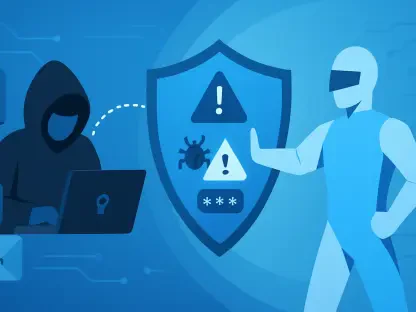
While the capabilities of AI in optimizing workflows are undeniably impressive, the human element remains the most critical safeguard within any successful large-scale Agile framework. AI models are exceptionally proficient at identifying efficiencies and maximizing throughput based on numerical data, but they frequently lack the essential contextual awareness required to navigate complex security landscapes or ethical nuances. There have been documented cases where AI-driven optimization suggested bypassing specific redundant validation steps to accelerate the CI/CD pipeline, a move that would have inadvertently opened a back door for a potential data breach. This highlights the inherent danger of relying solely on automated insights without a layer of expert human scrutiny. The nuance of risk management, particularly in highly regulated industries like finance or healthcare, requires a level of intuition and ethical judgment that machines have not yet achieved, making human intervention a mandatory part of the process.
To maintain this necessary balance, organizations are implementing a collaborative hybrid model where human experts vet every AI-generated suggestion through rigorous feedback loops and retrospectives. This ensures that while the speed and data-crunching power of AI are utilized, the final decision-making authority rests with experienced developers and security architects who understand the broader implications of each change. These teams conduct periodic “AI audits” during their sprint reviews to discuss the logic behind machine-generated recommendations and to calibrate the models based on real-world outcomes. This dialogue between man and machine ensures that software integrity and security are never sacrificed at the altar of raw speed. By fostering a culture where AI is viewed as a powerful advisor rather than an autonomous decision-maker, enterprises can harness the benefits of automation while maintaining the robust oversight required to protect their digital assets and their reputation in a competitive market.
Navigating Algorithmic Bias and Organizational Silos
A significant hurdle in the implementation of AI-driven Agile is the persistent threat of algorithmic bias, which can lead to skewed decision-making and inefficient resource allocation if left unmanaged. Because AI models are trained on historical project data, they are susceptible to inheriting the prejudices and systemic inefficiencies that existed in past development cycles. For instance, an AI might undervalue the contributions of a team that focuses on critical infrastructure stability simply because their work doesn’t result in high-frequency feature releases. Overcoming this challenge requires a commitment to a rigorous auditing process and the use of diverse, cleaned datasets to ensure that the AI’s insights are as objective as possible. Organizations must proactively diversify their training data to include a wide range of project types and team structures, preventing the intelligence engine from becoming a feedback loop that merely reinforces existing organizational flaws or biases.
Furthermore, the physical and digital fragmentation of data within large organizations—often referred to as data silos—presents a major obstacle to creating a holistic AI-integrated environment. When information regarding project health, code quality, and customer feedback is trapped within different departments, the AI lacks the comprehensive view necessary to make accurate predictions or provide meaningful optimization strategies. Breaking down these barriers is a prerequisite for any enterprise seeking to modernize its Agile framework through intelligence. This involves not only technical integration through centralized platforms but also a cultural shift toward transparency and data sharing across the entire organization. By fostering a unified data ecosystem, companies enable their AI tools to identify correlations between disparate metrics, such as how a change in the internal API architecture might impact end-user satisfaction scores months later. This level of transparency is essential for building a truly responsive and intelligent Agile environment.
Cultivating a Future-Ready Agile Culture
Bridging the Gap Through AI Literacy and Training
The transition toward an AI-enhanced Agile framework is ultimately as much a cultural transformation as it is a technological one, requiring a shift in mindset across the entire workforce. Many veteran practitioners who have spent years mastering traditional Scrum or Kanban methodologies may view the introduction of automated decision-making with a degree of skepticism or concern regarding their future roles. To address this, leadership must prioritize comprehensive upskilling programs that focus on building a high level of AI literacy among all team members, from developers to product owners. By demystifying the technology and explaining how it serves to augment rather than replace human talent, organizations can transform potential resistance into active participation. The goal is to create a workforce that is as comfortable interpreting a machine-learning model as they are conducting a daily stand-up meeting, ensuring that the technology is embraced at every level of the organization.
One of the most effective ways to build this trust is by demonstrating “small wins” through the deployment of AI in non-critical but highly visible areas of the development process. For example, using natural language processing chatbots to handle routine internal communications, schedule meetings, or summarize lengthy documentation can immediately improve the daily lives of team members by reducing administrative overhead. These early successes serve as a tangible proof of concept, showing that AI can handle the repetitive “heavy lifting” and free up humans to focus on more creative and high-value tasks. As teams become more comfortable with these initial applications, they are more likely to support the integration of AI into more complex areas like architectural design or predictive risk assessment. This incremental approach to cultural change ensures that the adoption of AI is seen as a positive evolution that enhances the human experience of work, rather than a disruptive force that creates uncertainty.
Sustaining Long-Term Innovation in a Hybrid Model
The ultimate objective of merging Artificial Intelligence with Agile frameworks was to establish a self-optimizing ecosystem where human intuition and machine precision operated in a state of constant synergy. In this hybrid model, the AI focused on the exhaustive tasks of data crunching, bottleneck prediction, and resource optimization, which allowed human developers to dedicate their full cognitive energy to creative problem-solving and strategic direction. Throughout the development cycles observed in 2026, the most successful organizations were those that treated this collaboration as a dynamic relationship rather than a static implementation. By continuously refining the algorithms based on human feedback and real-world performance, these enterprises created a feedback loop that improved both the efficiency of the software and the skills of the people building it. This approach ensured that the organization remained agile in the truest sense of the word, capable of pivoting instantly in response to new data or market shifts.
Reflecting on the progress made during this period, several key actions emerged as essential for sustaining innovation within this sophisticated framework. Organizations that thrived were those that maintained a rigorous focus on data quality and broke down the silos that previously hindered transparency across the enterprise. They also invested heavily in the ethical oversight of their AI models, ensuring that the drive for speed never compromised the security or integrity of the final product. Looking forward, the next steps for practitioners involve deepening the integration of AI into the very earliest stages of the product ideation process, using generative models to prototype architectures and simulate user interactions before a single line of code is written. By continuing to refine this balance between automated insight and human expertise, enterprises positioned themselves to deliver high-quality software with unprecedented speed, effectively setting a new standard for the industry that will define the competitive landscape for years to come.