
The rapid proliferation of autonomous coding agents and generative development environments has forced chief technology officers to reconsider the foundational architecture of their engineering teams rather than simply adding new software to their existing tech stacks. This fundamental shift marks a transition from the mere adoption of productivity tools to a comprehensive structural overhaul of the entire software development lifecycle. In the current landscape, engineering leaders find that the traditional methods of writing, reviewing, and deploying code are no longer sufficient to keep pace with the sheer volume of output generated by advanced artificial intelligence. The challenge now lies in moving beyond basic coding assistants to fundamentally redesigning how human engineers and AI agents collaborate across all phases of development. This transformation requires a holistic perspective that ensures the organization’s capacity to deliver high-quality software remains intact while scaling at an unprecedented rate. By focusing on a cohesive environment that integrates workflows, governance, and infrastructure, technology leaders can secure long-term technical excellence rather than settling for fleeting gains in individual speed. Success in this era is defined by the ability to orchestrate complex systems where human intuition and machine efficiency are harmoniously aligned within a resilient operational framework.
Harmonizing Rapid Production with Organizational Flow
A significant obstacle for many modern organizations is the growing discrepancy between the massive productivity gains seen at the individual developer level and the persistent “organizational drag” that often follows such rapid changes. While AI agents allow developers to draft code and generate scripts much faster than ever before, traditional review systems and coordination protocols frequently create significant bottlenecks that stifle overall progress. This phenomenon effectively neutralizes the advantages of increased output if the broader pipeline is not rewired to handle the massive volume of new code entering the system. When a developer can produce a week’s worth of work in a single afternoon, the legacy manual review processes become a point of failure, leading to a backlog that delays deployment and frustrates the engineering staff. Leaders must recognize that speed in one segment of the lifecycle is meaningless if the subsequent stages are not optimized to absorb and validate that speed. Addressing this mismatch requires a deep dive into the mechanics of team coordination and a willingness to automate the connective tissue that holds the development process together.
To resolve these friction points, engineering departments are increasingly turning toward a total reimagining of their delivery pipelines to ensure that the increased velocity of code creation does not compromise system integrity. This involves the implementation of automated testing suites and continuous integration protocols that are capable of operating at the same frequency as the AI-driven code generation tools. By removing manual hurdles and replacing them with robust, data-driven validation layers, organizations can maintain a steady flow of high-quality features without succumbing to the weight of their own productivity. This structural rewiring also necessitates a shift in how team meetings and handoffs are conducted, moving away from time-consuming synchronous updates toward more efficient, asynchronous documentation managed by intelligent systems. The goal is to create a frictionless environment where the output of an AI-assisted engineer can move through the validation and deployment stages with minimal human intervention, provided it meets the predefined standards of the organization. Only by synchronizing the speed of the individual with the speed of the collective can a company truly capitalize on the potential of the current technological revolution.
Building Resilient Systems through Centralized Orchestration
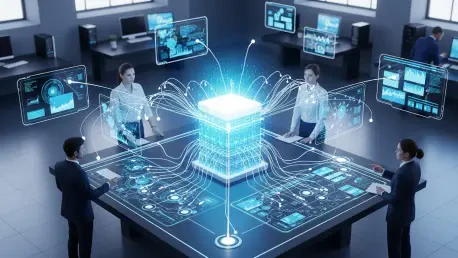
Artificial intelligence often acts as a powerful amplifier of an existing corporate culture, magnifying inherent strengths while also accelerating the accumulation of technical debt if the underlying processes are fundamentally broken. For the modern CTO, managing this risk involves the implementation of a sophisticated orchestration layer that serves as the central nervous system for all engineering activities. This technological substrate ensures that every piece of AI-generated code aligns perfectly with organizational standards and respects the complex architectural dependencies that define large-scale software systems. Without such a layer, the risk of fragmentation increases, as different agents and developers might produce disjointed solutions that do not integrate properly with the existing codebase. A centralized orchestration system provides the necessary oversight to maintain a high-level view of the entire system design, ensuring that tactical speed does not lead to strategic failure. It allows for the enforcement of consistent coding patterns and security protocols across the entire organization, regardless of which specific AI tool or model is being utilized by an individual team.
Utilizing advanced substrates for cross-team coordination also allows engineering departments to maintain a high degree of organizational memory during project handoffs and transitions. These technological layers are designed to coordinate separate agent roles and manage complex interactions across thousands of files, effectively bridging the gap between isolated task execution and holistic system architecture. By capturing the context of every change and the reasoning behind specific design decisions, the orchestration layer prevents the loss of critical knowledge that often occurs in fast-paced development environments. This approach enables teams to navigate the intricacies of shared interfaces and microservices with greater confidence, as the system provides a clear map of how individual changes ripple through the broader infrastructure. Furthermore, it empowers leaders to implement fine-grained controls over how agents interact with sensitive components of the stack, providing a layer of safety that manual oversight alone cannot achieve. In an era where software complexity continues to grow, having a reliable mechanism for cross-team alignment is essential for maintaining a stable and scalable engineering engine.
Mapping Progress within the AI Maturity Framework
To successfully scale their operations, technology leaders must be able to identify their current position within a structured maturity model that tracks the evolution of AI integration. This journey typically begins with isolated exploratory tasks, where teams experiment with various tools in a controlled environment to understand their potential and limitations. As the organization moves toward a more “Future Ready” state, the focus shifts toward establishing dedicated governance roles and redesigning standard workflows to be “agent-first” from the outset. This progression is not merely about adopting more advanced technology but about fundamentally changing the mindset of the engineering department. At the highest levels of maturity, the developer’s primary role shifts from manual implementation and syntax mastery to high-level system orchestration and strategic oversight. Understanding where a team sits on this spectrum allows a CTO to set realistic goals and allocate resources effectively, ensuring that the transition remains manageable and aligned with broader business objectives. It also provides a roadmap for the necessary cultural shifts that must accompany technological change.
Moving through these stages of maturity requires a commitment to continuous improvement and a willingness to retire legacy processes that no longer serve the organization’s needs. In the middle stages of this evolution, organizations often face the most resistance as they attempt to integrate AI into critical production workflows while still maintaining traditional safety nets. This phase necessitates the creation of new metrics that measure not just the speed of delivery, but the quality and long-term maintainability of the code being produced. Leaders must also focus on building a robust infrastructure that supports autonomous agents, providing them with the necessary context and access to perform their tasks effectively without compromising security. As the organization approaches full maturity, the integration of AI becomes seamless, with intelligent systems handling the majority of routine maintenance and implementation details. This allows human engineers to dedicate their energy to innovation and complex problem-solving, which are areas where human intuition remains irreplaceable. By following a clear maturity framework, a company can navigate the complexities of this transformation with a sense of purpose and direction.
Mitigating Risk within the Five Core Challenge Domains
Scaling the use of artificial intelligence introduces a specific set of failure modes, particularly in the areas of governance operationalization and the stability of software delivery. To prevent these issues from derailing progress, organizations must integrate automated controls directly into their delivery pipelines, ensuring that review checkpoints scale at the same rate as the code volume. This proactive approach helps to prevent stability regressions and quality dips that can occur when the speed of production outpaces the ability of human teams to perform thorough audits. Governance must be viewed as an integrated part of the development process rather than an external hurdle, with policy enforcement happening in real-time as agents and developers interact with the codebase. By embedding compliance and quality standards into the tools themselves, leaders can create a “secure by design” environment that protects the organization from the risks associated with rapid, automated change. This focus on delivery stability is crucial for maintaining the trust of both internal stakeholders and external customers who rely on the reliability of the software products.
Security and quality also require a completely new approach in the agentic era, moving away from isolated, single-repository reviews toward a broader understanding of the “cross-repo blast radius” of any given change. As AI agents become more capable of making modifications across multiple interconnected services, the potential for downstream failures increases significantly if the full architectural context is not maintained. Providing comprehensive audit trails and maintaining a clear visibility into how changes in shared interfaces affect the rest of the system is essential for identifying potential gaps before they become critical issues. Additionally, managing “agent sprawl” and the shift toward usage-based infrastructure costs has become a vital component of financial health for modern technology departments. Without centralized platform controls and shared memory systems, organizations risk incurring redundant development costs and high expenses associated with uncoordinated or repetitive agent prompts. By implementing a unified strategy for managing agent resources and infrastructure consumption, a CTO can ensure that the technological transformation remains economically sustainable while delivering maximum value to the enterprise.
Restructuring Capital and Human Talent for the Agentic Era
Achieving financial success in the current technological environment requires a strategic shift toward “infrastructure-first” budgeting, where the development of platform controls and workflow redesign is funded before expanding the headcount for AI tools. This approach ensures that the necessary foundations are in place to support a large-scale rollout, preventing a situation where an organization has many powerful tools but no effective way to manage them. Measuring the return on investment at specific stages of the development lifecycle, such as planning or testing, allows leaders to pinpoint exactly where the technology is adding the most value and where the delivery pipeline remains congested. This data-driven perspective is essential for making informed decisions about future investments and for justifying the costs associated with the engineering transformation to the broader executive team. Furthermore, prioritizing the development of internal platforms that provide a consistent experience for developers and agents alike helps to reduce friction and improve overall operational efficiency. Budgeting must be viewed as a dynamic process that adapts to the changing needs of the engineering department as it evolves.
The human element of this transformation is equally important, as the roles of software engineers are rapidly evolving into those of architects and auditors of increasingly complex agentic systems. Quality assurance professionals are also seeing their responsibilities shift toward the design of evaluation frameworks and the management of automated testing environments, while platform engineers focus on building the abstractions needed to support autonomous operations. There is a notable difference in how these changes impact various levels of talent within an organization, with senior engineers often seeing a significant boost in their ability to handle context-heavy tasks. Conversely, junior developers may struggle with the advanced judgment required to audit the output of sophisticated AI systems, creating a potential gap in the talent pipeline. To address this, CTOs must redesign career ladders and mentorship programs to focus on teaching steering and auditing skills rather than just syntax and implementation details. By investing in the continuous education of their workforce, companies can ensure that their teams are prepared to lead in a world where the primary role of the human engineer is one of strategic oversight and creative problem-solving.
Cultivating Resilience through Intentional Change Management
The successful adoption of new engineering paradigms hinges on a transparent change management strategy that includes the active co-design of workflows with the developers who use these systems every day. Rather than imposing new tools from the top down, leaders should engage their teams in the process of defining how these technologies will be integrated into their daily routines. By addressing displacement fears directly and providing dedicated time for applied reskilling, a CTO can build a culture of trust and collaboration that is essential for long-term success. This participatory approach not only improves the quality of the resulting workflows but also ensures that the engineering staff feels empowered and valued during a period of significant transition. Providing clear communication about the goals of the transformation and the expected impact on individual roles helps to reduce anxiety and fosters a sense of collective ownership over the new direction. When developers see themselves as partners in the evolution of the organization, they are much more likely to embrace the change and contribute their own ideas for improvement.
Leaders who successfully navigated this transformation recognized that the integration of artificial intelligence was never a static event but a continuous evolution of human-machine collaboration. They prioritized the creation of robust governance frameworks that operated at the speed of automated generation while ensuring that senior engineers were empowered to act as the ultimate arbiters of system integrity. By the time these organizations reached a state of operational maturity, the focus had shifted from simple code generation to the complex orchestration of entire software ecosystems through intelligent substrates. This transition necessitated a complete re-evaluation of how talent was nurtured and how technical debt was managed within an increasingly automated lifecycle. Strategic investments in shared memory systems and cross-team coordination layers proved to be the decisive factors in maintaining stability during periods of rapid expansion. Ultimately, the engineering departments that thrived were those that embraced a culture of transparency and co-design, ensuring that every technological advancement was matched by a corresponding evolution in human capability and organizational foresight.